
1-805-484-2992
Quotes - Engineering - Sales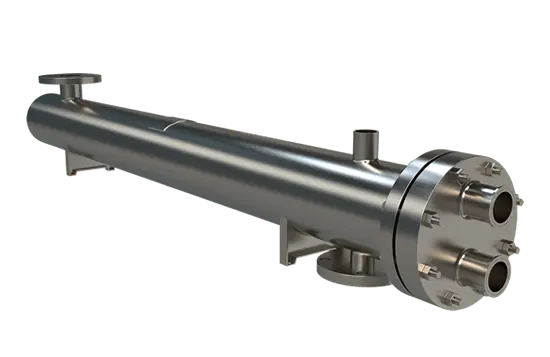
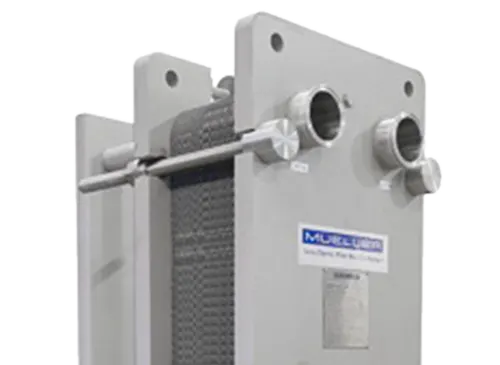
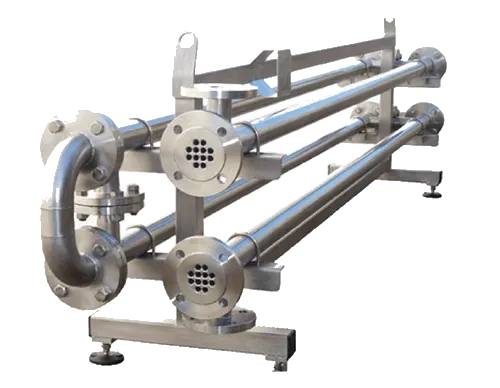
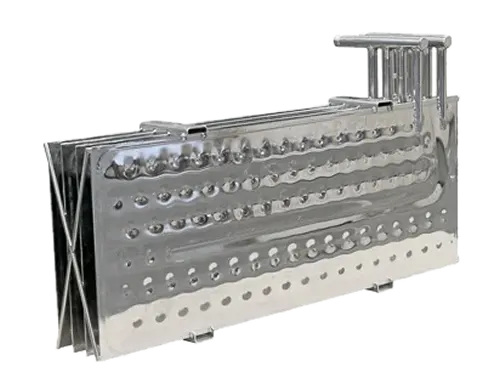
Pick the construction and the grade together
A stainless heat exchanger is two decisions made at once: which construction moves the heat, and which grade survives the fluids on each side. We size and build all five exchanger types plus coils in stainless, and we will tell you when the one you asked for is the wrong one. A plate pack is the smallest, closest-approach answer for two clean liquids and the wrong answer for a slurry; a shell and tube takes 150 psig at 350°F without comment and takes a 40-foot bay to pull the bundle; a brazed plate holds 435 psig in a unit you can carry and plugs on the first fiber.
The grade question is just as sharp. 304L is the right metal for steam, glycol, dry gas and treated water, and it will pit in tower water that has cycled up past a few hundred ppm chloride. 316L carries most product-contact and process duty to about 1,000 ppm, and it can crack above roughly 140°F when chlorides and stress meet. Beyond those lines are 2205 duplex, 904L, 6-moly and titanium, each with a price and a reason. Every product page on this site names the grade for its duty and why; the full comparison, with PREN and chloride figures, is on one page.
Stainless Coils for Tanks and Ducts
When the vessel already exists, a welded 304L or 316L tube coil or an immersion plate is the smallest change to make it heat or cool. Steam coils to 150 psig, all-stainless ammonia coils with no copper anywhere, transformer oil coolers and custom welded assemblies with headers are sized to the duty and shaped to the tank.
Coil pages: Ammonia Coils, Custom Coils, Transformer Oil Coolers, Welded Coils.
Heating & Cooling Coils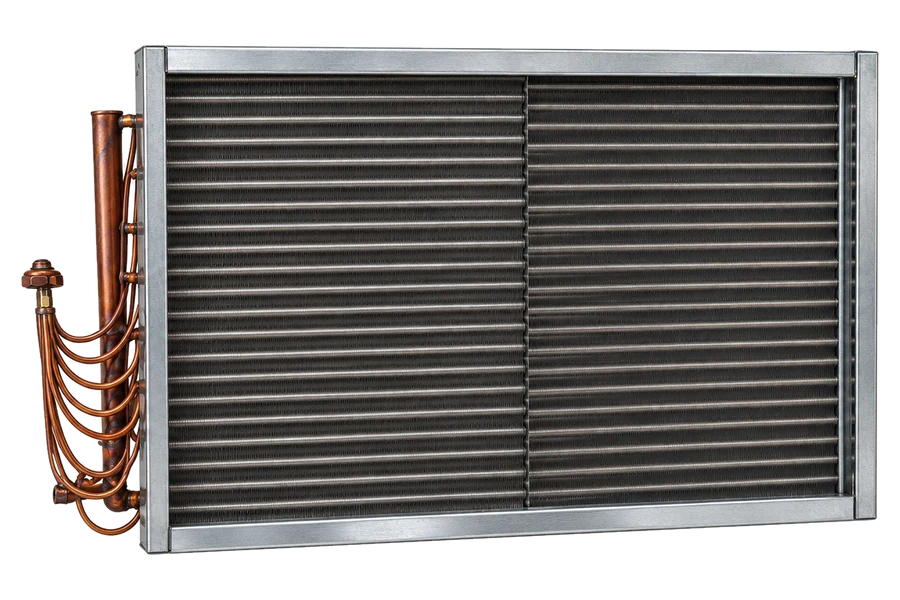
Stainless duties we size




Brazed Plate in Stainless, Down to the Filler
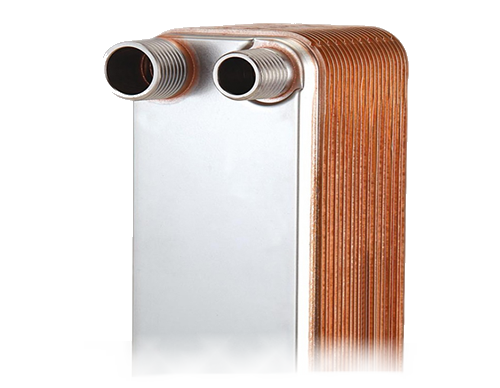
The fifth construction has no tile above because it is a different kind of purchase. A brazed plate exchanger is a stack of 316L plates vacuum-brazed into one block, no gaskets, no frame, no bolts, rated 435–650 psig as standard and to about 2,030 psig on transcritical CO2 designs. It is the compact high-pressure choice for refrigerants, glycol, oils and clean water, and it is the wrong choice for anything carrying fibers or grit, because the channel gap is 1–3 mm and nothing opens it for cleaning.
What makes a brazed plate a stainless question is the filler. Copper braze is standard and is wrong for ammonia and deionized water; nickel braze fixes both; an iron-based stainless filler leaves no copper or nickel on the wetted surface at all, for pharmaceutical water and specifications that call for every wetted part in stainless. Double-wall versions vent a leak between two plates, and dual-circuit versions run two refrigerant circuits against one water side. The filler is chosen with the plate, not after it.
Start Here
Start Here
Compare the grades
304L, 316L, 2205 duplex, 904L, 6-moly and titanium on one page, ranked by PREN and chloride limit, with finish, passivation and braze material explained.
+ Learn More
Start Here
Corrosive service shell and tube
The page to read when the fluid is the problem: which grade holds up, where crevice attack starts, and when 316L is not enough.
+ Learn More
Start Here
Request a quote
Fluids, flows, temperatures, pressures, grade and connections in one form; a nameplate photo if you are replacing an existing unit.
+ Learn More