
1-805-484-2992
Quotes - Engineering - SalesCodes and stamps
A certification is an order line, not a property of the metal
Engineers send us specifications that read ASME, TEMA, 3-A, BPE, PED, CRN in one breath, as if they were a single quality mark. They are six different things from five different bodies, and each adds cost, calculation, inspection or paperwork to a particular unit. A U stamp says an authorized inspector witnessed the hydrotest and reviewed the design against Section VIII Division 1. A TEMA class says which tolerances, corrosion allowances and construction details the shell and tube was built to. A 3-A symbol says the product-contact surfaces, drainability and gaskets meet a dairy and food standard. None of them say the exchanger will survive the fluid.
We apply every one of these where the order specifies it, and quote it as a separate line so you can see what it costs. A chemical plant in Ontario needs a CRN; a brewery in Oregon does not. A 316L shell and tube for pharmaceutical water may need ASME BPE surface designations and MTR traceability on every wetted part, while the glycol chiller beside it needs neither. Nothing on this site claims that a given stamp applies to every unit we build; the quotation names what is included, and a line missing from the quote is not on the unit.
Certification never substitutes for grade selection: a stamped 304L shell and an unstamped one corrode identically, so pick 316L or duplex for the fluid first and stamp second. The Material & Construction page compares the grades.
Where certification meets the rest of the specification
Material and construction
- Grade first: a U stamp on a 304L shell in 1,000 ppm chloride water is a certified pitting failure.
- Material test reports tie plate, tube and tubesheet heats to the ASTM or ASME spec on the drawing.
- Dual-certified 304/304L and 316/316L mill product meets both the standard and L carbon limits.
Sanitary standards
- 3-A Sanitary Standards cover dairy and food product-contact surfaces, drainability and gasket materials.
- ASME BPE adds SF1–SF6 surface designations, orbital weld criteria and documentation for bioprocess.
- A 32 µin Ra polish without the 3-A gasket and drain detail is a polished exchanger, not a sanitary one.
Requesting a quote with codes
- Name the stamp, the TEMA class and the registration province or EU category on the first inquiry.
- State design pressure and temperature on each side; the code calculation is run against those figures.
- Tell us who the authorized inspector or notified body is if your plant already works with one.
Name the code
ASME U stamp, TEMA class or PED category
Fix the ratings
design pressure and temperature on both sides
Add the registration
CRN province or notified body where required
Request the papers
MTRs, hydrotest report, data report, 3-A symbol
ASME Section VIII and TEMA
ASME Section VIII Division 1 is the pressure vessel code most U.S. plants require on any exchanger above 15 psig, and the U stamp is the evidence that an authorized inspector reviewed the calculations, checked the material certificates and witnessed the hydrotest, normally at 1.3 times design pressure. The stamp covers the pressure boundary only; it says nothing about thermal performance, fouling or whether 316L was the right grade.
TEMA is a mechanical standard for shell-and-tube exchangers, not a certification body. Class R is written for petroleum and heavy process duty, Class C for commercial and general process, Class B for chemical process; they differ on corrosion allowance, minimum tube wall, baffle spacing and tubesheet thickness. A sanitary double-tubesheet unit is rarely a TEMA design at all.
PED and CRN
The Pressure Equipment Directive applies to exchangers shipped into the European Union and sorts them by fluid group and a pressure-times-volume product into categories from sound engineering practice up to Category IV. The higher categories need a notified body before the CE marking goes on. Send the installation country, fluid group and design conditions and we classify it.
A Canadian Registration Number is issued province by province; a CRN for Alberta does not cover Quebec. The design must already be built to ASME, so a CRN is an addition to the U stamp, not a replacement, and registration time belongs on the project schedule.
3-A and ASME BPE
3-A Sanitary Standards are written by equipment makers, users and regulators for dairy and food product contact, and the 3-A symbol on a heat exchanger means it was built to the heat exchanger standard and verified by a third party. It governs surface finish, radii, gasket materials, drainability and the sanitary design of connections. A unit without the symbol can still drain and polish well, but it cannot be sold as 3-A.
ASME BPE is the bioprocessing standard: surface finishes SF1 through SF6, orbital welding and inspection criteria, dimensions for hygienic fittings, and a documentation package with MTRs, weld maps and finish reports. Pharmaceutical buyers specify BPE where 3-A would not go far enough; the two overlap but neither replaces the other.
What as specified means
Every certification on this site is listed as specified and applicable because the alternative, implying that every unit carries every stamp, is false and expensive. A 304L steam coil for a wash tank needs no stamp in most jurisdictions; a 316L shell and tube in a refinery might need ASME, TEMA R and an MTR package three inches thick.
The practical rule: if a code, stamp, standard or document does not appear on the quotation, it is not included. We would rather add a line to the quote than have an inspector reject a unit on the dock.
Call and talk it through with an engineer: 1-805-484-2992
Questions on stamps and standards
Only if the jurisdiction, the insurer or the owner requires one, and most do above 15 psig on the shell side of a vessel-type exchanger. Brazed plate units, small coils and clamp-on embossed plates often fall below the threshold or under an exemption. Tell us where the unit is going and whether your insurer has a written policy; we build to it.
No. 3-A is a dairy and food standard built around 32 µin Ra finishes, CIP cleanability and drainability. Pharmaceutical water and bioprocess duty usually call for ASME BPE, which fixes finer finishes, electropolishing, orbital weld inspection and documentation 3-A does not require. Specify BPE for pharma and 3-A for food; an exchanger can carry both, at a price.
Sometimes, but it is slower and costlier than registering the design before fabrication. The province reviews the ASME calculations and drawings, and a design never run through a code calculation may need re-rating or cannot be registered at all. Name the installation province on the first inquiry and registration runs in parallel with fabrication.
MTRs come with every unit where the order asks for them, and we recommend asking whenever the fluid is corrosive, the duty is sanitary, or an auditor will ever open the file. Without one, the only evidence that a tubesheet is 316L rather than 304L is a note on the drawing; with one, the heat number traces back to the mill chemistry.
Class R demands heavier construction than Class C: thicker tubesheets, larger corrosion allowances, minimum tube wall, and specific baffle and tie-rod rules. In stainless the corrosion allowance is often reduced because the grade was chosen to resist the fluid, but Class R still adds metal and cost. Most process plants specify Class C or B unless a refinery standard applies.
Related
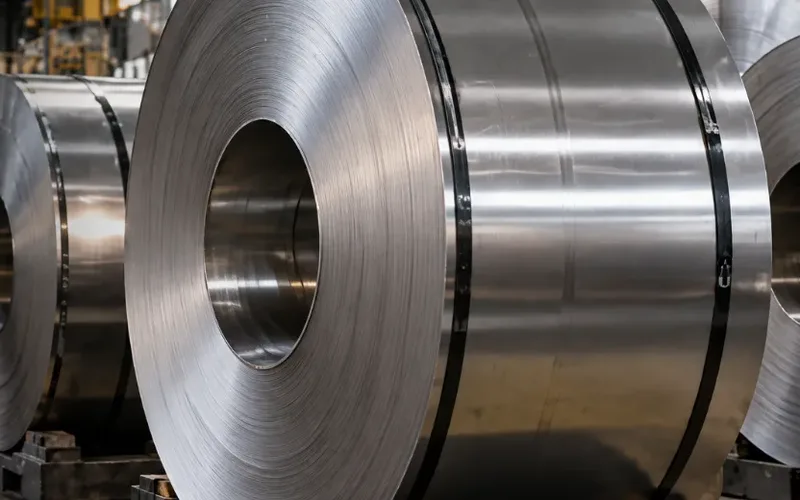
Material & Construction
Material & Construction
The one materials page on the site: 304L, 316L, duplex, 904L, 6-moly and titanium compared by PREN, chloride limit and temperature, plus finish and braze.
+ Learn More
Shell & Tube
3A Sanitary
Shell and tube units built to the 3-A tubular standard: 300-series product contact, 32 µin Ra, radiused corners, no exposed threads and a drawn-in drain path.
+ Learn More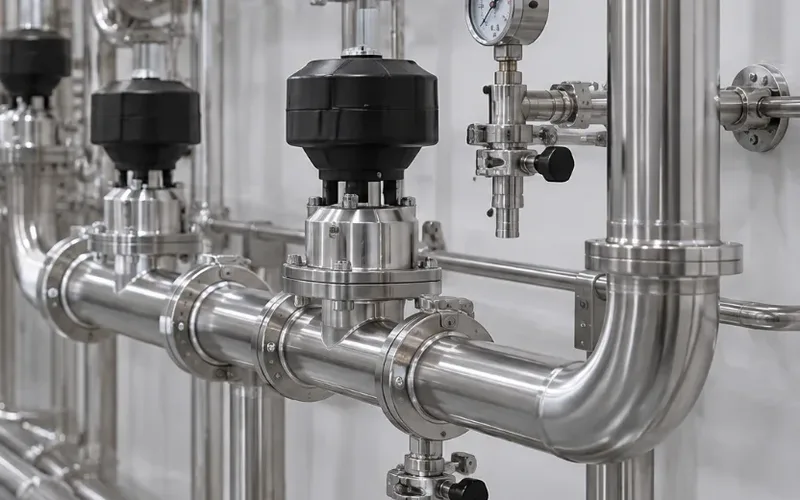
Shell & Tube
Pharmaceutical
WFI and purified water shell and tube units in electropolished 316L with a vented double tubesheet, BPE surface designations and full material traceability.
+ Learn More