
1-805-484-2992
Quotes - Engineering - SalesA brazed plate with nothing but stainless wetted
An all-stainless brazed plate exchanger uses an iron-based stainless filler in place of copper or nickel. After the vacuum braze cycle the plates, the port rings and every joint between them are stainless or stainless-type alloy, with no copper or nickel-alloy braze exposed to either fluid. That matters when the fluid would dissolve copper, when it would attack a nickel braze, or when the specification says all wetted parts stainless and means it. The plates are 316L; the filler is formulated to melt below the plate and wet it without eroding it, and the finished block has the same gasket-free, bolt-free form as any other brazed plate.
Three groups of duty send buyers here. Corrosive process liquids where copper or nickel is the weak point: dilute organic acids, oxidizing cleaning solutions, sulfur-bearing streams that blacken copper. High-purity water where even a nickel-alloy braze is not acceptable in the ion count, or where the owner's standard bans dissimilar metals in the loop. And food and beverage liquids where copper contact is prohibited and the product is clean enough for a 1–3 mm channel: sugar syrups, clear juices, wort and wash in commercial breweries and distilleries, water for batching. The pack is not an inspectable construction, so where a 3-A standard applies to product contact a gasketed plate or tube-in-tube is the right stainless answer and this unit sits on the utility side.
The limit to understand before ordering is that all-stainless describes the joint, not a corrosion upgrade of the plate. The plate is still 316L: water-side chloride under about 200 ppm preferred, 200–1,000 ppm only cool, clean and treated after review, and chloride stress cracking a risk above about 140°F. Seawater, high-cycle tower water and hot brine pit the plate regardless of what holds it together, and the braze points are the crevices where that attack starts. For those fluids the stainless answer is a titanium plate pack or a super duplex or 6-moly bundle, not a different braze. Ratings on stainless-brazed designs are design-specific; many sit at or near the 435–650 psig copper figure, and the quotation states the number.
All-stainless packs pair 316L plates with an iron-based stainless braze; the chloride and hot-acid limit is the plate's, and past it a higher alloy or titanium takes over. See Material & Construction for the grade comparison.
Three angles on the all-stainless choice
Where it is the right answer
- Process liquids that attack copper and nickel braze but sit inside the 316L envelope
- Purified and deionized water loops with a no-dissimilar-metals rule
- Copper-free food, beverage and brewing liquids clean enough for the channel
- Specifications that read all wetted parts 316L with no exception for the braze
Where another stainless construction wins
- Product contact that must be opened or inspected: gasketed plate or tube-in-tube
- Pulp, fibers, pieces or crystallizing liquids: tube-in-tube or a wide-gap plate
- Chloride past the 316L limit or hot acids: titanium or 6-moly plates, not a stainless braze
- Pressure above the plate rating: a 316L shell-and-tube built to the required design pressure
What to put on the inquiry
- The fluid, its concentration, pH, chloride content and the temperature range it sees
- Why copper and nickel are excluded: corrosion, ion pickup or a written standard
- Flows and temperatures on both sides, and the allowable pressure drop
- Passivation per ASTM A967 and material test reports, where required
All-stainless build
Standard build; the quotation states the rating and plate count for your duty.
| Feature | Typical build |
| Plates | 316L, dual-certified 316/316L |
| Filler | Iron-based stainless (Fe-Cr-Ni) brazing alloy; no copper or nickel-alloy braze |
| Connections | 316L threaded, weld stub or flanged; tri-clamp where the duty calls for it |
| Design pressure | Design-specific; many at or near 435–650 psig |
| Temperature | -320 to 400°F envelope |
| Channel gap | 1–3 mm; strainer on both sides |
| Surface treatment | Passivation per ASTM A967 on request; the channels cannot be polished |
| Chloride guide | Prefer under about 200 ppm; 200–1,000 ppm cool, clean and treated after review |
| Documentation | MTRs for plate and filler, pressure test record, as specified |
Questions on the stainless braze
It has no copper or nickel-alloy braze wetted, which satisfies the material side of many food specifications, but it is not inspectable and the channels cannot be polished to a 32 µin Ra finish. Where the duty requires a 3-A or ASME BPE construction the answer is a gasketed sanitary plate or a tube-in-tube. Where it requires only copper-free contact with a clean liquid, this pack does the job at a fraction of the size.
It changes it. The iron-based filler is a closer match to the plate in strength and in thermal expansion, which is good for fatigue, but the joint geometry and the braze cycle differ from copper, and the pressure rating is set per design rather then carried over. Many stainless-brazed packs rate at or near the copper figure; some sit below it. We quote the number rather than quote the copper catalog.
No, and this is the order we turn away most often. Seawater at about 19,000 ppm chloride can pit a 316L plate in weeks, and tower water that can reach 600–900 ppm from a 150 ppm makeup can pit it at the braze crevices over a season or two. The filler never enters into it. A titanium plate pack in a gasketed frame is the stainless-site answer for those waters, and a brazed plate of any kind is not.
Nickel braze is copper-free, which covers ammonia and most deionized water loops at a lower cost. It still puts a nickel-alloy braze at every joint, and that is the line. Fluids that attack a nickel braze, standards that ban nickel-alloy filler, and purity loops that exclude it need the stainless filler. If your specification says only copper-free, read the nickel-brazed page first; it is the cheaper fit.
Yes, with the same caustic and acid cycles a 316L gasketed plate takes, at 160–185°F, and the stainless joint has no copper to be stripped by the acid step. What you cannot do is open it to verify the result, so a CIP routine on a brazed pack is validated by pressure drop and rinse-water checks rather than by inspection. Keep the channel gap in mind when you set the strainer upstream.
Related
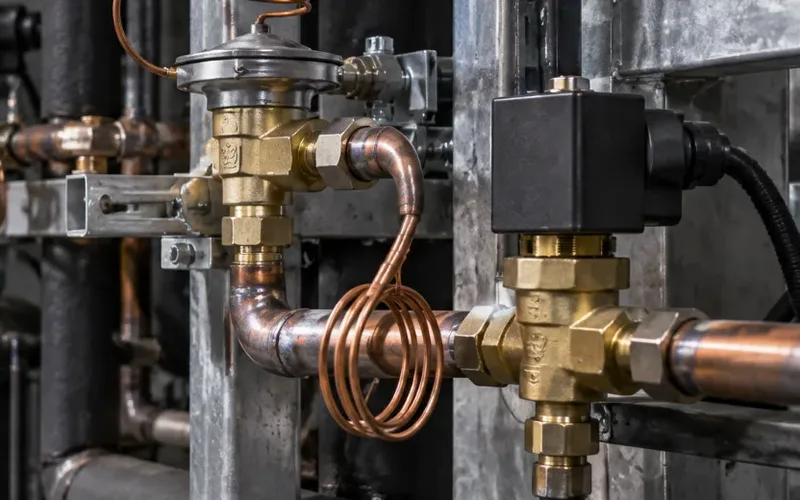
Brazed Plate
Two Phase
Why an evaporator or condenser pack is built differently from a liquid unit: inlet distribution, asymmetric channels, port direction and the freeze line.
+ Learn More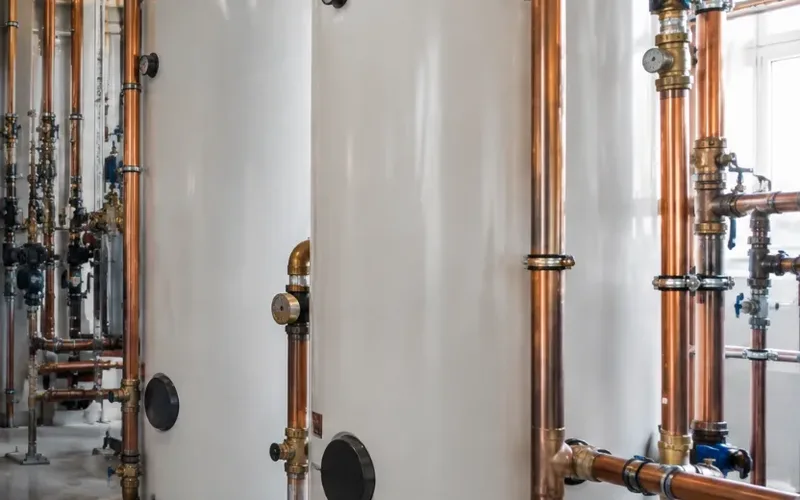
Brazed Plate
Double Wall
Where a plumbing code demands a vented barrier between potable water and a heating fluid, this is the construction, and here is what it gives up to get it.
+ Learn More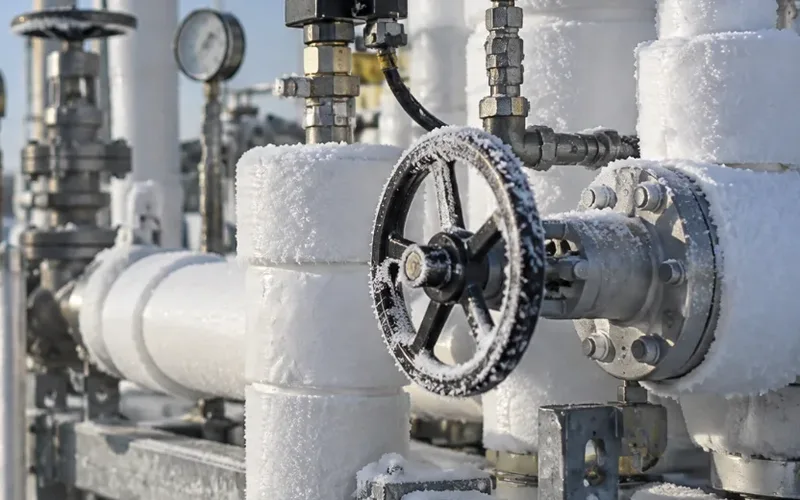
Brazed Plate
Nickel Brazed
When the fluid attacks copper or must not pick it up, the braze filler changes to nickel. What that buys on ammonia and DI water, and what it costs in rating.
+ Learn More