
1-805-484-2992
Quotes - Engineering - SalesWater to water in a commercial mechanical room
Hydronic duty in a commercial building, campus plant or industrial facility is a family of water-to-water transfers: a 180°F boiler loop making 140°F building hot water through an instantaneous exchanger, a glycol snow-melt loop under a loading dock fed from the same boiler, a chilled water loop isolated from a district cooling supply, a high-rise pressure break between a basement plant and an upper zone. Every one of them is clean, low-viscosity water or glycol at pressures a brazed plate unit treats as light duty, and the compact block fits on a wall bracket where a shell-and-tube would need a floor stand and pull space.
The copper-brazed 316L unit is the standard choice for a closed loop against a closed loop. Both sides carry treated water with inhibitors, chlorides are low, and the copper fillets see nothing that attacks them. The decision changes when one side is potable. Most plumbing codes require a double-wall exchanger with a vented leak path between a treated boiler loop or a toxic glycol loop and domestic hot water, and a potable side can push the filler question too: some jurisdictions and some specifications want a lead-free, low-copper or copper-free wetted path, which the nickel-brazed or stainless-brazed version provides.
The mistake we see on hydronic jobs is scale and chloride on the open side. Building hot water is make-up water, and hard make-up water at 140°F can scale a 1–3 mm channel within a year unless it is softened; softened water on a brine-regenerated softener can carry chloride that climbs with every regeneration. A 316L plate typically tolerates about 1,000 ppm chloride cold, but at 140°F and above, with a crevice at every braze fillet, the safe working number is far lower. Send the make-up water analysis, size the unit with a fouling margin of 10–25% excess surface, and if the water is hard or the chloride is high, say so and we will size a unit that can be backflushed and descaled in place or recommend a gasketed plate you can open.
316L plates with copper braze on closed boiler and chilled water loops; double-wall and a filler chosen for the water chemistry where the second side is potable or deionized. Material & Construction explains how the grade is chosen.
Four hydronic duties, one construction
Boiler loop to building hot water
- Double-wall plates with a vented gap where the hot water is potable
- Boiler side 180°F, hot water side 140°F; 5–10°F approach
- Hard make-up water scales; soften or plan to descale
- Mixing valve and recirculation loop sized with the exchanger
Snow melt and glycol loops
- Propylene glycol 30–50 percent on the slab side
- Glycol viscosity at start-up temperature drives the plate count
- Boiler side protected from the glycol by the exchanger
- Single-wall copper braze is normal on this closed duty
Isolation and pressure break
- District or campus loop isolated from the building loop
- High-rise zones separated so the lower units see less static head
- Design pressure to 435–650 psig covers the tall building
- 2–5°F approach to keep the secondary loop within spec
Typical hydronic brazed plate build
A commercial mechanical room unit; the double-wall and filler rows change when a side is potable or deionized.
| Feature | Typical build |
| Plate grade | 316L, dual-certified 316/316L |
| Braze filler | Copper on closed loops; nickel or stainless filler where copper-free wetted parts are specified |
| Wall construction | Single wall on closed loops; double wall with vented gap against potable water |
| Design pressure | 435–650 psig both sides; high-rise static head is rarely the limit |
| Temperatures | Boiler loop to 180°F; building hot water 120–140°F; glycol loops 100–140°F |
| Approach | 2–5°F on isolation duty; 5–10°F on instantaneous hot water |
| Water quality | Treated closed loops; softened make-up water on the potable side, chloride checked |
| Connections | NPT, sweat, grooved or flanged ports; wall bracket mounting |
| Fouling margin | 10–25% excess surface on make-up water; backflush or descale in place |
Hydronic questions
Most plumbing codes require a double-wall exchanger with a vented leak path when potable hot water is on one side and treated boiler water, or a glycol not classed as essentially non-toxic, is on the other. The vent makes a leak show outside instead of mixing unseen. The double-wall plate costs some surface, so the unit is larger than a single-wall for the same duty. We quote the code construction when you tell us the water is potable.
It solves the hardness and creates a chloride question. A softener trades calcium for sodium, so scale stops, but brine carryover during regeneration can raise the chloride in the softened water. At 140°F on a 316L plate in a brazed crevice that chloride matters. Send a water analysis of the softened water, not the raw supply, so we can judge whether the plate and the braze are at risk.
Sizing starts from the slab load the designer has calculated in Btu/h, the glycol concentration and the supply and return temperatures to the slab, typicaly a 20°F range on 30–50 percent propylene glycol. The glycol side is the hard side: cold, viscous and low in specific heat at start-up, so the plate count is set by that condition. Give us those figures and the boiler loop temperatures.
Usually, and it is often the reason to change. A pressure-break exchanger in a high-rise sees the static head of the loop above it, and a 435–650 psig brazed rating covers that where a 150 psig shell would not. The brazed unit also reaches a 2–5°F approach, so the upper loop runs at nearly the plant temperature. Confirm both loops are closed and treated before you make the swap.
Very little: there are no gaskets to replace, so the work is keeping it clean. Fit isolation valves and drain ports on both sides so it can be backflushed and circulated with a descaling solution without removal, a strainer on any side fed with make-up water, and a pair of pressure gauges so a rising pressure drop shows fouling before the duty falls off. If cleaning cannot recover the duty, the unit is replaced.
Related
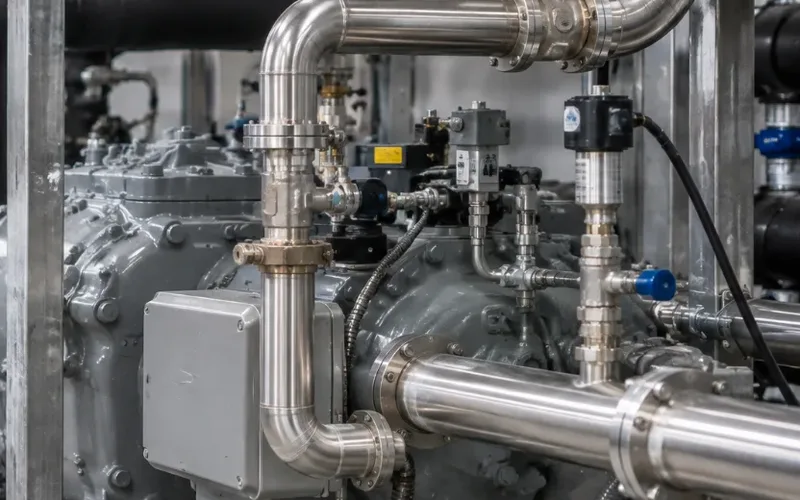
Brazed Plate
CO2
R-744 is a pressure problem, not a chemistry problem. The high-pressure brazed plate puts 316L and copper braze to work at ratings a standard plate cannot reach.
+ Learn More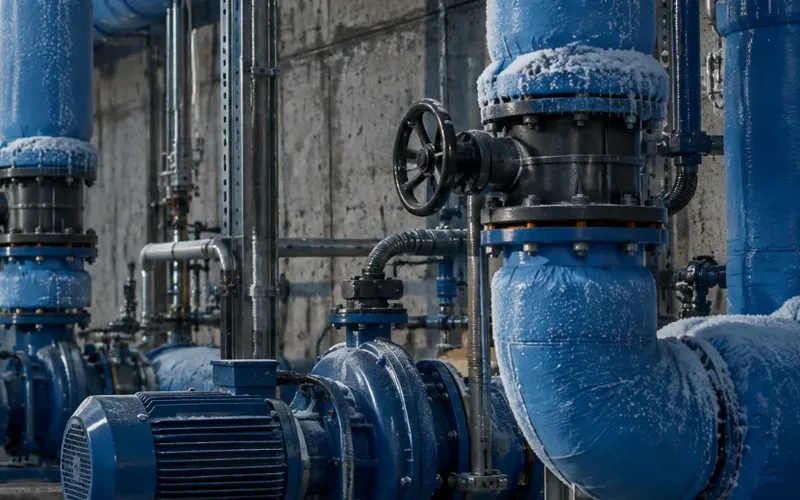
Brazed Plate
Fluid-to-Fluid
Liquid on both sides is the bread-and-butter brazed plate duty: copper braze on clean loops, with the chloride and strainer questions answered before the order.
+ Learn More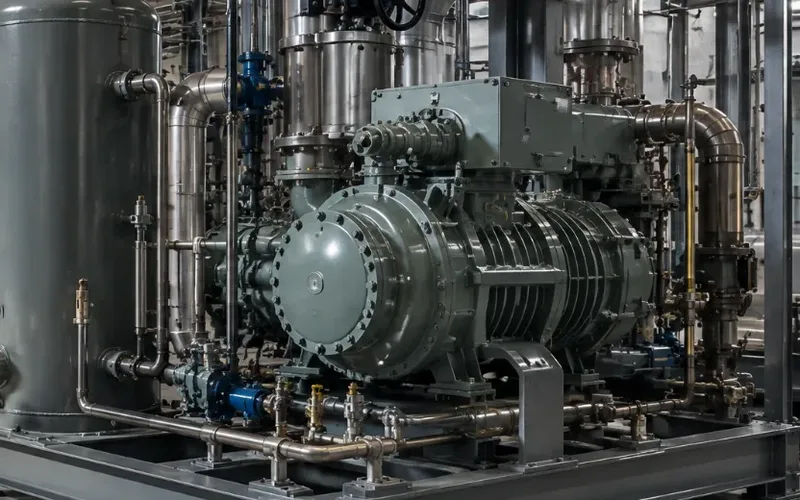
Brazed Plate
Refrigeration
For chillers and industrial refrigeration the braze follows the refrigerant: copper for HFC and HFO, nickel for ammonia, high-pressure plates for CO2.
+ Learn More
