
1-805-484-2992
Quotes - Engineering - SalesDairy processing
The dairy products that need a tube instead of a plate
Fluid milk belongs on a plate pasteurizer and most dairies have one. The tubular unit comes in for everything the plate cannot carry: heavy cream and half-and-half at high fat, yogurt and cultured products that must not be sheared, sour cream and dips, sweetened condensed milk, dairy desserts, ice cream mix at high solids, and any product with fruit, grain or inclusions. These products are viscous, protein-rich, and in the cultured cases carry a structure that a plate gap and its turbulence will break. In a tube-in-tube unit the product moves in a 1–3 in. bore at low velocity with nothing in the path to shear it.
The stainless questions in a dairy are set by the cleaning cycle rather than by the product. Milk and cream are near neutral and carry about 1,000 ppm chloride, modest beside a brine; the daily CIP adds the harsher exposure, with hot caustic at 160–185°F, an acid wash, and a chlorine-based or acid sanitizer in water that may itself carry 100–300 ppm chloride. A 304 tube survives the milk and can fail on the sanitizer. 316L on every product-contact surface, finished to 32 µin Ra and built to 3-A geometry where specified, is the dairy standard for that reason.
Fouling is the other dairy problem, and it is a wall-temperature problem.
Dairy product tubes are 316L at 32 µin Ra for 3-A product contact and the chloride in the daily acid wash; 304L is kept to the hot-water and chilled-water annulus. See Material & Construction for the grade comparison.
Low velocity for the culture, low wall temperature for the protein
A cultured product keeps its body only if it moves slowly through a full-bore tube with no shearing step, and whey protein fouls a wall above about 170°F, so the heating water runs close to the product and the 316L tube stays clean through a shift.
What the product asks for
Cream at 40% fat heats and cools slowly because the fat holds the heat; it is pasteurized at 166°F or above for 15 seconds (HTST) and cooled to 40°F, and it will churn if it is pumped too hard or sheared at a restriction, so the whole product path is kept at one bore and the velocity under about 3 ft/s. Yogurt and cultured products are cooled after fermentation from 110°F to 40°F and must arrive with their gel intact; a centrifugal pump or a sharp reduction turns set yogurt into drinking yogurt.
Whey proteins begin to denature near 160°F and deposit on a wall hotter than about 170°F, building a layer that cuts heat transfer and then burns. Milk minerals follow at higher wall temperatures. This fouling is the reason dairy heaters are designed on a small temperature difference between the heating water and the product rather than on steam, and why a dairy unit runs a chemical clean every day whether the gauges say it needs one or not.
The 316L unit for the dairy
The product tube is 316L, 1-1/2 to 3 in., corrugated for cream, desserts and mixes to hold turbulence at low velocity, and smooth for set cultured products. Interior finish is 32 µin Ra per 3-A, with product welds ground and the whole unit drainable on a slope; tri-clamp connections to 4 in., flanged above that. The utility is hot water in a 304L annulus held about 10–15°F above the product outlet on a heater, and chilled water or propylene glycol on a cooler, where the problem reverses: cream thickens at a cold wall and the glycol is held no colder than it has to be.
Regeneration between hot and cold product is normal on a cream pasteurizer and recovers most of the heating duty, done across a 316L tube wall with the pasteurized side at the higher pressure. Product-side rating follows the positive displacement pump's dead-head pressure, typically 150 psig at these viscosities, and the daily CIP sets the gasket choice: EPDM for the caustic and acid cycle, typically rated to 275–300°F for the occasional steam sanitization.
What to send for a dairy tubular unit
The product name tells us the fat, the solids and the structure; the rest is the plant's schedule and water. With these we can size a heater, regenerator and cooler that meet 3-A geometry where specified and your fouling interval.
- Product and its fat and solids content, and whether it is cultured or set
- Flow rate, inlet temperature, pasteurization temperature and hold, and final outlet temperature
- Pump type on the product side and the pressure at the exchanger inlet
- Hot water and chilled water or glycol temperatures available
- Required finish, 3-A conformance and any documentation on the product-contact surfaces
- CIP chemistry, sanitizer type and the chloride content of the plant water
Call and talk it through with an engineer: 1-805-484-2992
Dairy questions before the quote
Many dairies do, at reduced capacity, and accept the shorter run before fouling and the fat damage from the plate turbulence. A tubular unit sized for the cream runs at full rate, protects the fat globules with a smooth low-velocity path, and takes a 40% cream through pasteurization and cooling without the air incorporation a plate gap causes. If cream is a daily product rather than an occasional one, the tube pays for itself.
With a full-bore tube, a positive displacement pump set to a low speed, long-radius bends and a velocity under about 3 ft/s, so the gel is moved rather than sheared. The chilled annulus is held only as cold as the duty needs, since a cold wall thickens the layer against it and raises the pressure drop. A smooth 316L tube is used rather than a corrugated one, because the corrugation itself is a shearing surface for a set product.
Because chlorides from the chlorinated sanitizers used in daily CIP pit 304 over time, especially at the welds; the molybdenum in 316L improves pitting resistance, and the low carbon of the L grade protects the welds. 3-A Sanitary Standards call for 300-series stainless on product contact, with surface finish, drainability and cleanability requirements, and both 304 and 316 can meet the standard. So 316L is a durability choice as much as a compliance one.
Dairy practice is a full CIP at the end of every production day, and a mid-run rinse on long runs of high-solids product. The design goal is that the heat transfer does not fall off before that scheduled clean, which on cream and mixes means keeping the wall within a few degrees of the product with a close water-to-product temperature difference. A unit designed on 15 psig steam will foul in hours and will not meet the schedule.
Related
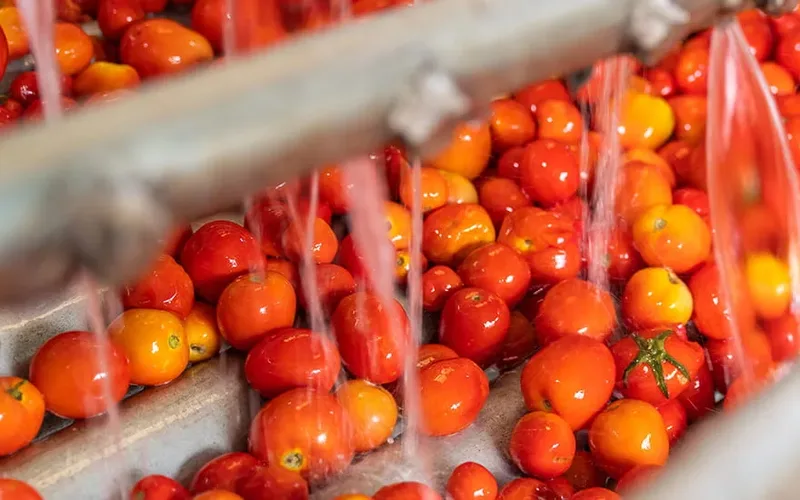
Tube-in-Tube
Diced Tomatoes
Tomato dice is soft, acidic and firmed with calcium chloride. Why that combination calls for a 3 in. full-bore 316L tube run slowly, and what crushes the dice.
+ Learn More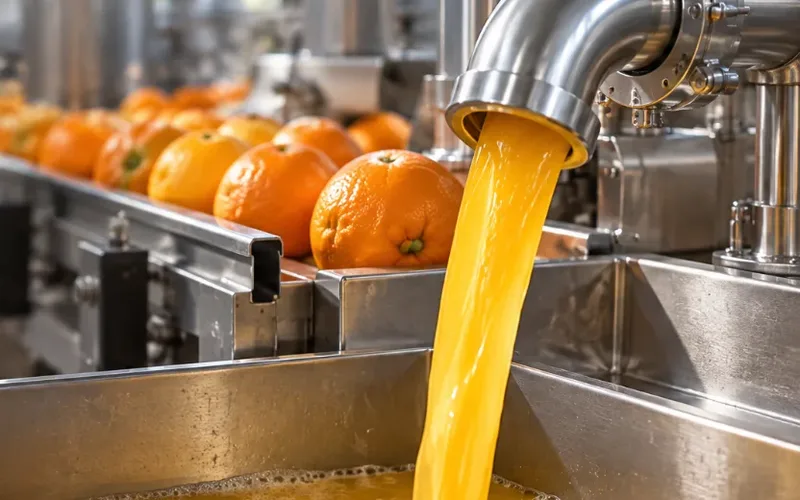
Tube-in-Tube
Juice Pulp
Citrus and fruit juices are acidic but not hard on 316L. Pulp, fiber and the chloride in the rinse water are what decide the tube on a juice pasteurizer.
+ Learn More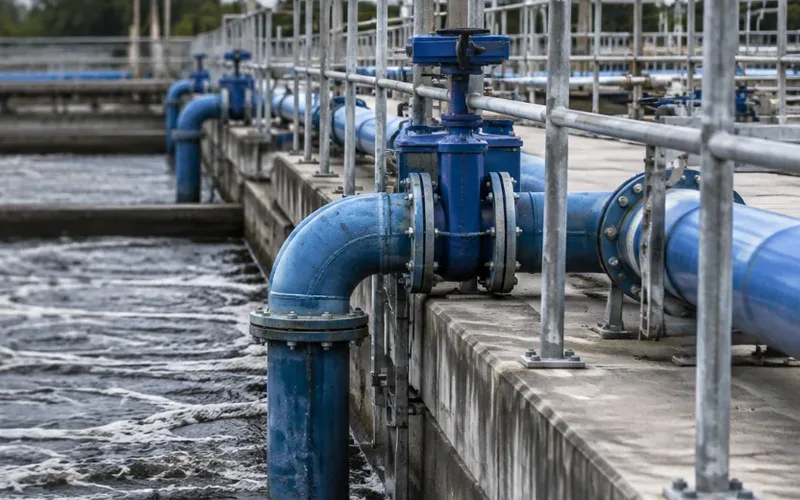
Tube-in-Tube
Waste Water
Digester sludge, plant effluent and process waste streams carry rags, grit, sulfide and more chloride than anyone expects. The tube and grade that survive them.
+ Learn More