
1-805-484-2992
Quotes - Engineering - SalesViscous products
Thick products and the wall that cooks them
A fruit puree, a rice pudding, a starch-thickened dessert or a vegetable baby food has two properties that defeat an ordinary exchanger. It is viscous, often several thousand centipoise at the inlet and thicker still as starch gelatinizes, so it moves in laminar flow with almost no mixing between the fast center and the slow layer at the wall. And it burns: the layer at the wall, left in place, cooks onto the metal, insulates it, and then chars. The heat has to pass through that layer to reach the center, so the wall gets hotter to compensate and the layer gets thicker, until the run stops.
A tube-in-tube unit is the construction that handles this, but only when two things are done. The product tube is corrugated, so that the slow wall layer is disturbed and swept back into the stream, and the utility is matched to the product so that the wall is never more than a few tens of degrees above the product it touches. Steam at 250°F against a pudding that scorches at 220°F is the classic mistake; hot water at 20–30°F above the product outlet, in a longer unit, cooks the same product with far less burn-on.
In stainless the grade is the easy part and the wall temperature is the hard part.
Purees and puddings run in 316L corrugated tube for the fruit acid and the daily caustic CIP; 304L serves the hot-water annulus, where no product is present. The Material & Construction page compares the grades.
Hot water, not steam, is the heating medium for a puree
A corrugated 316L tube keeps a thick product moving at the wall, and a hot-water annulus 20–30°F above the outlet holds that wall near, not far above, the 220°F where starch and sugar begin to burn, so runs between cleanings are usually much longer.
What the product does
These products are non-Newtonian: their apparent viscosity drops under shear and climbs again when they slow down, so the viscosity at the pump discharge and the viscosity in the tube are different numbers. Starch-based puddings also change as they heat, thin at first and then thickening sharply as the starch gelatinizes between 150 and 190°F, which can double the pressure drop halfway along the heater. Fruit purees at pH 3.2–3.8 are acidic and their sugars caramelize on a hot wall; dairy desserts add protein, which denatures and fouls at a lower wall temperature than sugar burns.
Flow is laminar at any practical velocity in a smooth tube, which means the outlet temperature a thermocouple reads is the center-line value and the product near the wall has been hotter for longer. For a pudding that is cooked, not just heated, that difference is part of the recipe and has to be understood before the unit is sized.
The stainless build that gets it through
The product tube is a corrugated 316L tube of 1-1/2 to 3 in. bore, the corrugation chosen for the viscosity: a deeper spiral for the thickest puddings, a shallower one for a pourable puree. Corrugation holds the product-side heat transfer coefficient well above the smooth-tube value at the same velocity and keeps the wall layer from settling in. Finish is 32 µin Ra, electropolished if the product is a nutritional or infant line, with tri-clamp ends and full drainability for the caustic-acid CIP that these lines run daily.
The annulus carries hot water on a closed loop heated by its own steam exchanger, so the water temperature is set to the product rather than to the boiler, and it is 304L because no product touches it. Product-side rating is 300 psig: positive displacement pumps on a thick product reach that against a closed valve or a plugged tube, and a 150 psig tube is not enough margin. Cooling after the cook is a second corrugated unit on chilled water or glycol, where the problem reverses and the product thickens at the cold wall.
What to send us for a viscous product
The viscosity figure is the one that matters most, and it is the one most often missing. If a rheology curve is not available, a measured value at two temperatures and a note on how the product behaves when it cooks will let us size the corrugation and the water temperature.
- Viscosity at inlet and at the cook temperature, or a flow curve if you have one
- Starch, sugar and protein content, and the temperature at which the product sets or burns
- Flow rate, inlet temperature, cook temperature and any hold time
- Pump type and discharge pressure at the thickest condition
- Whether the product carries pieces, and their size
- Available steam pressure or hot water loop temperature, and the cooling medium
- CIP chemistry and temperatures, and the required product finish
Call and talk it through with an engineer: 1-805-484-2992
Questions on viscous products
A scraped-surface unit is the right tool for products that set solid on a cold wall or carry more than about 10,000 centipoise at the outlet, and we will say so when that is the case. Below that range a corrugated tube-in-tube unit does the same job with no rotating seal, no blades to replace and a product path that cleans in place. Most purees and starch puddings sit comfortably in the tube-in-tube range.
On a hot-water design we hold the water inlet 20–30°F above the product outlet, and the wall sits between the two, so a product leaving at 200°F sees a wall close to 215°F. On a 15 psig steam design the wall is at 250°F irregardless of the product, and for a sugar or starch product that is the difference between a clean tube and a black one at the end of the shift.
Some, at the same velocity, but the comparison is misleading because the corrugated unit is shorter for the same duty. The real pressure-drop driver on a pudding line is the starch gelatinizing midway through the heater, which can double the viscosity in a few feet of tube, and we size the pump and the 300 psig product tube for that condition rather than for the inlet viscosity.
316L on the product tube. The fruit acids alone would be tolerated by 304L at these temperatures, but the daily CIP cycle of hot caustic followed by an acid rinse, and the chloride in the rinse water, are what pit a 304 tube over a season. The molybdenum in 316L buys the margin, and the low-carbon grade protects the orbital welds at the tube ends through years of thermal cycling.
Related
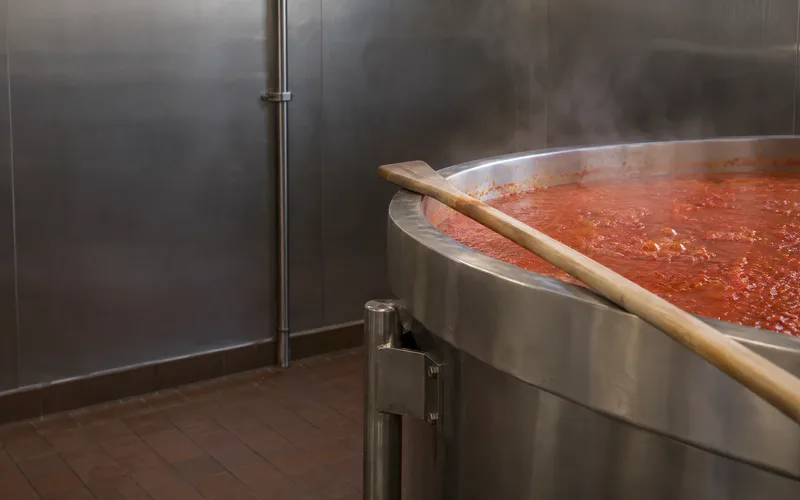
Tube-in-Tube
Sauce and Condiments
Ketchup, mustard, soy sauce, salsa and brines each pit stainless differently. The chloride-at-temperature math behind choosing 316L or duplex for a sauce line.
+ Learn More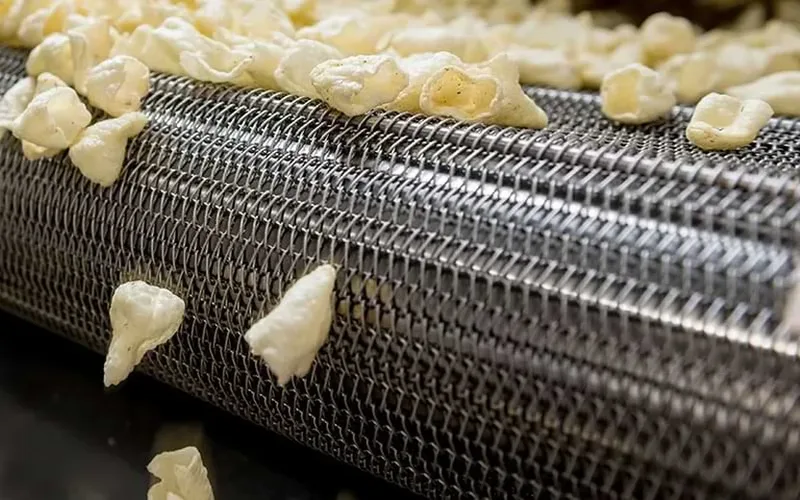
Tube-in-Tube
Solids in Suspension
Pieces, chunks and grains carried in a liquid need a bore they cannot bridge and a velocity that keeps them moving. Here is how the tube is chosen.
+ Learn More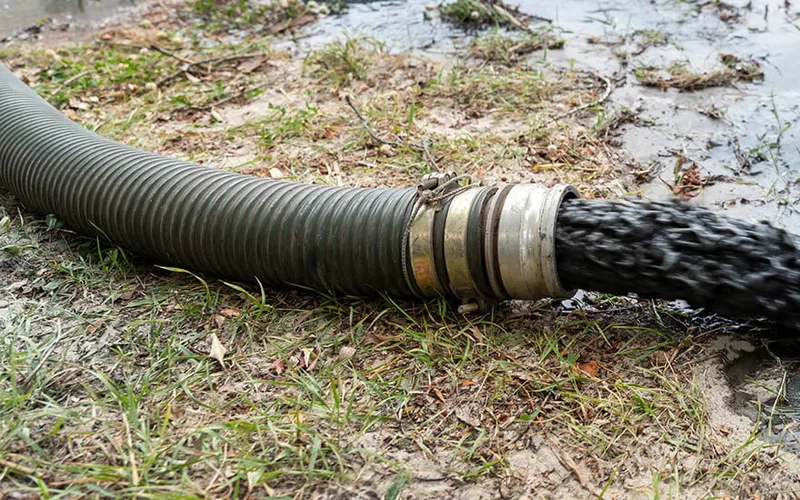
Tube-in-Tube
Fibers and Slurries
Fibers bridge narrow gaps and hard solids erode thin walls. The stainless tube-in-tube answer is an open bore, a heavier wall, and duplex when the slurry is salty.
+ Learn More