
1-805-484-2992
Quotes - Engineering - SalesCondiment lines
Sauces are the chloride problem in a food plant
Most of the stainless failures we see on food lines happen on the sauce cooker, and the arithmetic explains why. A tomato ketchup at 2% salt carries about 12,000 ppm chloride at pH 3.8; a soy sauce at 16–18% salt carries about 100,000 ppm; a pickle brine or a hot-fill salsa lands between. These products are cooked, hot-filled or pasteurized at 180–210°F, and some are held hot for an hour or more in a surge tank before filling. Chloride, acid and temperature are the three things that pit stainless, and a sauce line supplies all three every day of the week.
316L is the standard product tube because its molybdenum lifts the pitting resistance far above 304, but it is not a universal answer. Its working range of roughly 1,000 ppm chloride at ambient temperature in neutral water shrinks sharply with acid and with heat, and sauces run well past that figure. In practice 316L lives on a 2% salt sauce because the product is moving, the surface is cleaned daily and the acid is organic, and it can fail on a soy-type brine at 200°F within a few seasons. This page is about telling those two cases apart before the tube is ordered.
Particulates, viscosity and burn-on are handled as on any tube-in-tube unit; here the grade is the point.
Sauces up to about 3% salt run in 316L; soy, fish sauce and pickle brines carry 18,000 ppm chloride or more hot and are reviewed for duplex, 6-moly or higher. See Material & Construction for the grade comparison.
Two percent salt at 200°F is where 316L begins to work hard
A 2% salt sauce carries about 12,000 ppm chloride, and at 200°F the organic acid, the salt and the heat act together; 316L holds on a clean, moving, daily-cleaned line, and a soy-type sauce at 100,000 ppm needs 6-moly or higher.
What is in the sauce
Tomato-based sauces, ketchup, salsa, barbecue and pasta sauces sit at pH 3.5–4.2 with 1–2.5% salt, carry pulp or diced vegetables and are cooked at 190–210°F before hot-filling. Mustards and vinegar-based dressings run more acidic, to pH 3.0, with acetic acid rather than citric. Soy, teriyaki, fish and oyster sauces are the extreme case at 15–18% salt, and brined products such as pickles, olives and peppers pass a brine of 5–10% salt through the exchanger on the way to a hot-fill.
The second factor is time at temperature. A sauce that passes through a pasteurizer in two minutes is a mild duty; the same sauce circulated hot through the exchanger from a surge tank for an hour, or left standing in it over a break with the steam on, is a severe one, because pitting under a stagnant deposit is the usual way 316L fails on these lines.
The stainless build for it
For tomato, pasta and barbecue sauces the product tube is 316L, corrugated for the viscosity, 1-1/2 to 3 in. bore to pass the vegetable pieces, 32 µin Ra inside, with full drainability so no sauce stands in a low point between runs. Every product-contact fitting, tee, gasket ferrule and sample valve is also 316L, because a single 304 ferrule in a 316L line is the first thing to pit and the leak it produces is blamed on the exchanger.
For soy, fish and oyster sauces and for pickle brines the product side is reviewed for 6-moly or higher; 2205 duplex, rated at roughly 3,000–5,000 ppm in neutral water, serves only where testing or service history supports it. The annulus is hot water or steam in 304L. Product rating is 150 psig on a pumped pasteurizer and 300 psig on a cooker fed by a positive displacement pump.
What to send for a sauce exchanger
The salt percentage and the hottest, longest moment in the process are the two facts that choose the grade. The rest sizes the unit.
- Salt content by weight and the acid type, with the product pH
- Cook, pasteurize or hot-fill temperture, and how long the sauce stays hot
- Whether the sauce recirculates through the exchanger or passes once
- Viscosity at the cook temperature and the size of any pieces
- Flow rate and inlet temperature, and the duty if a regeneration section is wanted
- Steam pressure or hot water temperature available on the utility side
- Daily cleaning routine: caustic, acid, sanitizer and water chloride level
Call and talk it through with an engineer: 1-805-484-2992
Grade questions on sauce lines
For a line that runs the sauce through once, cleans every day and drains fully, yes, and that is the normal specification. The organic acid and 1–2% salt at 200°F are within what a clean, moving 316L surface tolerates. The failures we see come from sauce left standing hot in the tube, from a 304 fitting in the line, or from a surge loop that keeps the product at temperature for hours; those change the duty, not the grade.
When the salt is above about 3% by weight at cooking temperature, which covers soy, fish, oyster and teriyaki sauces and most pickle and olive brines, or when a lower-salt product is held hot in the exchanger for long periods. 2205 duplex has a PREN near 35 against about 24 for 316L and is highly resistant to chloride stress corrosion cracking at these temperatures. For hot, acidic, salt-saturated brines the step is to 6-moly.
Because a gasket joint is a crevice, and crevice attack in a chloride product starts well below the chloride level that pits an open surface. Sauce left under the gasket face over a shutdown concentrates as it dries, and the metal under it is oxygen-starved. The fix is a gasket that seals at the bore with no step, a drain at every low point and a rinse before the line stops, not a change of grade.
Only if it is built for the salty one. A plant that runs barbecue sauce on Monday and teriyaki on Tuesday needs the higher-alloy tube on both days, since the chloride exposure that matters is the worst product the tube sees, not the average. If the salty product is rare and short, a 316L unit with a thorough rinse after each run can be defended; if it is a regular shift, specify the higher alloy.
Related
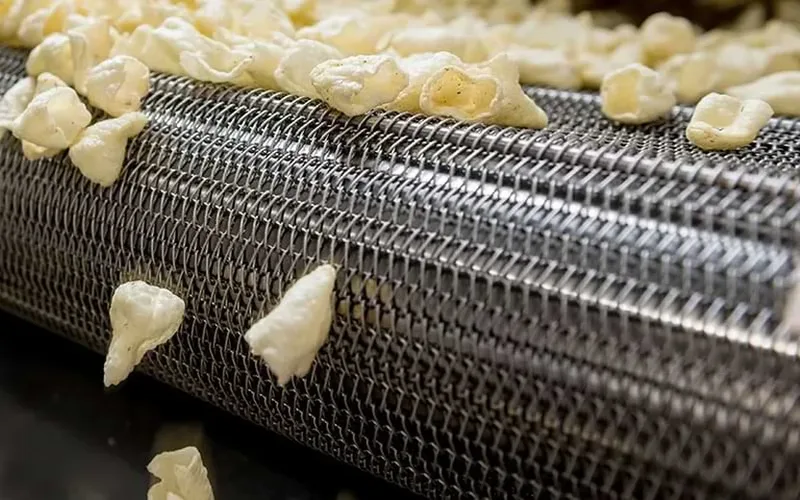
Tube-in-Tube
Solids in Suspension
Pieces, chunks and grains carried in a liquid need a bore they cannot bridge and a velocity that keeps them moving. Here is how the tube is chosen.
+ Learn More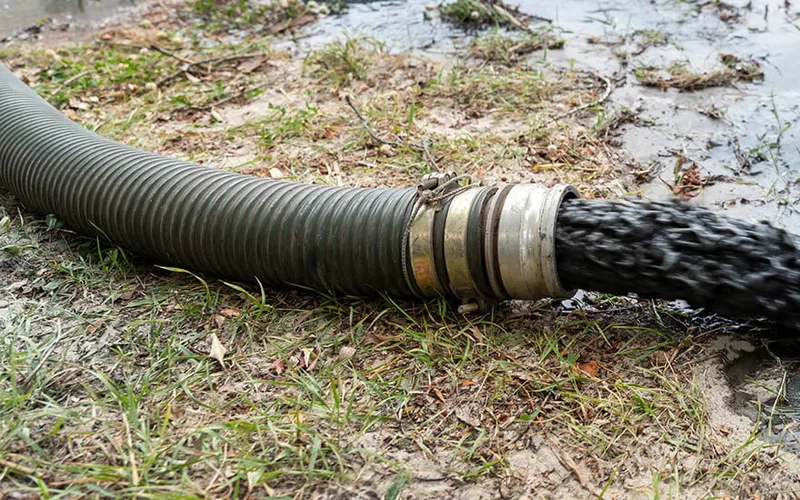
Tube-in-Tube
Fibers and Slurries
Fibers bridge narrow gaps and hard solids erode thin walls. The stainless tube-in-tube answer is an open bore, a heavier wall, and duplex when the slurry is salty.
+ Learn More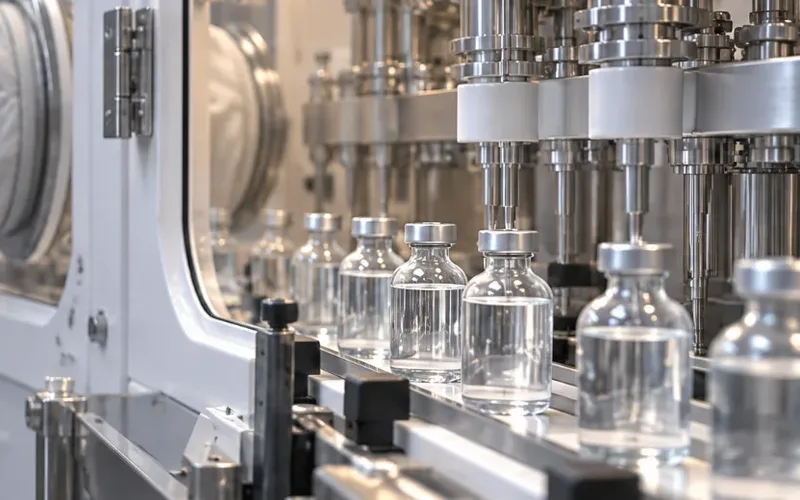
Tube-in-Tube
Aseptic Applications
Sterilizing a product at 250–285°F asks more of the stainless than any pasteurizer does. Grade, finish, welds and layout for an aseptic line.
+ Learn More