
1-805-484-2992
Quotes - Engineering - SalesSterile processing
Heating product to sterilization temperature and keeping it sterile
An aseptic line heats a product to 250–285°F, holds it long enough to achieve commercial sterility, cools it under pressure, and delivers it to a sterile filler without letting it touch anything that has not itself been sterilized. The heat exchanger sits at the center of all four steps. It is the heater, often the regenerator and the cooler as well, and its product path is the part of the line most likely to hide the dead leg, the crevice or the rough weld that lets an organism survive the steam sterilization before the run.
Tube-in-tube construction is the usual choice for aseptic duty on anything with viscosity or particles, because the product path is a single tube with one inlet, one outlet and nothing in between. The stainless questions are specific to the temperature. Above 250°F the product sits well past the point where chloride stress corrosion cracking of 304 and 316 begins, so chloride in the product, in the CIP water and in the condensate all matter; weld heat-affected zones need the low-carbon grade; and the surface finish is no longer only a cleaning convenience but the difference between a surface that sterilizes in the SIP cycle and one that does not.
The product-side pressure that keeps the product liquid at 285°F also sets the tube rating.
Aseptic product tubes are 316L with the carbon held at 0.03% for weld-zone resistance, electropolished where specified, and never 304 at sterilization temperature. Material & Construction explains how the grade is chosen.
At 285°F every chloride in the system counts
A 316L product tube is the minimum for sterilization duty, and the water that heats it, cleans it and condenses on it must be low in chloride too, or stress corrosion cracking starts in the hottest run long before the product shows any sign of it.
The aseptic duty
Products run aseptically include puddings, dairy desserts, nutritional beverages, plant-based milks, soups, sauces with particulates, fruit preparations and baby food. Sterilization temperatures of 250–285°F are reached in a heater, held in a sized hold tube for a residence time set by the product's heat resistance, and then the product is cooled in a second exchanger while a back-pressure valve keeps it above its boiling point. A pressure of 50–75 psig on the product side is common at the hold tube.
Before the run the whole product path is sterilized with steam or superheated water at 250–275°F and then cooled with sterile medium. Any pocket that does not reach temperature, a sample valve branch, an instrument tee, a poorly drained low point, is a contamination source, and so is a crevice or scratch deep enough to shelter spores from the SIP.
The stainless build for it
The product tube is 316L, low carbon by specification so that the welds and their heat-affected zones keep their corrosion resistance after the thermal cycling of daily SIP. Finish is 32 µin Ra for most foods and 20 µin Ra, often electropolished, for nutritional and pharmaceutical products; product welds are orbital, full penetration and inspected on the inside. Connections are tri-clamp to 4 in. with gaskets rated for 285°F, and the layout drains completely on a slope.
Because 316L is exposed to chloride stress corrosion cracking above about 140°F and the product runs some 145°F above that, the heating medium matters as much as the product: steam from a treated boiler, or hot water at low chloride, in a 316L annulus rather than 304L. For a salted or acidified product sterilized above 270°F the inner tube moves to 2205 duplex. Hold tubes are the same grade and finish as the exchanger, since they see the same temperature longer.
What we need for an aseptic exchanger
Aseptic sizing is a residence-time calculation as much as a heat transfer one, and the grade and finish follow from the product and the water. Send us the following and we will return the heater, hold tube and cooler as a set.
- Product, its viscosity at the hold temperature and any particulates
- Sterilization temperature and required hold time, or the target lethality value
- Product flow rate and inlet temperature from the balance tank
- Salt and acid content of the product, with pH
- Heating medium: steam pressure or hot water temperature, and its chloride level
- SIP conditions and the CIP program, including chemicals and temperatures
- Required product finish, electropolish, and documentation such as MTRs and weld logs
Call and talk it through with an engineer: 1-805-484-2992
Aseptic questions, answered before the quote
Because sterility is achieved in the hold tube, not in the heater, and the two are sized together. The heater brings the product to temperature; the hold tube keeps the slowest-moving element there for the required time, which means its length is set by the flow, the bore and the velocity profile of the product. It is built in the same 316L, the same finish and the same drainable layout as the exchanger.
Not by us for sterilization duty. 304L has no molybdenum, pits at around 200 ppm chloride even at room temperature, and at 250°F and above is at real risk of stress corrosion cracking from the chloride in ordinary water. The annulus of a cooler that sees clean, cool water can be 304L; the heater annulus and every product-contact surface are 316L or better.
It removes 0.0005–0.001 in. of metal, cuts the Ra by roughly half and leaves a surface with a higher chromium-to-iron ratio, which means fewer sites for a biofilm to anchor and a passive layer that recovers faster after SIP. On a 20 µin Ra tube it is the step that makes the diffrence for nutritional and pharmaceutical products; on a 32 µin Ra food tube it is optional and specified by the customer.
Any branch off the product path must be short enough that steam reaches its end during SIP: the usual rule is a branch no longer than two to three times its diameter, measured from the wall of the main tube. On the exchanger that governs instrument tees, sample points and the drain valves at the low point. We mount temperature and pressure elements in flush tees and keep the drain at the end cover.
Yes, with care. Regeneration puts sterile outgoing product against unsterile incoming product across a single tube wall, so the sterile side must be held at the higher pressure and the tube must be leak-tested and documented. Product-to-product regeneration recovers more than half the heating duty, and on a tube-in-tube unit it is done with a full-bore 316L inner tube so that particulates pass both sections.
Related
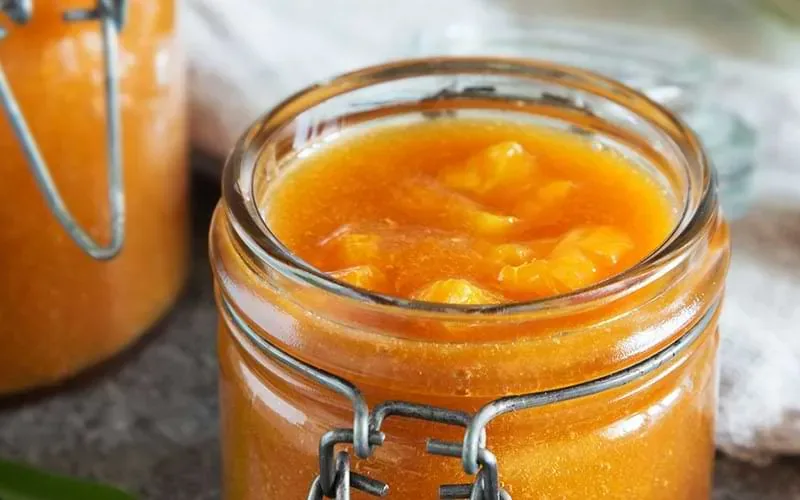
Tube-in-Tube
Puddings & Purees
Thick products move in laminar flow and scorch on a hot wall. How a corrugated 316L tube and a hot-water utility get a pudding or puree through without burn-on.
+ Learn More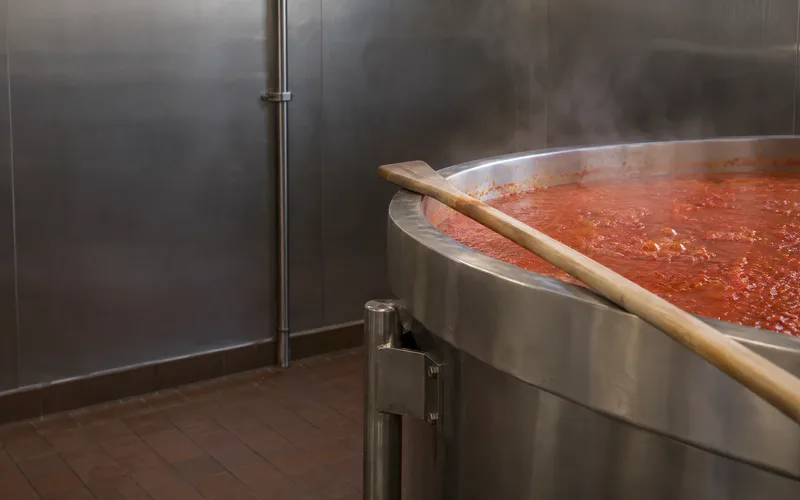
Tube-in-Tube
Sauce and Condiments
Ketchup, mustard, soy sauce, salsa and brines each pit stainless differently. The chloride-at-temperature math behind choosing 316L or duplex for a sauce line.
+ Learn More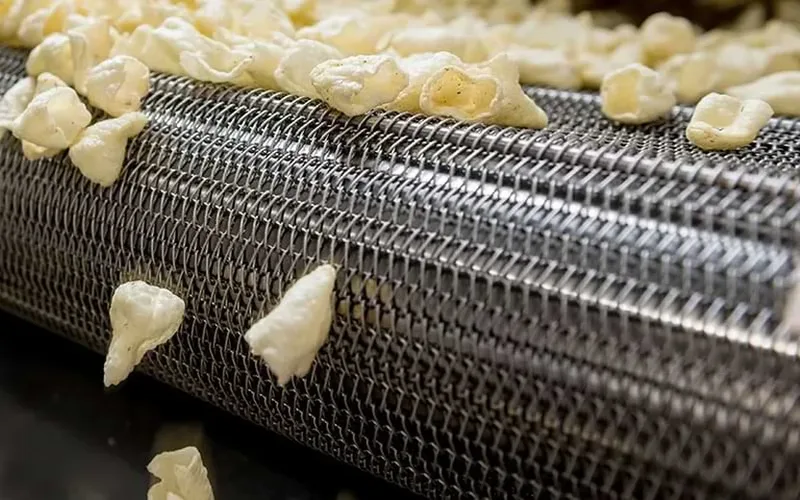
Tube-in-Tube
Solids in Suspension
Pieces, chunks and grains carried in a liquid need a bore they cannot bridge and a velocity that keeps them moving. Here is how the tube is chosen.
+ Learn More