
1-805-484-2992
Quotes - Engineering - SalesWhat makes a shell and tube sanitary
The product side, taken apart
A sanitary shell and tube is an ordinary tube bundle on the utility side and a different animal on the product side. The tubes and the product heads are 316L, every product-contact surface is polished to 32 µin Ra or better, the tubes are orbital-welded or seal-welded into the tubesheet with no crevice at the joint, the product channels slope so nothing pools, and the connections are tri-clamp ferrules through 4 in., flanged with a sanitary gasket above that. The shell side, which only sees culinary steam, hot water or glycol, can be 304L with a mill finish and ordinary clamps.
This matters because the surface is the product-side specification. A 32 µin Ra wall on 316L typically holds up to the 160–185°F caustic step of a CIP cycle and a 250–275°F SIP without roughening, where a 304 wall at the same finish can eventually pit under the chlorinated rinse and becomes a place for biofilm to anchor. Food, beverage, dairy and nutraceutical lines all start here; the deeper hygienic design rules for each product belong on the pages we link to below.
The product side is 316L polished to 32 µin Ra; the shell can stay 304L on culinary steam or hot water, and gaskets go to EPDM or FKM per the cleaning chemistry. The Material & Construction page compares the grades.
Our job on this page is the metal: which grade, which finish, which joint, and which gasket survives the chemistry.
Shell & Tube Construction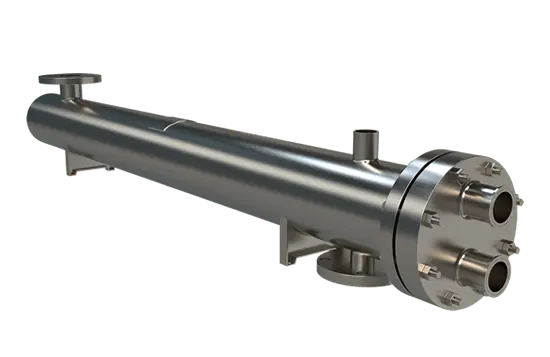
The sanitary product side, specified
These are the values a sanitary shell and tube is built to unless your product or your cleaning cycle moves them.
| Condition | Typical value |
| Product-side material | 316L tubes, tubesheets and heads; dual-certified 316/316L |
| Product-side finish | 32 µin Ra (0.8 µm) mechanical polish; 20 µin Ra or electropolish to order |
| Tube joint | Orbital- or seal-welded, flush and ground; expanded-only joints not used on product |
| Connections | Tri-clamp to 4 in.; flanged with sanitary gasket at 6 in. and larger |
| Drainability | Tubes and heads sloped; product low point at the outlet ferrule |
| CIP / SIP | Caustic at 160–185°F; steam at 250–275°F |
| Gaskets | EPDM standard, steam grade for SIP; FKM for oil-bearing product, checked against caustic |
| Shell side | 304L or 316L, 150 psig at 350°F; culinary steam, hot water or glycol |
| Tubesheet | Single, or double with a vented gap where the line cannot risk cross-contamination |
A sanitary exchanger laid out so every product-wetted surface empties by gravity when the line stops: sloped shells and heads, no pockets behind baffles and connections at the low points, so neither product nor cleaning solution is left standing between runs.
Choosing the sanitary stainless build
316L on the product side, and why not 304
The chemistry that reaches a sanitary product side is not the product, it is the cleaning. Chlorinated sanitizer at a few hundred ppm, a caustic wash at 185°F, an acid step to pull milkstone or beer stone, then a steam cycle. Each one alone is within the reach of 304; together, cycled daily for years, they find the weld heat-affected zones and the tube-to-tubesheet corners first. The 2–3% molybdenum in 316L is what moves the typical pitting threshold from about 200 ppm chloride to about 1,000 ppm and keeps a polished wall polished. The cost difference on a tube bundle is small against the price of a product recall traced to a pit.
Finish, polish and the passivation after it
A 32 Ra mechanical polish is the common product-contact finish for food and dairy and is what most sanitary specs mean by polished. Twenty Ra and electropolishing belong to pharma and to products that cling, like protein-rich or sugary streams, and cost more per square foot of tube. Whatever the finish, the unit is passivated after fabrication, citric or nitric per ASTM A967, to strip the free iron the polishing left behind. Passivation is not polishing: it changes the surface chemistry, not its roughness, and a unit polished but not passivated can show rust bloom at the welds within weeks of wet service.
- 32 µin Ra: food, beverage, dairy product contact
- 20 µin Ra or electropolished: pharma, biotech, sticky or protein products
- Passivation per ASTM A967 after every polish and every weld repair
- Finish certificate and MTRs supplied with the unit where specified
The mistake: a sanitary unit that will not drain
The common sanitary failure is a horizontal bundle whose tubes are level and whose product head has a flat bottom. The unit passes its leak test and its first CIP, and then every cycle leaves a film of product in the low spots of the tubes and a puddle in the head that the rinse never reaches. The line starts failing swab tests in the second month. The cure is in the drawing: a slope on the bundle of a degree or two toward the outlet, a head whose lowest point is the outlet ferrule, and a mounting that keeps that slope on the plant floor. Ask for the drainability to be shown on the general arrangement, not assumed.
Double tubesheet, or not
A single tubesheet with welded tube joints is sound for most food and beverage duty where the utility is culinary steam or potable hot water and a leak would be found at the next pressure test. The double tubesheet earns its cost when the utility is glycol, non-culinary steam or a loop with treatment chemicals, or when the product is one you cannot afford to loose a batch of. Two sheets with a vented gap mean a weeping tube joint vents to atmosphere instead of into the product. It adds length, a little pressure drop and a line item, and it is one of the first things a pharma auditor looks for.
Sanitary build questions
Yes, when the shell fluid is culinary steam, potable hot water or a glycol loop. The shell never touches product, so it needs the grade its own fluid needs, and 304L with a mill finish is enough for those three. We go 316L on the shell when the plant washes the exterior with chlorinated sanitizer every shift, or when the utility is a treated loop with chloride in it.
EPDM typically handles caustic and hot water to about 275–300°F, compound-dependent, and is the default on tri-clamp joints and heads. It swells in oils and fats, so an oil-bearing product or a solvent-based cleaning step moves the gasket to FKM, which is weaker in hot caustic and steam. Tell us the full CIP recipe, including the sanitizer, and we will pick the elastomer for the worst step rather than the product.
For low-viscosity, particle-free product at modest pressure, a plate unit is cheaper and tighter on approach. The shell and tube wins when the product carries pieces that would bridge a plate gap, when steam is the utility, when the design pressure passes a plate frame, or when the line insists on a welded product path with no gaskets between plates. Product with large solids goes to a tube-in-tube instead.
We check the finish with a profilometer and record the Ra on the product surfaces, hydrotest both sides, and run a dye-penetrant check on the tube welds where the spec calls for it. Passivation is documented, and the MTRs for the 316L tube, sheet and fittings travel with the unit where the order requires them. A boroscope look down the tubes is available for lines that want to see the weld roots themselves.
Write the Ra number, not a polish grit, because grit numbers do not translate between shops. Thirty-two Ra µin covers food, beverage and dairy; 20 µin Ra or an electropolish is the pharma and sticky-product range. Specify it for the tubes and the heads together, since a polished tube in an unpolished head is still an unpolished product path at the point that matters most.
Related
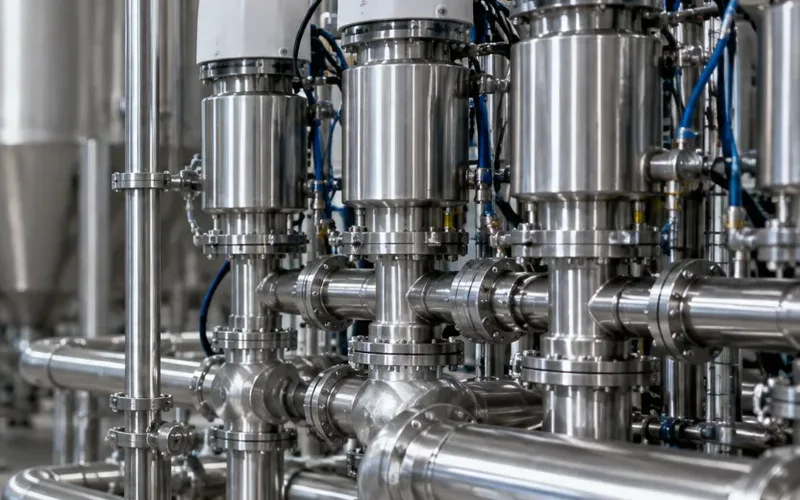
Shell & Tube
3A Sanitary
Shell and tube units built to the 3-A tubular standard: 300-series product contact, 32 µin Ra, radiused corners, no exposed threads and a drawn-in drain path.
+ Learn More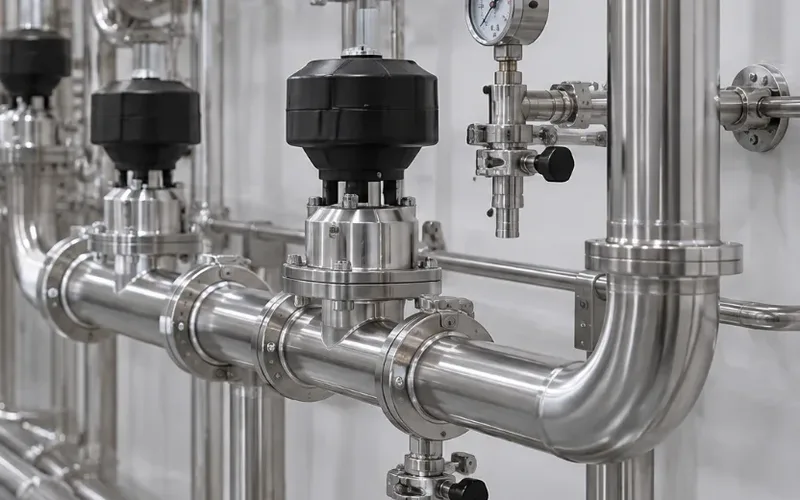
Shell & Tube
Pharmaceutical
WFI and purified water shell and tube units in electropolished 316L with a vented double tubesheet, BPE surface designations and full material traceability.
+ Learn More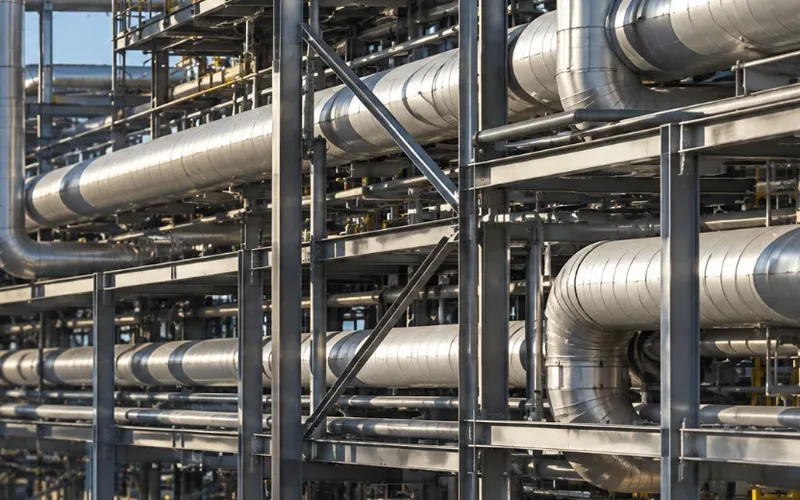
Shell & Tube
Industrial
Flanged, mill-finish shell and tube units for plant utility and process duty, with the shell in steel or stainless and the tubes in the grade the water demands.
+ Learn More