
1-805-484-2992
Quotes - Engineering - SalesHeat exchangers for WFI, purified water and point of use
Where the water is the product
In a pharmaceutical plant the exchanger's product is usually water: water for injection held hot in a loop near 176°F (80°C), purified water that must stay within its conductivity and TOC limits, and the point-of-use coolers that drop a hot WFI draw to a usable temperature at a filling line or a vessel. The water carries nothing to foul a tube, so the thermal design is easy. The hard part is that any metal ion, any rouge particle and any cross-leak from the utility ends up in a drug, which is why the construction is dictated by ASME BPE, where specified, and the plant's validation package rather than by heat transfer.
That package asks for 316L on every water-contact surface, with the alloy's sulfur held in the range that lets orbital welds penetrate evenly; an interior electropolished to a BPE surface designation, with 20 µin Ra or finer the usual target; tube ends welded to the tubesheet and polished so the joint shows no crevice; a double tubesheet with a vented, inspectable gap between water and utility; a product path that drains completely to a low-point valve; and a document set with MTRs, weld maps, finish readings and passivation records that a validation engineer can file.
Pharma product sides are 316L with controlled sulfur for orbital welding, electropolished to 20 µin Ra or finer; nothing lower in the alloy family is offered on the water side. The Material & Construction page compares the grades.
This page is the stainless build for that duty. The process side of pharma and biotech is covered in depth on the page we link to below.
Shell & Tube Construction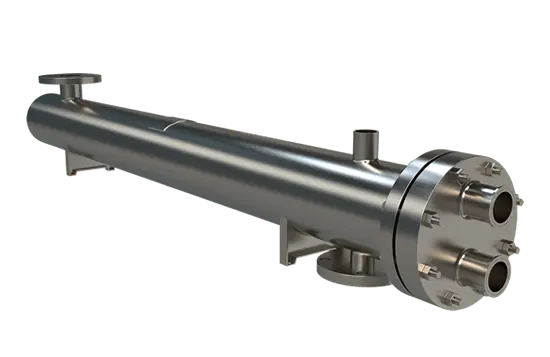
The pharma water-side build
Values for a WFI or purified-water shell and tube built to ASME BPE; the site's water system specification governs where it is stricter.
| Condition | Typical value |
| Water-contact alloy | 316L, dual-certified, sulfur controlled for orbital welding, full heat traceability |
| Interior finish | Mechanically polished then electropolished; 20 µin Ra typical, 15 µin Ra to order |
| BPE surface designation | SF4 (15 µin Ra max, electropolished) or SF5 common for WFI; SF1–SF6 as specified |
| Tubesheet | Double, with vented open gap; water-side sheet welded, polished and electropolished |
| Tube joint | Orbital- or seal-welded flush; weld map and boroscope record supplied |
| Loop temperature | Hot WFI near 176°F; point-of-use draw cooled to the use temperature |
| Utility side | Plant steam, chilled water or glycol in a 304L or 316L shell, 150 psig at 350°F |
| Connections | Tri-clamp hygienic ferrules on the water side; flanged or tri-clamp on utility |
| Documentation | MTRs, weld log, Ra readings, passivation and electropolish certificates, hydrotest |
Two tubesheets at each end of the bundle with a vented gap between them, so a leak at either tube-to-tubesheet joint drains to atmosphere instead of crossing from the utility into purified water or product. It protects the joint, not a hole in the tube wall.
The stainless decisions behind a pharma exchanger
316L only, and which 316L
There is no debate about 304L here; the water-contact grade is 316L, and the question is which heat of it. Orbital welding of thin tube is sensitive to the sulfur content of the alloy, and a tube with sulfur at one end of the allowed range welded to a fitting at the other end gives an arc that wanders and a root that does not fully penetrate. BPE addresses this by narrowing the sulfur range for weldable product-contact tube, and we buy tube and fittings against that range and keep the heat numbers on the weld map. The 2–3% molybdenum in 316L is also what resists the chloride left behind by a sanitizer or an ozone step, keeping the electropolished surface from pitting between validations.
Electropolishing, rouge and repassivation
Mechanical polish to 32 µin Ra, then electropolishing that removes 0.0005–0.001 in. of surface, cuts the Ra by about half and raises the chromium-to-iron ratio at the surface, is how a 20 µin Ra interior is produced. The chromium-rich surface is what slows rouging, the thin iron-oxide film that hot WFI grows on stainless over months. Rouge is not a leak and not a structural problem, but it is particulate in the water and a validation finding, and a derouge-and-repassivate cycle takes the loop down. A well electropolished, well passivated 316L bundle rouges slowly; a mechanically polished one typically rouges sooner.
- Electropolish after the final weld, then passivate per ASTM A967
- Ra measured per surface and recorded against the BPE designation
- Chromium-to-iron ratio reported where the specification asks for it
- Derouging compatibility stated so the plant's chemistry does not strip the finish
The double tubesheet and the gap
A pharma exchanger uses two tubesheets at each end with an open space between them. The water-side sheet is welded and polished to the same standard as the tubes; the utility-side sheet holds the shell pressure. If a tube-to-sheet weld ever weeps, the fluid shows in the gap and vents to a drain rather than crossing to the other side. The gap is left open, or vented through a sight, so an operator can see it, and the utility-side pressure is often set below the water-side so that any leak would push water out rather than steam or glycol in.
The mistake: a point-of-use cooler with a dead leg
A point-of-use cooler sits off the hot loop and sees flow only when someone draws. If the branch from the loop to the cooler is long, or the cooler's water side holds a pocket that does not drain back, that pocket cools, sits, and grows biofilm between draws. The exchanger did nothing wrong; the piping made it a dead leg. We size the water side to drain fully to the loop or to a low-point valve, keep the branch short, and when the plant allows it, design the cooler to be flushed by the hot loop between uses so the water in it is never still for long.
Questions on WFI and purified water
SF4, the finest electropolished designation at 15 µin Ra max, is the common choice for WFI and purified water; SF5 and SF6 (20 and 25 µin Ra) suit sites that accept a coarser electropolish. SF1 through SF3 are mechanically polished product-contact finishes, used where electropolishing is not specified. Specify the designation on the drawing for each surface so the finish is measured where it matters.
Yes, with the double tubesheet keeping the steam and its treatment chemicals on their own side of the gap. Plant steam at 15–50 psig heats a WFI loop well; the shell runs 304L or 316L at the usual 150 psig rating. If the site insists that only clean or pure steam touches the exchanger, we build the utility side to the same surface standard, which adds cost that a double tubesheet alone avoids.
Yes. Any water left in a tube or a head after the loop is drained or after a sanitization is water nobody controls, and the hot loop depends on no pocket cooling below its validated temperature. The bundle is sloped to a low-point drain, the heads are shaped so the outlet is the lowest point, and the drain is a hygienic valve, not a plug.
A copper-brazed plate puts copper in the water path, which GMP practice and BPE material rules exclude, and a gasketed plate leaves elastomer in contact across hundreds of edges that a validation team must qualify. An all-welded 316L shell and tube with a double tubesheet has one gasket at each ferrule and a water path that can be electropolished, inspected with a boroscope and documented weld by weld.
Related
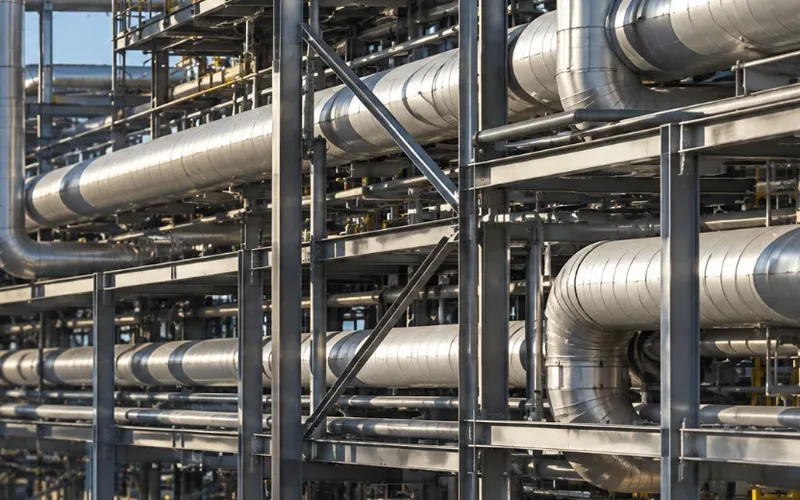
Shell & Tube
Industrial
Flanged, mill-finish shell and tube units for plant utility and process duty, with the shell in steel or stainless and the tubes in the grade the water demands.
+ Learn More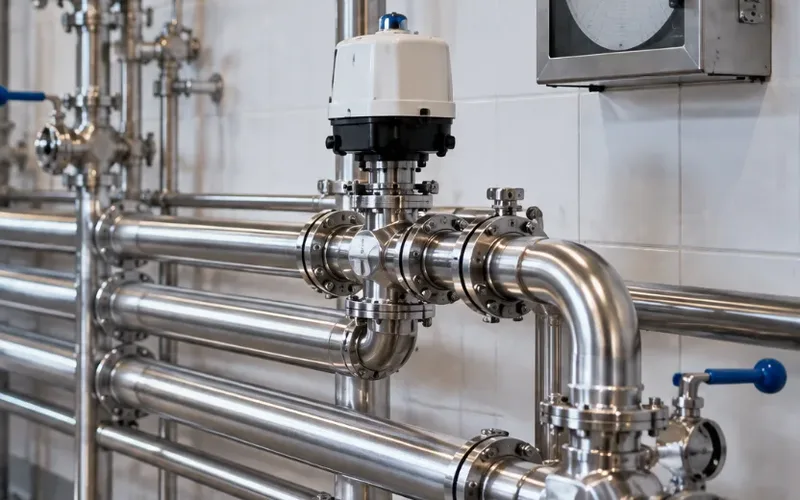
Shell & Tube
Sanitary
Shell and tube units who's product side is 316L, polished to 32 µin Ra, tri-clamped and sloped to drain, with a double tubesheet when the line cannot risk a leak.
+ Learn More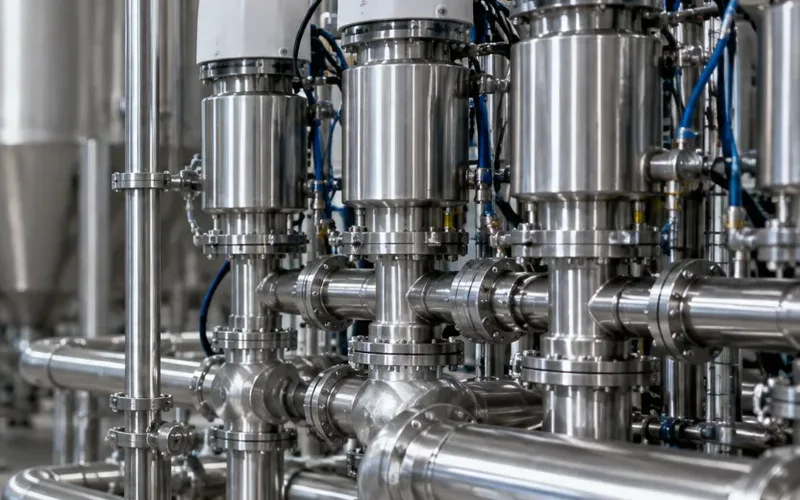
Shell & Tube
3A Sanitary
Shell and tube units built to the 3-A tubular standard: 300-series product contact, 32 µin Ra, radiused corners, no exposed threads and a drawn-in drain path.
+ Learn More