
1-805-484-2992
Quotes - Engineering - SalesStainless in the plant: where it pays and where it does not
Industrial buyers do not choose stainless for its appearance. They choose it because a carbon steel shell rusts into the condensate, because admiralty brass tubes fail on ammonia or on a tower with too much chlorination, because copper carries over into a product that cannot have it, or because the exchanger is on a corrosive stream and the alternatives are exotic alloys at several times the price.
All five of our exchanger types, plus coils, are built in stainless for industrial service. Shell-and-tube carries the high pressures, the dirty streams and the condensing and boiling duties; gasketed plate-and-frame takes the close approaches on liquid-to-liquid duty and opens for cleaning; brazed plate packs the most surface into the smallest envelope for clean fluids at pressure; tube-in-tube handles slurries and streams with solids; embossed plate heats and cools tanks, troughs and flue gas where a tube bundle will not fit. The construction is picked first, from the fluids and the pressure; the grade is picked second, from what corrodes.
This page covers the markets. The grade ladder itself, from 304L to titanium, is on the material and construction page, and the acid, caustic and chloride limits are on the corrosive service page.
Industrial plants run 304L on steam, condensate and clean process streams, 316L wherever tower water or chlorides appear, and 2205 duplex or titanium on brackish water and seawater. Grade limits are set out on Material & Construction.
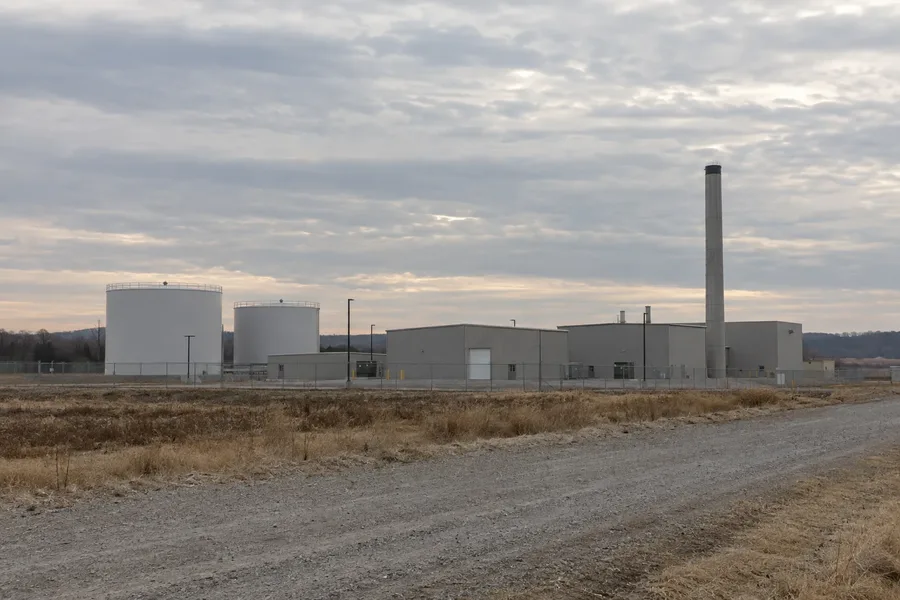
Shell and tube
- 150 psig and 350°F standard, higher to order
- Condensing, boiling and dirty streams
- Bundle pulls for cleaning both sides
Plate and frame
- 2–5°F approach on liquid-to-liquid duty
- Opens on site, grows by adding plates
- Gasket limits of 230–350°F by elastomer
The industrial markets and what each asks of the metal
Each market has a fluid that sets the grade and a duty that sets the construction.
Chemical and petrochemical
- Reactor jacket heating and cooling with 316L shell-and-tube or embossed plate
- Solvent recovery condensers in 304L; acid-bearing overheads in 2205 or 6-moly
- Nitric acid coolers in 304L, since molybdenum gives nothing in nitric
- TEMA class B or R and ASME Section VIII Div 1 as the plant specifies
- Material test reports and heat-number traceability as the order requires
Power generation and district energy
- Steam-to-water converters in 304L shells with 316L tubes on treated loops
- Plate-and-frame between a district loop and a building at a 2–5°F approach
- Sample coolers, seal coolers and lube oil coolers in 316L on tower water
- Condensate coolers where iron pickup from carbon steel is not acceptable
- PED marking in the EU or CRN in Canada, where required
Water, wastewater and HVAC
- Digester sludge heating in tube-in-tube or wide-gap plate, 316L for chlorinated effluent
- Cooling tower isolation exchangers with 316L plates, titanium above 1,000 ppm chloride
- Biogas and flue-gas heat recovery in embossed plate banks
- Chilled water and glycol loops in brazed plate where the water is clean
- Reclaimed water duties sized for the chloride it carries, not the city supply
Marine and coastal
- Seawater-cooled units with titanium tubes or plates and a 316L shell or frame
- Brackish intake water on 2205 duplex to about 3,000–5,000 ppm chloride
- Engine jacket water and lube oil coolers in 316L on the fresh side
- Stagnant seawater during layup drained, never left in a 316L unit
- Class society and CRN documentation where the vessel or site requires it
Tower water sets the grade on half the plant
Nearly every industrial cooler, condenser and oil cooler rejects heat to the cooling tower, and the tower's water, not the process, decides the tube or plate grade. A tower at 4–6 cycles can turn a 150 ppm makeup into 600–900 ppm chloride, and chlorine dosing adds an oxidizer. 304 is typically good to about 200 ppm and is at risk on most tower water; 316L typically holds about 1,000 ppm in flowing water; above that, and on any tower water that runs warm, 2205 duplex or titanium plates take over.
Pressure and temperature by construction
Shell-and-tube is the construction for anything above the gasket limits: a 150 psig shell at 350°F is standard and 300 psig and higher is built to order, with steam at 100 psig and 338°F routine. Gasketed plate units stop where the elastomer does, typically NBR near 230°F, EPDM near 275–300°F and FKM near 350°F on oils, at 150 psig frames with 300 psig to order. Brazed plate has no gasket and carries 435–650 psig as a matter of course, which is why refrigerant and high-pressure glycol duties land there.
Where stainless is the wrong answer
Hydrochloric acid, hot concentrated sulfuric acid and seawater at temperature are not stainless duties, and a quote that says 316L for them is a quote for a failure. Titanium answers seawater and wet chlorine; 904L answers dilute sulfuric and 6-moly many warm chloride duties; HCl leaves our material range entirely and we say so. Conversely, a clean steam-and-condensate duty rarely needs more than 304L, and specifying 316L there buys nothing but cost.
Codes and documentation as specified
Industrial units are supplied with the ASME Section VIII Div 1 stamp, TEMA class, PED module or CRN registration the specification calls for, each applied where required rather than assumed on every unit. Where specified, material test reports tie each tube, plate and shell course to it's heat number, and a pressure test report to the applicable code travels with the exchanger where the order requires it. Tell us the code and the jurisdiction with the duty, since both change the thickness and the price.
What industrial buyers ask before a quote
When the fluid on that side carries chlorides above about 200 ppm, an acid other than nitric, or a chlorinated biocide, or when the plant cleans with hypochlorite. Steam, condensate, treated closed-loop water, lube oil and most hydrocarbons are 304L duties. The two grades can be mixed in one exchanger: 304L shell on the steam side with 316L tubes on the tower water side is a common and economical build.
Usually the duty transfers but the surface does not, because stainless has a lower thermal conductivity than carbon steel and far lower than copper or brass tubes. A direct swap of a copper-alloy bundle for 316L at the same tube count loses capacity, so we re-rate from the duty and generally add length or tubes. Send the existing drawing or nameplate and the current operating data and we size the stainless equivalent from the heat load.
Shell-and-tube or brazed plate. A gasketed plate frame at 300 psig is a special order and the gaskets remain the weak point; brazed plate carries 435–650 psig as a standard rating but suits only clean fluids with no solids and a channel gap of 1–3 mm. For a fouling or corrosive chemical stream at that pressure, a shell-and-tube rated to the pressure in 316L or duplex, with a removable bundle if the shell side fouls, is the usual answer.
Yes, as titanium tubes and tubesheets in a shell-and-tube with a 316L or duplex shell, or as titanium plates in a gasketed plate-and-frame on a stainless-clad frame. Grade 2 titanium handles seawater at normal cooling temperatures and flows, with Grade 7 or 12 quoted above about 160°F, and its conductivity is close to stainless and a thin wall keeps the surface penalty small. The process side stays in the stainless grade that process requires, so only the seawater-wetted parts carry the titanium cost.
Related
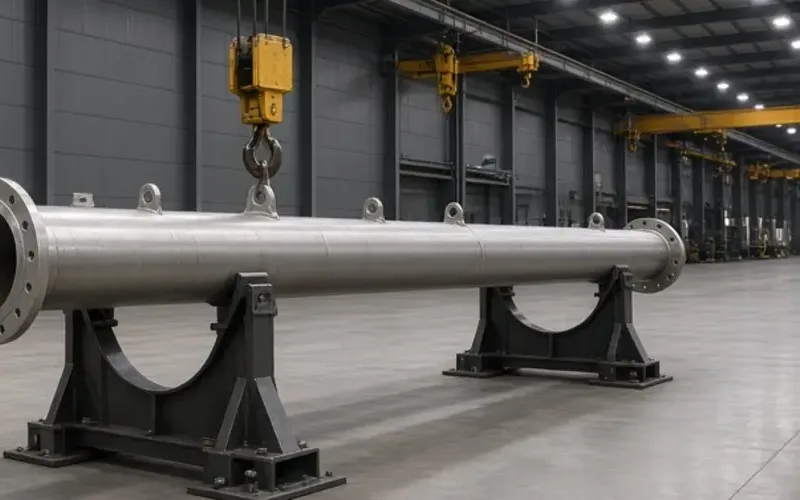
Shell & Tube
Shell & Tube
Code-stamped stainless shells and tube bundles for tower water, steam, process liquids and sanitary product, sized and built to the duty you send.
+ Learn More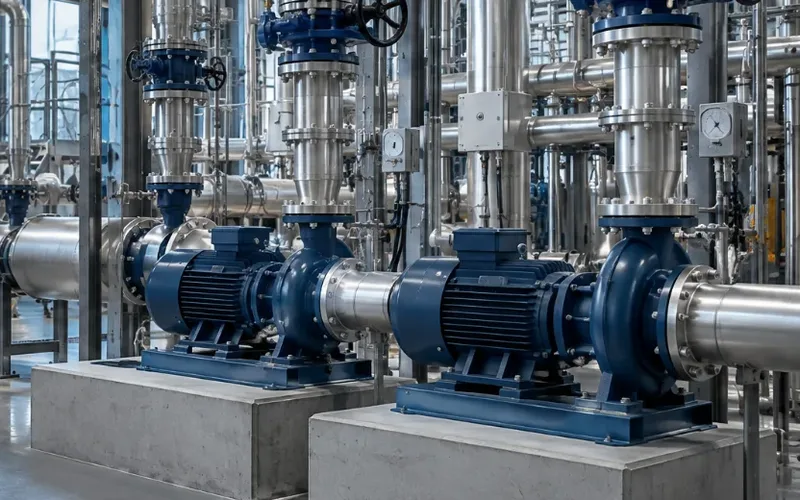
Plate & Frame
Industrial
Process cooling, glycol loops, quench water and oil coolers on 316L plate packs with painted frames, sized to a stated pressure drop.
+ Learn More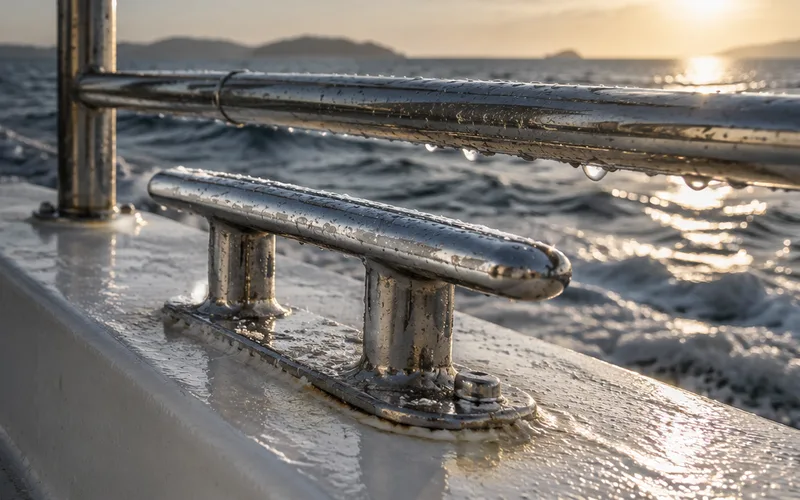
Shell & Tube
Corrosive Service
The grade ladder for aggressive fluids: 316L, 2205 duplex, 904L and 6-moly, and titanium, with the chloride, temperature and pH limits that move a duty up a rung.
+ Learn More
