
1-805-484-2992
Quotes - Engineering - SalesParticulate products
Heating and cooling liquids that carry pieces
Beans in brine, fruit in syrup, meat cubes in gravy, rice in broth, chickpeas in a curry base: every one of these is a liquid carrying solids that are large enough to settle, bridge or crush. A plate exchanger stops them at the first port; a shell-and-tube on 3/4 in. tubes stops them at the tubesheet. The tube-in-tube unit is the construction that lets the piece through, but only if the inner tube is chosen for the piece before anyone looks at the duty.
Two numbers drive the selection. The first is the largest piece dimension, which sets the minimum bore: a full-bore layout passes pieces up to about half the inner diameter without bridging, so a 3/4 in. cube wants a tube of 1-1/2 in. or more, and a 1-1/2 in. meatball wants 3 in. The second is the settling velocity of the piece in its carrier. Below it, solids drop to the bottom of a horizontal tube, ride along in a drift that fouls and overheats, and come out unevenly cooked. Above about 6 ft/s on hard solids the tube wall starts to wear.
The window between those limits is where the exchanger is designed, and in stainless the wear question also decides the grade.
The product tube is 316L for the acid and salt most particulate foods carry, with 2205 duplex where an abrasive mineral slurry adds wear to chloride. See Material & Construction for the grade comparison.
The piece sets the bore, the carrier sets the velocity
A 3/4 in. cube needs a 1-1/2 in. product tube and a carrier moving fast enough to keep it suspended; a hard grain running near 6 ft/s wears the wall, so abrasive solids are slowed down and given a thicker 316L tube.
What the product does in the tube
Solids in a carrier do not heat the way a homogeneous liquid does. The carrier takes heat from the wall quickly, the piece takes it from the carrier slowly, and the center of a 3/4 in. cube can leave the exchanger 20°F behind the liquid around it. That is why particulate cook lines are designed on the center temperature of the largest piece and why a hold section after the heater is normal practice. Residence time, not just outlet temperature, is the spec.
Chemistry varies with the product but the usual cases are acidic (fruit, tomato bases, pH 3.5–4.5) or salted (brines and gravies at 1–3% salt, which is 6,000–18,000 ppm chloride). Abrasion adds a third factor on seeds, grains, bone fragments and mineral solids, where the solid itself cuts the passive film faster than the chemistry does.
How the stainless unit is built for it
The inner tube is a single 316L tube of 1–4 in. with no reduction, no internal weld bead left proud, and end connections at the full bore. For soft pieces the tube is smooth to avoid shredding; for a viscous carrier with small firm solids a corrugated 316L tube is used to keep the carrier turbulent without catching the pieces. Return bends are long-radius so that a cube turning the corner is not jammed against the far wall.
On salted products at cooking temperature 316L is the floor, not a luxury: at about 3% salt, 18,000 ppm chloride at 200°F, the product side is reviewed for 2205 duplex, 6-moly or higher. On abrasive solids the answer is wall thickness and velocity, not alloy; a heavier-gauge 316L tube at 3–4 ft/s usually outlasts a thin 2205 tube at 6 ft/s. The utility side runs hot water or steam in the annulus and is normally 304L.
What we need to size a particulate exchanger
A sample photo or a dimension of the largest piece tells us more than the flow sheet does. With the items below we can fix bore, velocity, length and grade in one pass and show you where the hold section goes.
- Largest piece dimension and whether it is soft, firm or abrasive
- Solids fraction by weight and the carrier viscosity at inlet temperature
- Flow rate, inlet and target outlet temperature, and any required hold time at temperature
- Salt and acid content of the carrier, or a pH and chloride figure
- Pump type and its dead-head pressure, so the product tube rating is right
- Utility available: steam pressure, hot water or glycol temperature and flow
- Connection style and size at the pump discharge and the next vessel
Call and talk it through with an engineer: 1-805-484-2992
Questions on solids and bore size
Only for small, firm solids and only with tubes of 1 in. or more on a single pass, and even then the tubesheet entry and the inlet channel are places solids collect. Once a piece exceeds about 1/4 in. the tube-in-tube unit is the better choice because the whole product path stays at one diameter and there is no header for the solids to settle in.
Fast enough to keep the heaviest piece suspended, at least 2–4 ft/s for most food solids in a thin carrier, but below about 6 ft/s. The lower figure holds solids up in a horizontal run; the upper limit keeps soft pieces intact through the bends and keeps abrasive ones from wearing the wall. A viscous carrier can run slower because it holds the solids up; a thin brine cannot.
Not inside the exchanger, in most cases. The carrier reaches it; the center of a large piece lags by a margin that depends on its size and how long it has been at temperature. A sized hold tube after the heater closes the gap, and the sizing uses the center temperature of the largest piece. Ask for that calculation when the product is a cook, not just a warm-up.
For unsalted, neutral products such as vegetables in plain water it can be, and some plants run it. We still quote 316L as the product tube because the same line will see a brine or a tomato base within a year, and the premium on one inner tube is small next to the cost of replacing it. The 304L saving is better taken on the annulus and shell.
Related
Tube-in-Tube
Fibers and Slurries
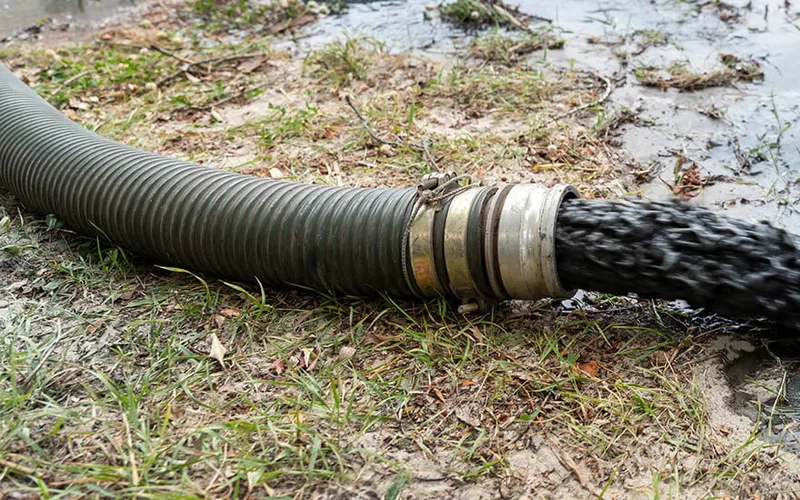
Fibers bridge narrow gaps and hard solids erode thin walls. The stainless tube-in-tube answer is an open bore, a heavier wall, and duplex when the slurry is salty.
+ Learn More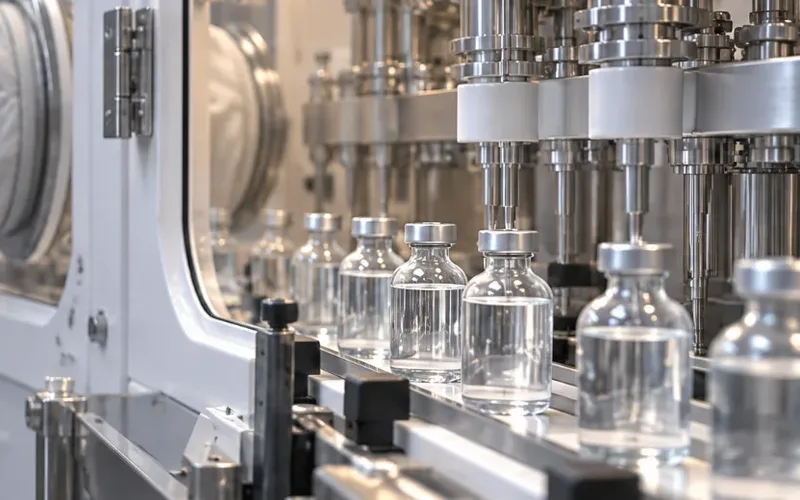
Tube-in-Tube
Aseptic Applications
Sterilizing a product at 250–285°F asks more of the stainless than any pasteurizer does. Grade, finish, welds and layout for an aseptic line.
+ Learn More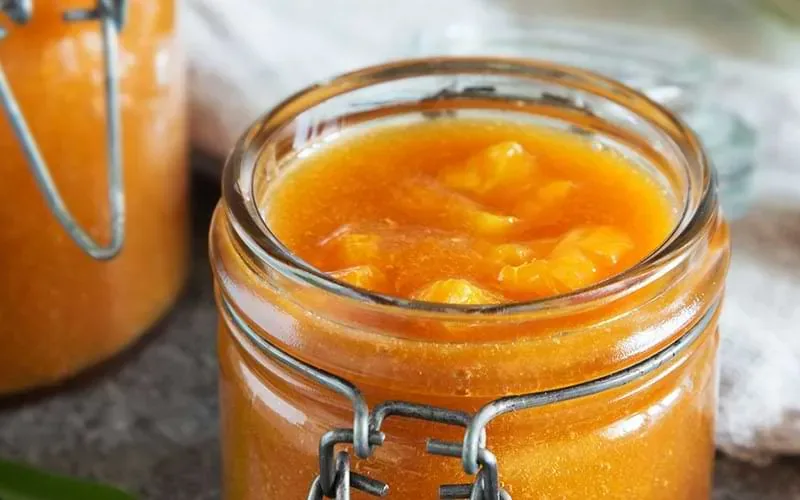
Tube-in-Tube
Puddings & Purees
Thick products move in laminar flow and scorch on a hot wall. How a corrugated 316L tube and a hot-water utility get a pudding or puree through without burn-on.
+ Learn More