
1-805-484-2992
Quotes - Engineering - SalesPressure first, then everything else
Carbon dioxide as a refrigerant, R-744, runs at pressures no other common refrigerant approaches. A subcritical CO2 evaporator in a cascade or booster system sits roughly 130–410 psig; a cascade condenser rejecting to an ammonia or HFC high stage runs roughly 370–550 psig; and a transcritical gas cooler, where the CO2 never condenses but is cooled as a dense gas above its 88°F critical temperature, operates at up to about 1,740–1,885 psig on units rated about 2,030 psig (140 bar). On the low side, standby pressure at a warm ambient can be higher than the running pressure, which is why the design pressure, not the operating pressure, is what we size against.
The brazed plate construction that handles this is still 316L plates and copper filler. CO2 does not attack either, and the plate is already the thinnest wall in any exchanger, so the high-pressure design gets its rating from thicker plates, a reinforced port and end-plate design, and a braze cycle qualified for the rating. It is a different product from the 435–650 psig standard unit, and a standard unit must never be put on a transcritical circuit on the theory that the relief valve will protect it. The secondary side, water, glycol or an HFC or ammonia high stage, is designed to its own rating and chooses the braze: copper on water and HFC, nickel where the high stage is ammonia.
Gas coolers reward a tight approach more than any other refrigerant duty, because the system efficiency in transcritical mode depends on how close the CO2 outlet gets to the entering water. A counterflow plate gas cooler can bring the CO2 within 3–5°F of the water inlet, and every degree of that approach is worth a measurable amount of compressor power. The duty is single-phase gas cooling with a steep change in specific heat along the plate, so the selection is done on the actual CO2 pressure and temperature profile rather than a condensing temperature, and the water flow and inlet temperature are the two numbers that decide the plate count.
316L plates and copper braze suit R-744 chemically; the difference on CO2 is a thicker plate and port design rated to about 2,030 psig rather than a change of grade or filler. See Material & Construction for the grade comparison.
Three CO2 duties on one construction
Transcritical gas cooler
- CO2 cooled as a dense gas above the 88°F critical temperature
- High-pressure plate rated to about 2,030 psig (140 bar)
- Counterflow against water or glycol; 3–5°F approach
- Sized on the pressure and temperature profile, not a condensing point
Cascade condenser
- CO2 condensing at roughly 370–550 psig against an ammonia or HFC high stage
- Nickel braze when the high stage is ammonia; copper on HFC
- Both sides two-phase, so port orientation matters on both
- Rated to the CO2 standby pressure, with margin
Subcritical evaporator and heat reclaim
- CO2 evaporating at roughly 130–410 psig in glycol chillers and secondary loops
- Heat reclaim gas cooler making hot water from the first stage of cooling
- Double-wall where reclaim water is potable
- Freeze and oil-return rules the same as any plate evaporator
Typical CO2 brazed plate build
Figures for the high-pressure plate family used on R-744; the secondary side follows its own fluid.
| Feature | Typical build |
| Plate grade | 316L, dual-certified 316/316L, thicker than the standard plate |
| Braze filler | Copper; nickel on the secondary side of an ammonia cascade |
| CO2-side design pressure | To about 2,030 psig (140 bar) for transcritical; lower ratings for subcritical duty |
| Operating pressure | Gas cooler to about 1,740–1,885 psig; cascade condenser 370–550 psig; evaporator 130–410 psig |
| Temperature envelope | -320 to 400°F; gas cooler inlet commonly 200–250°F |
| Gas cooler approach | 3–5°F between CO2 outlet and entering water |
| Secondary side | Water, glycol or high-stage refrigerant at its own rating |
| Testing and documentation | Pressure and leak test at the CO2 rating; PED, ASME or CRN as specified |
CO2 questions
Because the relief valve lifts at the system design pressure, which on transcritical CO2 is far above 650 psig, and even a subcritical circuit sees standby pressure at warm ambient that can exceed the standard rating. A plate that is overpressured bulges, the braze fillets crack, and the leak is between circuits. The CO2 side must be rated for the circuit, full stop.
No. R-744 is compatible with copper, so the CO2 side is copper brazed on 316L. Nickel enters only when the other fluid demands it, as on the ammonia side of a cascade condenser, or on a deionized water loop. The reason CO2 units cost more is the high-pressure plate and port design, not the filler, and that is where the specification effort belongs.
The colder the better, because the CO2 outlet temperature, which the plate unit can bring within 3–5°F of the water inlet, sets the system's cooling capacity and efficiency. Tower water at 85°F or evaporative pre-cooling gives a far better transcritical cycle than 95–105°F loop water. Give us the real entering water temperature accross the year, not a single design point.
Yes, and it is one of the best uses of the transcritical cycle. CO2 enters the gas cooler at 200–250°F and the glide across the plate can heat water to 160°F or more in one pass without a condensing plateau. A first-stage reclaim unit can serve process or building hot water, with a double-wall plate where that water is potable, and a second gas cooler finishes the cooling.
Related
Brazed Plate
Fluid-to-Fluid
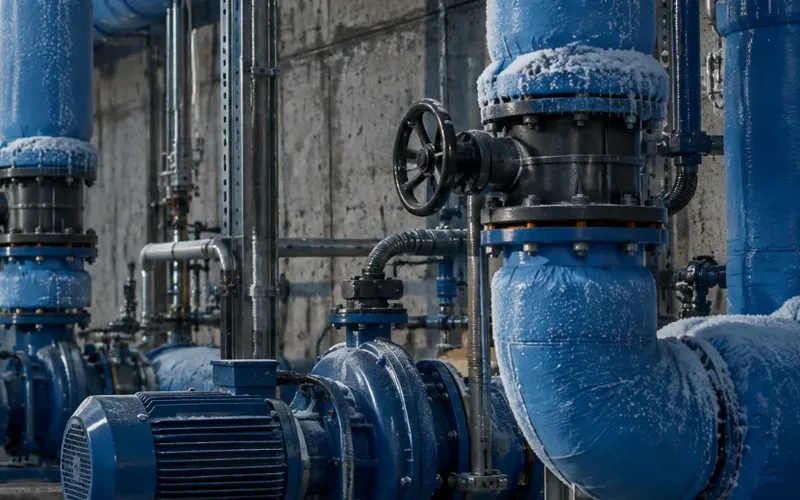
Liquid on both sides is the bread-and-butter brazed plate duty: copper braze on clean loops, with the chloride and strainer questions answered before the order.
+ Learn More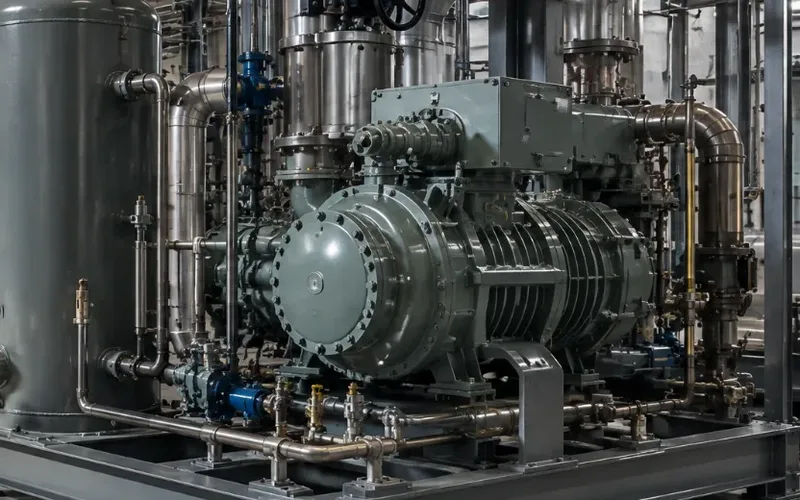
Brazed Plate
Refrigeration
For chillers and industrial refrigeration the braze follows the refrigerant: copper for HFC and HFO, nickel for ammonia, high-pressure plates for CO2.
+ Learn More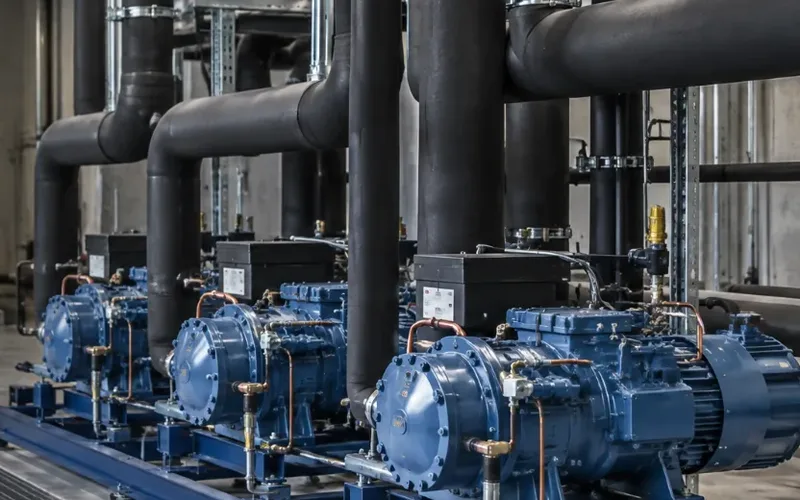
Brazed Plate
Evaporators
A plate evaporator in 316L boils refrigerant a few degrees below the chilled fluid. Distribution, superheat and freeze margin are the three things that make it last.
+ Learn More