
1-805-484-2992
Quotes - Engineering - SalesThe refrigerant chooses the braze
Commercial and industrial refrigeration is the largest single use of brazed plate heat exchangers, and for good reason. A chiller evaporator or water-cooled condenser has to hold refrigerant at 300–600 psig, give a small charge, and transfer heat across a few degrees of temperature difference. A stack of 316L plates brazed into one block does all three. The plates are the same on every refrigerant; what changes is the filler between them and, for CO2, the plate thickness and port design that take the pressure.
On R-134a, R-410A, R-513A, R-1234ze and the other HFC and HFO refrigerants, copper braze is the standard and the right choice. Copper is compatible with these refrigerants and their POE oils, forms a ductile joint, and usually gives the highest pressure rating of the three fillers. On ammonia the answer flips. Ammonia attacks copper, forming complexes that eat the fillets out of the joint and leave a unit that leaks between circuits within weeks to months. Every ammonia brazed plate is copper-free, nickel or stainless brazed, and the water side of an ammonia unit is still 316L, so no copper is wetted.
CO2 is a pressure problem rather than a chemistry problem. Copper braze and 316L are both compatible with R-744, but subcritical CO2 evaporators run roughly 130–410 psig, cascade condensers roughly 370–550 psig, and transcritical gas coolers far above that, on units rated about 2,030 psig (140 bar). Once standby and design pressures are counted, the standard 435–650 psig plate will not do; CO2 duties take a plate and port design rated for the pressure, and we select from that range only. Across all three refrigerant families the unit is sized on the evaporating or condensing temperature, the water or glycol flow and temperatures, and the compressor's capacity at that condition, never on a nominal tonnage alone.
316L plates on every refrigerant unit; copper braze for HFC and HFO systems, nickel braze for ammonia, and reinforced high-pressure plate designs for CO2 at transcritical pressure. The Material & Construction page compares the grades.
Selecting by refrigerant family
HFC and HFO systems
- Copper braze, 316L plates, 435–650 psig
- Evaporator, condenser, subcooler, economizer and desuperheater duties
- Oil return needs enough refrigerant velocity in the channels
- Glycol percent on the secondary side changes the plate count
Ammonia systems
- Nickel or stainless braze; copper braze fails in service
- Flooded, pumped or DX evaporators with the right port layout
- Water-cooled condensers and oil coolers on the same nickel build
- Slightly lower pressure rating than copper; confirm against relief
CO2 systems
- High-pressure plate design rated to about 2,030 psig
- Gas coolers, cascade condensers, subcritical evaporators
- Copper braze is compatible; the rating is what you specify
- Standby pressure at warm ambient sets the design pressure
Typical refrigerant brazed plate build
The build varies with the refrigerant more than with the duty; the rows below show what we quote for each family.
| Feature | Typical build |
| Plate grade | 316L on all refrigerants and on the water or glycol side |
| Braze filler | Copper for HFC and HFO; nickel or stainless for ammonia; copper on a high-pressure plate for CO2 |
| Refrigerant-side rating | 435–650 psig HFC and HFO; nickel-brazed ammonia slightly lower; CO2 to 2,030 psig |
| Water-side rating | Matches the refrigerant side; 150 psig is rarely the limit on a brazed unit |
| Temperature envelope | -320 to 400°F; ammonia and CO2 evaporators commonly run -40 to 40°F |
| Distribution | Inlet distribution device on DX evaporators to feed every channel evenly |
| Connections | Sweat or brazed stubs on the refrigerant side; threaded, flanged or grooved on water |
| Documentation | Pressure test, leak test, MTRs; UL, ASME or PED as specified |
Refrigeration questions we answer most
Nickel filler. It costs more than copper, brazes at a higher temperature, and the finished joint is less ductile, so the unit carries a somewhat lower pressure rating and a longer lead time. There is no copper-brazed shortcut; a copper joint on ammonia is a leak between circuits waiting to happen. On ammonia the extra cost is the price of a unit that stays in service.
Yes. A dual-circuit evaporator or condenser runs two independent refrigerant circuits against one common water or glycol side, so a two-circuit chiller uses a single exchanger and a single pair of water connections. The circuits are brazed into separate channel groups, each with it's own ports. We size both circuits for the full water flow and for the unloaded case.
Send the refrigerant and its operating point, the water or glycol conditions, and the pressure drop you can afford. In detail: refrigerant and oil type; evaporating or condensing temperature and the superheat or subcooling you need; compressor capacity at that condition; water or glycol type, percent, flow, and inlet and outlet temperatures; and the water-side pressure drop limit. With those we select plate count, channel pattern and inlet distribution, and show the refrigerant pressure drop.
Yes, as far as the materials go: HFOs such as R-1234ze, HFO blends and hydrocarbons such as R-290 are compatible with copper braze on 316L plates in a clean, dry system. What changes is the system around the exchanger. A flammable refrigerant (A2L or A3) brings charge limits and electrical classification that the plate unit does not settle, and the compressor oil changes with the refrigerant, so tell us both. Ammonia is the refrigerant that rules out copper and calls for a nickel or all-stainless braze.
It can on plain water or weak glycol if the flow drops or the refrigerant temperature falls below the fluid's freeze point. Water expanding in a 1–3 mm channel splits plates. Specify enough glycol for the lowest evaporating temperature with margin, use a flow switch and low-pressure cutout, and tell us the minimum flow case so the channel velocity stays above the freeze threshold.
Related
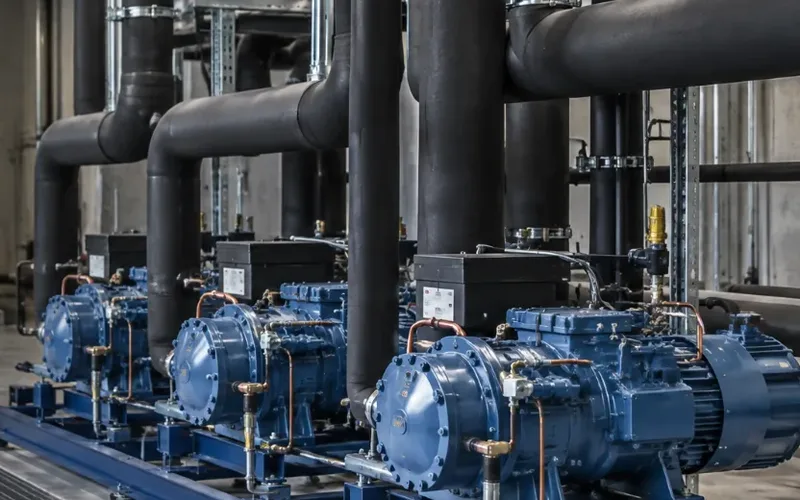
Brazed Plate
Evaporators
A plate evaporator in 316L boils refrigerant a few degrees below the chilled fluid. Distribution, superheat and freeze margin are the three things that make it last.
+ Learn More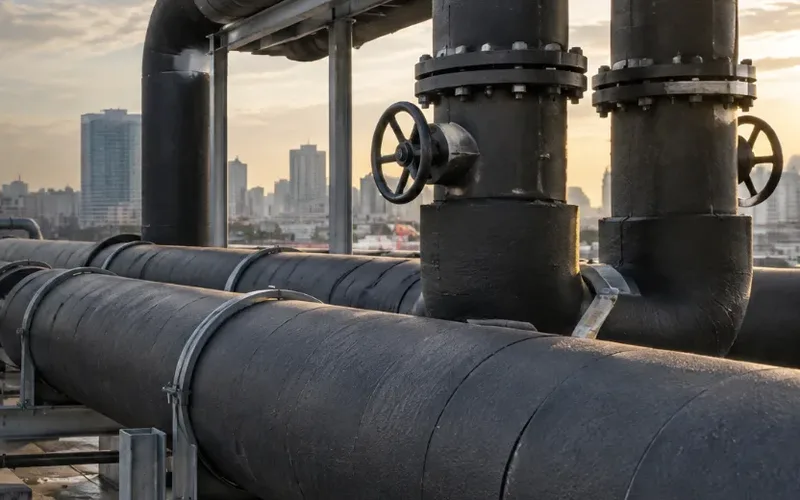
Brazed Plate
Condensers
A water-cooled brazed plate condenser desuperheats, condenses and subcools in one 316L block. Water quality, not refrigerant, decides whether it belongs on the job.
+ Learn More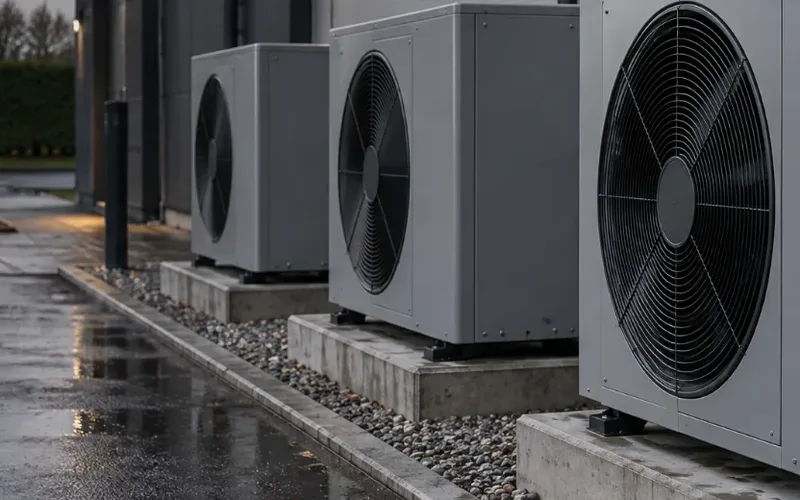
Brazed Plate
Heat Pump
A reversible heat pump asks one exchanger to boil refrigerant in heating mode and condense it in cooling mode. Plate pattern and ports must suit both.
+ Learn More