
1-805-484-2992
Quotes - Engineering - SalesA pillow plate that cleans and drains with the vat
A sanitary pillow plate is a 316L immersion or wall plate whose product face is polished, whose edges are ground to a radius, and whose internal channel drains completely when the utility is shut off. It heats or chills a vat, a mix tank or a cheese vat from inside the product space, and it comes through the same CIP cycle as the tank at 160 to 185°F caustic without leaving a crevice behind it. The grade, the finish and the drain point are what separate it from the plant plate next door.
Finish, radius and drain point
The product face is the first decision. A 32 µin Ra (0.8 µm) mechanical polish is the usual dairy and food finish; 20 µin Ra and electropolishing are specified for pharmaceutical and some beverage work. The polish is applied to the flat sheet before welding and inflation, then the weld zones are blended and the whole plate passivated to ASTM A967 so the chromium-rich surface is continuous across spot welds and seam.
The second decision is drainability on both sides. The product side drains because the plate hangs vertically or stands on feet with no horizontal ledge. The utility side drains because the channel is laid out with every pillow sloping to one low outlet. A plate that holds a cup of condensate or glycol between runs will corrode from the inside, out of sight, and that is the failure a sanitary plate cannot afford.
Product-contact pillow plates are 316L on both sheets, polished to 32 µin Ra or finer, with 304L kept to the utility side only when the plate is a welded jacket. The Material & Construction page compares the grades.
What a product-contact build carries
- 316L on both sheets, dual-certified 316/316L, MTRs supplied where required
- Product face polished to 32 µin Ra, 20 µin Ra or electropolished as specified
- Edges ground to a radius with no sharp seam for product to lodge against
- Internal channel sloped to a single low drain so no utility stands in the plate
- Tri-clamp stubs to 4 in., welded with sanitary bevel and bored flush
- Passivated after fabrication, finish verified with a profilometer on request
- 3-A or ASME BPE surface requirements met where the specification calls for them
the usual product-contact finishA 32 µin Ra polish on the product face is standard; go to 20 µin Ra or electropolish when the specification or the product demands it.
What to send us for a product-contact plate
A sanitary plate is sized like any other, then shaped by the cleaning regime and the vessel it lives in. Send the duty and the hygiene requirements together so neither gets traded away later.
- Product, its viscosity, solids and whether it scorches, foams or sets on a hot face
- Vat geometry, agitator sweep and the clearance a plate must keep from the blade
- Heating or chilling duty: batch size, temperature change and the time allowed
- Utility: steam pressure, hot water or glycol supply, and whether SIP at 250 to 275°F applies
- Finish called out on the drawing: 32 µin Ra, 20 µin Ra, electropolished, or a BPE SF designation
- Connection style and size, and whether the stubs must pass through a tank nozzle
- CIP chemistry and temperature so the gasket and grade are picked to match
Call and talk it through with an engineer: 1-805-484-2992
A pillow plate with one face kept flat and polished for product contact and the other inflated, so the product side cleans like a tank wall and the utility side carries the steam or glycol.
Where sanitary pillow plates differ from industrial ones
The sheet is the same 316L either way; the difference is what happens to its surface. An industrial plate is welded and passivated and goes to work. A sanitary plate starts from polished sheet, is handled so the polish is never scratched, is welded with a narrow laser seam that can be blended without dragging the surrounding face, and is inspected for Ra before and after passivation. Electropolishing, where specified, removes 0.0005 to 0.001 in. of surface, typically lowers Ra and leaves a chromium-rich skin that releases product and better resists the chlorides in a sanitizer rinse.
Chlorides are the real threat to a sanitary plate, and they arrive in the sanitizer, not the product. A hypochlorite rinse left on a warm 316L face after CIP will pit it; the fix is a potable-water rinse after the sanitizer step and a plate that drains so the rinse does not pool. Peracetic and iodophor sanitizers are easier on 316L. If the product itself is a brine, a pickle or a high-salt sauce, 316L is still the normal choice at chilling temperatures but a hot brine duty moves to 2205 duplex.
Steam inside a sanitary plate is common for cooking and pasteurizing vats, but the face temperature has to be controlled or the product burns on. Modulating the steam to hold the plate near the product's target, rather than running full line pressure, keeps milk, sauces and egg products off the face. Where scorching is the limiting problem, hot water at 180 to 200°F inside the plate is slower and gentler, and the plate is sized with the extra area that implies.
Chilling duties favor glycol or direct refrigerant in the plate, and here the drain layout matters twice. A chilled plate that holds glycol in a low pillow will frost the product face at that spot and hold a lump of frozen product through the cleaning cycle. The channel geometry, the stub positions and the mounting angle are chosen together so the utility side empties completely and the product side has no shelf.
The mistake we see is a plate that passes the surface inspection and fails the drain inspection. A horizontal plate laid in the bottom of a vat, or a vertical plate with its stubs on the side instead of the bottom, cleans well enough to look right and still holds liquid inside the channel between batches. Specify the drain point on the drawing, hold the plate vertical or on a slope, and put the utility outlet at the lowest pillow.
Chlorides reach a sanitary plate in the sanitizer, not in the milk.
Rinse hypochlorite off a warm 316L face with potable water and let the plate drain, or it will pit where the rinse pooled.
Request a QuoteQuestions on product-contact plates
No. The utility side carries steam, water or glycol and never sees product, so it is left mill finish and passivated. What the inside does need is a drainable layout and a grade that resists its own fluid: 316L handles condensate and glycol without trouble, and because both sheets are 316L on a product-contact plate there is no mixed-grade weld to worry about.
Yes, when it is specified for it. SIP steam at 250 to 275°F reaches the plate from the product side, so the plate is rated for that temperature on both faces, the stub gaskets are a steam-rated elastomer or PTFE, and the utility side is drained before the cycle. A glycol plate left full during SIP can be overpressured as the trapped fluid heats, and its weld zone stressed by thermal shock.
On the utility side of a welded jacket, where only steam or glycol touches it, 304L is fine and common. On a product face we do not recommend it: dairy, brewing and sauce lines all see chloride sanitizers, and 304 pits at about 200 ppm chloride where 316L typically tolerates roughly 1,000 ppm. The sheet cost difference on a plate is small against the cost of a pitted product face.
Through a nozzle in the tank wall or head. The plate stubs are tri-clamp to 4 in. and are routed so the utility joint sits outside the product space wherever the vessel allows. Inside a closed vessel the stubs are welded through the wall with a sanitary pass-through so no clamp joint is exposed to product. The approval drawing shows the nozzle, stub and drain positions before fabrication.
Related
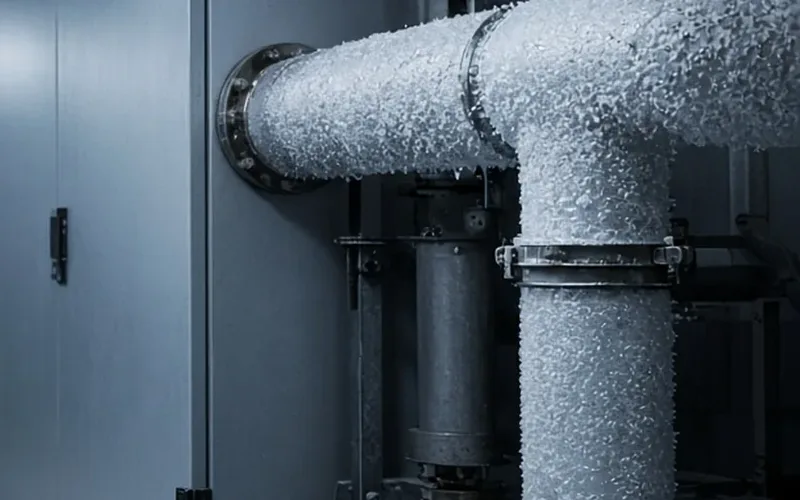
Embossed Plate
Industrial
Double-embossed immersion plates and single-embossed wall plates for quench, rinse, plating and process tanks, with the grade matched to the bath chemistry.
+ Learn More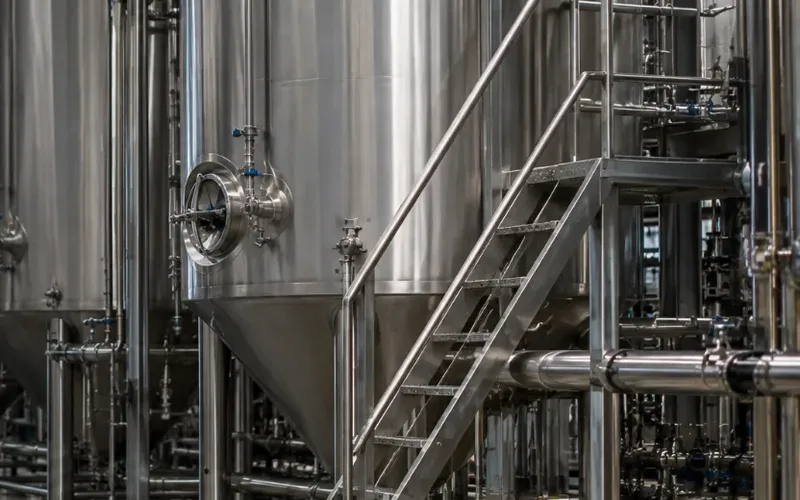
Embossed Plate
Clamp On
Retrofit heating or cooling on a stainless tank you already own: curved pillow plates, straps and heat-transfer mastic, with no weld and no code re-rating.
+ Learn More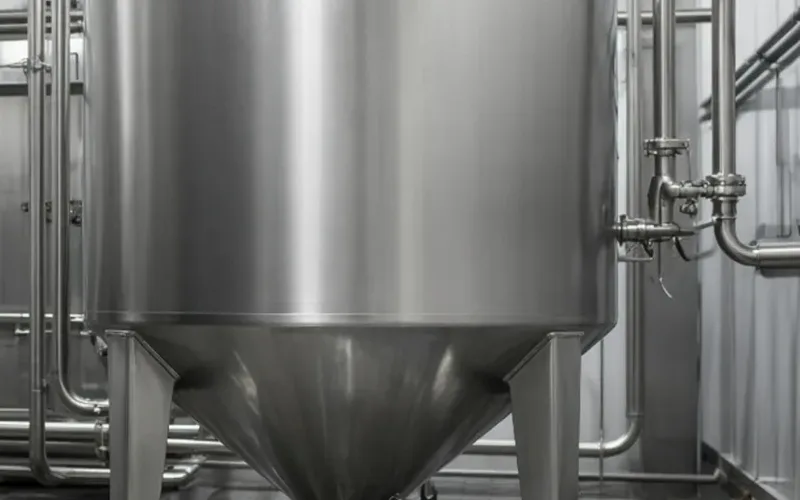
Embossed Plate
Jacketed Tanks
New stainless tanks with the dimple jacket laser-welded to the shell: zoned for steam, glycol or cooling water, rated to 150 psig, sized to the batch.
+ Learn More