
1-805-484-2992
Quotes - Engineering - SalesPlate exchangers for juice, soft drinks and water
A beverage line puts three different liquids through plate exchangers: the finished drink or juice through a pasteurizer or a flash cooler, the sugar syrup through a heater and cooler, and the treated water through a deaerator pre-chiller or a carbonation chiller. Each is a low-viscosity, low-solids stream that a gasketed plate pack handles well, and all three are acid. Citric acid in juice and phosphoric acid in cola sit at pH 2.5–4, which is mild on 316L in a clean channel but attacks 304L where the gasket groove traps a film of product between cleanings.
Sugar is the second variable. A 65 Brix simple syrup has 100 times the viscosity of water at room temperature, and the same syrup caramelizes on a plate wall above about 220°F, so syrup heaters are sized with a close hot-water approach and a product-side pressure drop allowance that keeps the channel turbulent. Finished drinks at 10–12 Brix behave much like water and chill on a standard chevron plate.
Carbon dioxide is the third. Carbonated product and carbonated water are chilled to 32–38°F under enough back pressure to hold the gas in solution, which makes the chiller a low-temperature, pressurized duty on glycol where the risk is freezing in the channel rather than corrosion. We size those with the glycol held at about 26–28°F or warmer and the plate count carrying the approach.
316L plates for every beverage stream, since citric and phosphoric acid at pH 2.5–4 attack 304L at the gasket groove; higher alloys reviewed only on vegetable juices above 3% salt. See Material & Construction for the grade comparison.
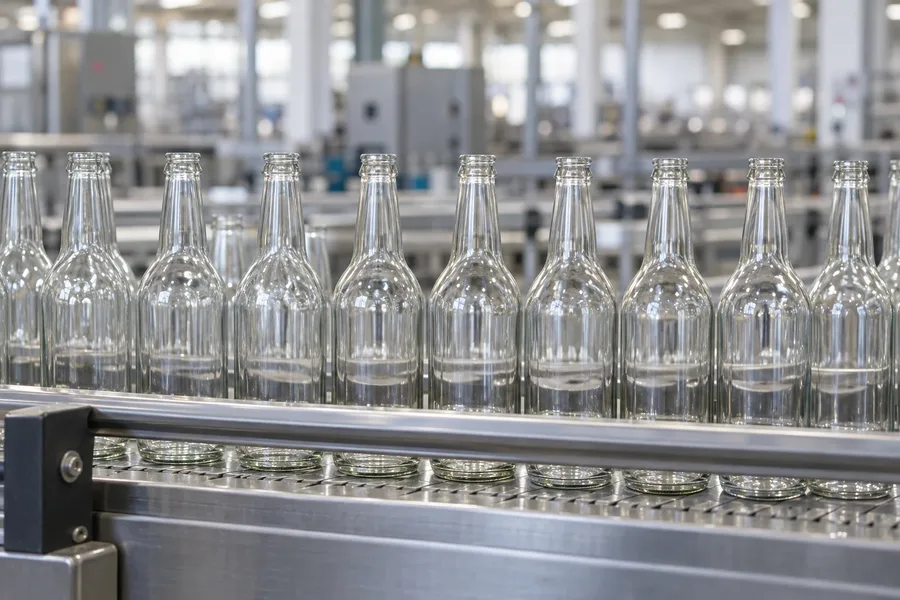
The three beverage questions that set the gasket and plate
- Product pH down to 2.5 from citric or phosphoric acid
- Citrus oil or flavor emulsion present, which swells EPDM
- Chill temperature of 32–38°F with the glycol held above 26°F
The beverage duty and the plate unit for it
Beverage plate duties divide into pasteurizing the product, conditioning the syrup, and chilling water or finished drink. The left column collects what the plant usually states; the right column is the stainless build we propose and the two or three items it needs from you to be sized.
Beverage duty
- Product: Juice, nectar, tea, sports drink, cola, syrup, treated water
- Pasteurize: 185–200°F for 15–30 seconds on juice; flash cooling after filling
- Chill: 32–38°F product on 26–28°F propylene glycol
- Chemistry: pH 2.5–4, sugar 10–65 Brix, carbonated to 4 volumes CO2
- Flavor carriers: Citrus oils, flavor emulsions, cloud agents in some products
- Cleaning: Caustic CIP at 160–185°F, acid rinse, chlorinated or peracetic sanitizer
Plate unit we recommend
- Plates: 316L, 0.4–0.5 mm, chevron chosen for syrup viscosity or water
- Gaskets: Food-contact EPDM for juice, water and cola; NBR with citrus oil
- Frame: Stainless clad, tri-clamp ports to 4 in., pressure-rated for carbonated product
- Sections: Regeneration plus heating and cooling on pasteurizers; single section on chillers
- Freeze protection: Glycol set point above 26°F, low-flow interlock on the product pump
- Send us: Product and Brix, flow, four temperatures, carbonation level, flavor system
Name the acid
citric, phosphoric or malic, and the lowest pH
Flag flavor oils
citrus oil that rules a gasket in or out
Set chill target
product outlet and the glycol that reaches it
Stop the freezing
a glycol floor and low-flow protection
Material and gasket choices on a beverage line
Why beverage plates are 316L and not 304L
Juice and soft drinks carry almost no chloride, so on paper 304L would do. In service the problem is the gasket groove: a thin film of acidic product stays there between CIP cycles, oxygen is excluded under the gasket, and the crevice becomes active at a pH where the open plate surface is passive. 304L crevice-corrodes under the gasket on citric acid lines within a few years; 316L, with 2–3% molybdenum, holds. The plate cost difference is small against a plate pack that has to be opened and re-gasketed because the groove has pitted.
- 316L plates on every acid beverage, including still water with added citric acid
- 304L acceptable only on untreated process water with no acid dosing
- Higher alloy reviewed on vegetable juices above 3% salt
Citrus oil and the gasket compound
Orange, lemon and lime juice carry peel oil, and many flavored drinks use a citrus-oil emulsion as the flavor carrier. The oil is a terpene solvent and it swells EPDM, which is otherwise the first-choice beverage gasket for its CIP resistance. On citrus lines we fit NBR, which resists the oil, and accept its lower temperature limit of about 230°F, which still covers a 200°F juice pasteurizer. Where the line runs both citrus and a hot CIP above 230°F, a special compound rated for both oil and hot caustic is specified, at a higher gasket cost that is small against the frame.
The mistake: a chiller frozen by its own glycol
A soft drink plant specified a carbonated water chiller to 33°F and ran the glycol at 22°F to be sure. On the first slow fill the product flow dropped, the water in the channels nearest the glycol inlet froze, the ice bridged the plates and the product pressure climbed until the gasket blew out at the port. Ice in a plate channel also bows the plate, and a bowed plate never seals again. The right design holds the glycol inlet as warm as the approach allows, typically 26–28°F, puts the plate count to work on the approach, and interlocks the glycol valve to product flow so a stopped line cannot freeze the pack.
- Glycol inlet no lower than 26–28°F on a 32–34°F product
- Glycol valve closes on loss of product flow
- Counterflow with the glycol inlet at the product outlet, never crossed
Syrup heating and cooling
Simple syrup is dissolved hot, held at about 185°F for microbial control and cooled to 70°F before blending. At 65 Brix the syrup runs laminar in a standard chevron, so the syrup side gets a low-theta or wide-gap plate and a 15–20 psi pressure drop allowance, with the hot water set within 10–15°F of the syrup to keep sugar off the wall. A syrup cooler on tower water is an easy duty for 316L plates; the chilled water or glycol stage after it needs the same freeze precautions as a product chiller.
Beverage line questions
Clarified and lightly pulpy juice runs on a wide-gap plate, which passes soft pulp to about 1/4 in. on the product side. Juice with heavy pulp, fiber or fruit cells at a high concentration bridges even a wide-gap channel and fouls the regeneration section first. That juice goes to a stainless tube-in-tube with a full-bore product tube, and the plate pack stays on the clarified streams.
Not a special plate design, but the frame, gaskets and layout change. The gaskets must hold the back pressure that keeps CO2 in solution, about 30–40 psig at 4 volumes and 32–38°F, the frame must be rated well above it, and the layout needs no high points where gas can break out and blanket the plates. Carbonic acid at that level is mild on 316L; the pressure rating, the venting and the freeze protection on the glycol side are what change.
Peracetic acid at normal use concentration is the easiest on 316L. Chlorinated sanitizers are acceptable at 50–200 ppm free chlorine, applied cold, for a short contact time and rinsed off. Hot chlorine, or chlorine left standing in a plate pack over a weekend, pits a thin plate at the gasket groove faster than any product the line will run, and it is the leading cause of plate replacement on beverage lines.
A plate pack reaches a 2–5°F approach, so a 33°F product on 28°F glycol is realistic in a reasonable plate count. Pushing the approach below 2°F adds plates quickly and brings the product wall temperature close to freezing in the last channels. We hold the approach at 3–5°F on chillers and make up the difference with glycol flow rather than a colder set point.
Not well. The syrup side wants a low-theta plate with a large pressure drop allowance and a hot-water heating section; the juice pasteurizer wants regeneration and a holding tube with a 15–30 second residence. The gasket compounds also differ if the juice is citrus. Two frames, each sized for its product, cost little more than one compromised frame and avoid cross-contamination of flavor between lines.
Related
Plate & Frame
Cooling Tower Isolation
Plate-and-frame isolation units between an open cooling tower and a closed loop, with the plate grade set by the basin chloride at full cycles, not the makeup water.
+ Learn More
Plate & Frame
Food Processing
Multi-section plate pasteurizers for broths, sauce bases, brines and dressings, with the plate grade checked against the salt in the product.
+ Learn More
Plate & Frame
Aseptic
316L plate sections for HTST and indirect UHT lines, specified around the gasket limit, daily pre-sterilization and the pressure that keeps product liquid at 285°F.
+ Learn More
