
1-805-484-2992
Quotes - Engineering - SalesPlate exchangers in a production brewery or distillery
The plate exchanger in a brewhouse is the wort cooler: boiling wort at 200–212°F leaves the kettle or whirlpool and has to reach pitching temperature, 65–68°F for ales and about 50°F for lagers, in the 30–60 minutes of a knockout. A production brewery does that in two stages on one frame. The first section runs against brewing water, which takes the wort down to 90–100°F and comes out at 160–180°F as hot liquor for the next brew; the second section runs against propylene glycol at 28–30°F and finishes the job. Sized well, the hot-liquor recovery often repays the exchanger quickly.
A distillery runs the same plate pack in the other direction and on dirtier streams: cooling cooked grain mash to 85–90°F before the yeast goes in, heating process water, and cooling hot stillage from the still at 200°F before it is dewatered or sent to feed. Stillage and whole-grain mash carry husk and fiber, which decides the plate pattern more than the chemistry does.
Both industries clean with caustic at 160–185°F, follow with phosphoric or nitric acid, and sanitize with peracetic acid or chlorine. That cleaning cycle, not the wort, is why the plates are 316L. This page covers the stainless and gasket specification of those packs, not the brewhouse process itself.
316L plates on wort, mash and stillage, where phosphoric acid CIP and chlorinated sanitizers would pit 304L in the gasket groove; 304L only on the brewing liquor side. The Material & Construction page compares the grades.
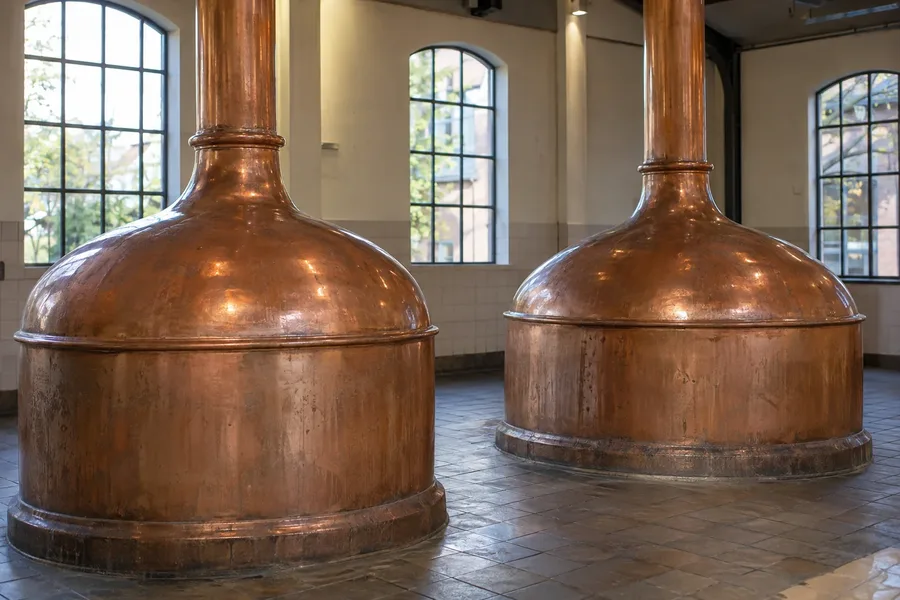
Three questions before a wort cooler is sized
- Knockout time, 30–60 minutes, which sets the flow through the plates
- Summer brewing-water temperature, which sets the first-stage outlet
- Trub and hop matter carried over, which sets the plate gap
The brewhouse duty and the plate pack for it
A wort cooler is sized to the batch, the knockout time and the worst-case cooling water of the year, so the left column lists the brewhouse as it runs in August rather than January. The right column is the 316L plate build we propose and what we need to confirm it.
Brewery or distillery duty
- Wort cooling: 200–212°F to 50–68°F in 30–60 minutes per batch
- First stage: Brewing water 50–75°F in, recovered at 160–180°F
- Second stage: Propylene glycol at 28–30°F, 30–35% by volume
- Mash and stillage: Grain mash to 85–90°F; stillage from 200°F with husk and fiber
- Wort chemistry: pH 5–5.5, 10–20 Plato, hop oils, trub and break material
- Cleaning: Caustic 160–185°F, phosphoric or nitric acid, peracetic or chlorine sanitizer
Plate pack we recommend
- Plates: 316L, typically 0.4–0.5 mm, standard chevron on wort; wide-gap on mash and stillage
- Gaskets: Food-contact EPDM; NBR where hop oil loading is heavy
- Frame: Stainless clad, two sections with a connecting plate, tri-clamp to 3 in.
- Glycol side: Sized for the finishing duty only, with the set point held above 26°F
- Spare plates: Frame bar cut for the next brewhouse size, 20–30% more plates
- Send us: Batch volume, knockout time, summer water temperature, glycol set point, CIP chemicals
Set knockout time
batch volume over the minutes allowed
Take summer water
the warmest brewing water of the year
Size plate gap
trub, hop and grain the cooler must pass
Match the cleaning
caustic, acid and sanitizer set grade and gasket
Specifying the stainless on wort, mash and stillage
Two sections, two utilities, one frame
A two-stage wort cooler is one frame with a connecting plate between the water section and the glycol section, so the wort passes through both in series while each utility has its own ports. The water section does 70–80% of the duty and is where the plate count goes; the glycol section only has to close the last 30–40°F. Sizing the first section to deliver hot liquor at 170–180°F instead of 150°F costs a few plates and saves the energy of reheating that water for the next mash. The glycol section is sized to the summer case, when the first stage leaves the wort warmer and the glycol carries more.
- Water section on 316L plates, sized for the recovered liquor temperature
- Glycol section on 316L plates with the inlet held above 26°F
- Connecting plate with its own ports so either section can be isolated
Trub, hops and grain on the plate side
Wort out of a whirlpool still carries hop fragments and hot break, and a standard chevron channel a few millimeters wide catches them at the inlet plates. Most breweries live with that by running the knockout through a strainer and backflushing the cooler during CIP. Dry-hopped or whole-leaf hop regimes and any whole-grain distillery mash or stillage exceed what a chevron plate passes, and those duties go to wide-gap plates on the product side, which pass soft solids and fiber to about 1/4 in. Stillage with heavy husk loading past that belongs on a stainless tube-in-tube rather than any plate pack.
The mistake: a wort cooler sized on January water
A brewery sized a single-stage wort cooler on its city water at 52°F and it worked through the winter. In August the city supply ran at 68°F, the wort left the cooler at 80°F, the brewer had to recirculate through the fermenter jacket for two hours before pitching, and the hot liquor came out too cool to use. The plate pack was correct for the water it was given. The fix was a second glycol section bolted into the same frame, which the frame had room for only because the carrying bar had been cut long. Give us the warmest water temperature of the year and the knockout time you want, not the average.
- Size the water stage on the warmest supply water, not the annual average
- Specify a two-stage frame or a frame with room for the glycol section later
- Hold the knockout time as a requirement, not an outcome
Grade and gasket against the cleaning cycle
Wort itself at pH 5–5.5 and under 100 ppm chloride would not trouble 304L. The brewery CIP does: hot caustic strips the organic film, the phosphoric or nitric acid step drops the pH to 2 in the gasket groove, and a chlorine sanitizer left to stand finishes the plate. 316L carries that cycle for years; 304L pits in the groove and the first sign is a wort cooler that will not hold pressure on the glycol side. EPDM food-contact gaskets handle caustic and acid; where a brewery runs heavy hop-oil loading, NBR resists the oil swelling that softens EPDM over a season.
Brewhouse and still-house questions
Production breweries plan a knockout of 30–60 minutes for a 10 to 100 barrel batch, which sets the wort flow through the plates and therefore the plate count. Faster knockout reduces DMS formation and gets the wort to the yeast sooner but needs more plates and more glycol capacity. Tell us the batch volume and the knockout time you want, and we size the pack and state the glycol load it will draw.
It does both at once: the first section of a two-stage wort cooler heats the brewing water to 160–180°F while cooling the wort, and that water goes to the hot liquor tank. What it can not do is heat liquor on a separate occasion without a hot source. Breweries that want a liquor heater between brews add a small stainless steam-to-water exchanger rather than reusing the wort cooler.
Thin stillage from a column still with grain removed runs on wide-gap plates at about 1/4 in. channel on the product side and standard plates on the water side. Whole stillage straight from a pot or beer still, with husk and spent grain in suspension, bridges even a wide-gap channel and should be cooled in a stainless tube-in-tube or dewatered first. Send a solids figure in percent and we tell you which.
30–35% propylene glycol by volume freezes at about +9°F to +3°F, ample for a 28°F set point, and is the usual brewery mix. Higher concentrations raise the viscosity and cut the heat transfer on the glycol side, so the glycol section grows for no benefit. Keep the glycol inlet to the wort cooler as warm as the duty allows, typically 26–28°F; a colder set point risks freezing wort in the last channels of a slow knockout and bowing the plates.
Related
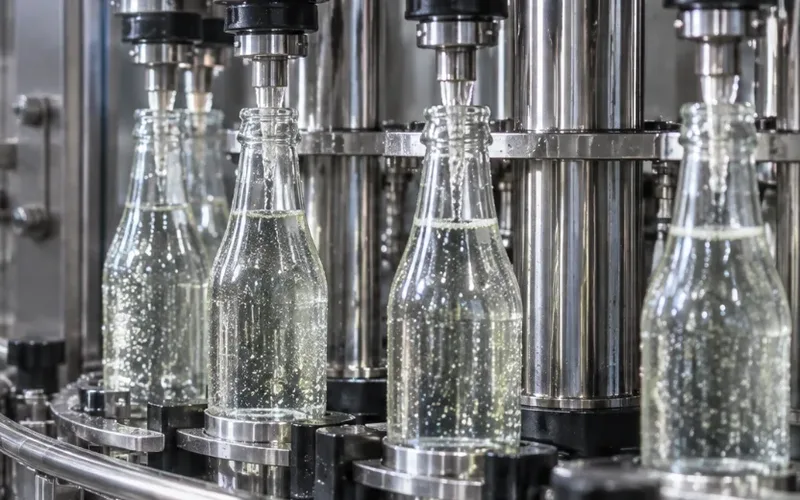
Plate & Frame
Beverage
Plate pasteurizers and chillers for juice, syrup, carbonated water and finished soft drinks, with acid, sugar and citrus oil driving the gasket choice.
+ Learn More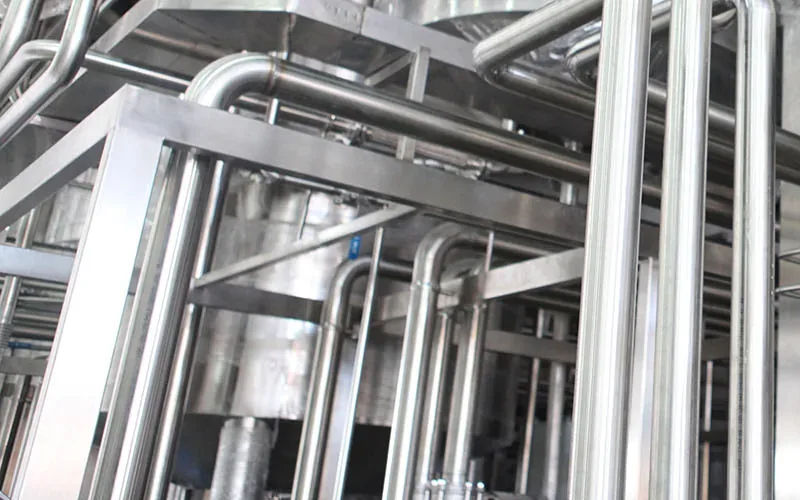
Plate & Frame
Aseptic
316L plate sections for HTST and indirect UHT lines, specified around the gasket limit, daily pre-sterilization and the pressure that keeps product liquid at 285°F.
+ Learn More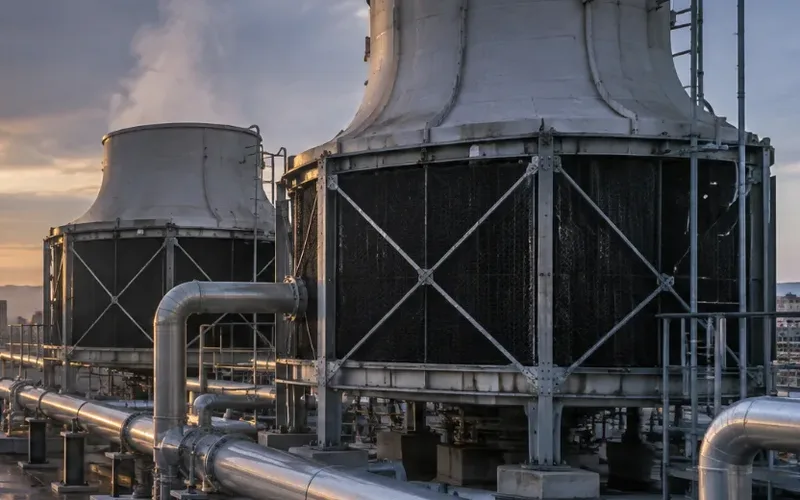
Plate & Frame
Cooling Tower Isolation
Plate-and-frame isolation units between an open cooling tower and a closed loop, with the plate grade set by the basin chloride at full cycles, not the makeup water.
+ Learn More