
1-805-484-2992
Quotes - Engineering - SalesPlate pasteurizers and coolers for liquid foods
Most pumpable foods without pieces are pasteurized on a plate exchanger: soups and broths, sauce bases, dressings, egg wash, thin dessert mixes, brines and marinades. The unit is a single frame divided by connecting plates into sections, each with its own ports: a regeneration section where incoming cold product takes heat from outgoing hot product, a heating section on hot water, a holding tube sized for the legal hold time, and one or two cooling sections on tower water and then chilled water or glycol. The regeneration section is where the money is; a well-sized one recovers 85–90% of the heat and the utility sections only make up the rest.
The stainless decision on a food plate pack starts with what is in the product. A broth at 1% salt is roughly 6,000 ppm chloride, a pickle brine many times that, and the heating section runs the plate wall at 170–200°F, which is above the point where chloride stress corrosion cracking of 316L becomes possible. 316L plates handle the salt in most prepared foods because the exposure is short and the CIP strips deposits daily; dedicated brine pasteurizers are reviewed for titanium Grade 7/12 or 6-moly plates.
Fouling sets the second limit. Proteins denature above about 160°F and sugars caramelize on a hot wall, so the heating section is sized with a 5–10°F difference between hot water and product to keep the wall below the burn-on point and lengthen the run between cleanings.
316L plates carry most food liquids; pickle and cheese brines above about 3% salt, 18,000 ppm chloride, are reviewed for titanium Grade 7/12 or 6-moly in the hot sections. The Material & Construction page compares the grades.
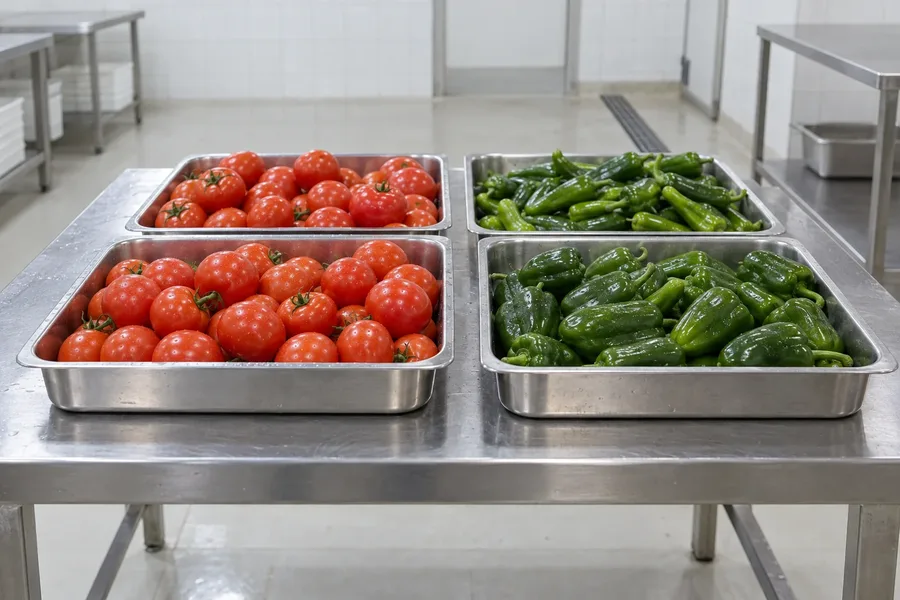
Three things that size a food plate pasteurizer
- Salt in the product, converted to ppm chloride on the plate
- Regeneration of 85–90% against the utility cost
- Heating water held within 5–10°F of the product to limit burn-on
The pasteurizing duty and the plate unit behind it
A food plate pasteurizer is specified section by section, so the left column describes the line as a sequence of temperatures and the right column lists the stainless build for each section. Run length between CIP cycles is a sizing input.
Process duty
- Product: Broth, sauce base, dressing, brine, dessert mix; viscosity to a few hundred cP
- Temperatures: In at 40°F, pasteurize at 165–195°F, out at 40°F or below
- Hold: 15 seconds to several minutes in a hold tube, by product and process
- Utilities: Hot water set 5–10°F above product; tower water; glycol at 28°F
- Run length: 8 to 20 hours between CIP cycles depending on fouling
- Salt content: Product chloride from a trace to several thousand ppm
Plate unit we recommend
- Sections: Regeneration, heating, cooling and chilling in one frame with connecting plates
- Plates: 316L, 0.4–0.5 mm; higher alloy in hot sections on brines
- Gaskets: Food-contact EPDM; NBR on high-fat dressings and sauces
- Frame: Stainless clad with product ports on the fixed head, tri-clamp to 4 in.
- Instruments: Pressure taps across regeneration; temperature ports at each section
- Send us: Product recipe and salt, flow, temperatures, hold time, CIP sequence
Give the recipe
salt, sugar, fat, solids and cold-end viscosity
Fix the hold
the approved pasteurizing temperature and time
Choose regeneration
how much product-to-product recovery pays
Cap heating water
a hot-water margin that limits burn-on
Designing the sections in stainless
Regeneration and the pressure differential
In the regeneration section raw product and pasteurized product sit on opposite faces of the same thin plate, so any pinhole or gasket leak moves fluid from the higher-pressure side to the lower. Food safety practice puts the pasteurized side at the higher pressure, usually by a booster pump and a pressure differential switch, so that a leak sends pasteurized product into the raw stream and never the reverse. We lay the sections out so the booster sees the pasteurized flow and the differential taps are on the frame, and the plates on that section are 316L with a tighter inspection schedule because a pitted plate here is a recall, not a repair.
- Pasteurized side 1–2 psi above the raw side across regeneration
- Pressure taps on both product streams at the section boundary
- Annual dye or light check of regeneration plates in the plant program
Plate grade against the product
The heating section sees the product at its hottest against the plate and is where chloride does its work. For soups, sauces and dressings up to about 3% salt we press 316L throughout and rely on short residence and daily CIP to keep deposits off the plate. Above that, and on any dedicated brine, whey or fermented product line where chloride and low pH arrive together at 170–200°F, the heating and hot regeneration plates are reviewed for titanium Grade 7/12 or 6-moly and the cold sections stay 316L, because the cold plates see the same chloride at a temperature where 316L holds.
The mistake: sizing heating water for speed
A sauce plant asked for a pasteurizer that reached temperature in the fewest plates, so the heating section was sized with 180°F product against 215°F hot water. The product burned onto the plates inside four hours, the pressure drop across the heating section doubled, and the line ran a CIP cycle every shift instead of once a day. Re-sizing the section with more plates and the hot water set at 190°F tripled the run length. On a fouling product, the small temperature difference costs plates once; the large one costs cleaning chemicals and production everyday.
- Hot water set point 5–10°F above product outlet, not higher
- Wall temperature below 200°F on sugar and protein products
- Run length between CIP cycles stated on the quotation request
Viscous and fatty products
Dressings, mayonnaise bases and cream soups at a few hundred cP run laminar in a normal chevron channel and need a wide-gap or low-theta plate with a product-side pressure drop allowance of 15–25 psi. Fat in the product swells EPDM over time, so these lines get NBR food-contact gaskets, and the CIP carries the fat away with a hot caustic step. Anything with pieces, pulp or fiber above about 1 mm leaves the plate exchanger and goes to a stainless tube-in-tube, which has no channel to bridge.
Questions on pasteurizing plate packs
On a water-like product with clean plates, 90% is routine: product in at 40°F and pasteurized at 180°F leaves regeneration at about 166°F before the heater. Viscous or fouling products are usually sized at 85% because the regeneration section fouls on both faces and the loss in approach over a run has to be absorbed. Every point of regeneration is heating water and glycol you do not buy.
Anything with particulates larger than the channel gap, products above roughly 1,000 cP, and lines that must be steam sterilized under pressure on every cycle. Those belong on a tube-in-tube with a full-bore product tube. Products with very high salt and low pH at pasteurizing temperature can run on a plate pack, but usually on a reviewed higher alloy, such as titanium Grade 7/12, in the hot sections.
Yes, and most food plants run several through one pasteurizer. The frame is sized for the hardest duty, usually the most viscous or the one with the longest hold, and the gasket compound for the worst chemistry among them, typically the product with the most fat for NBR or the highest CIP temperature for EPDM. Tell us the whole product list, not the one that runs most.
Chloride attack on 316L accelerates with temperature, and stress corrosion cracking becomes a risk above about 140°F. The heating section and the hot end of regeneration are where a brine product sits against a plate above that temperature with the hot water driving the wall even hotter. The cold end of regeneration and the cooling plates see the same chloride where 316L is adequate, so a higher alloy there would spend money on a problem the plates do not have.
A rinse, caustic at 160–185°F for 20–30 minutes, a rinse, a nitric or phosphoric acid wash for mineral scale, and a final rinse, all circulated at a velocity above the product velocity. 316L plates take that cycle daily. If the sanitizer is chlorinated, it goes in cold, at the end, and is rinsed off; hot chlorine on a thin plate is the fastest way to pit it.
Related
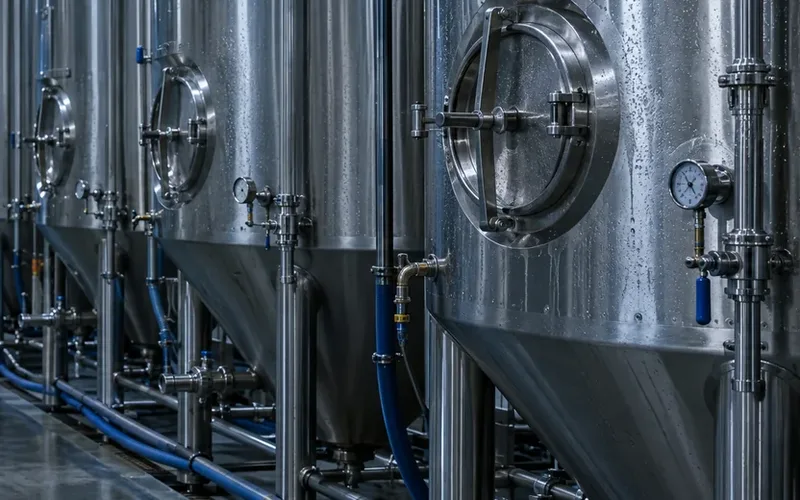
Plate & Frame
Brewing & Distilling
Two-stage wort coolers, liquor and mash heaters and stillage coolers for production breweries and distilleries, on 316L plates with wide-gap options for grain.
+ Learn More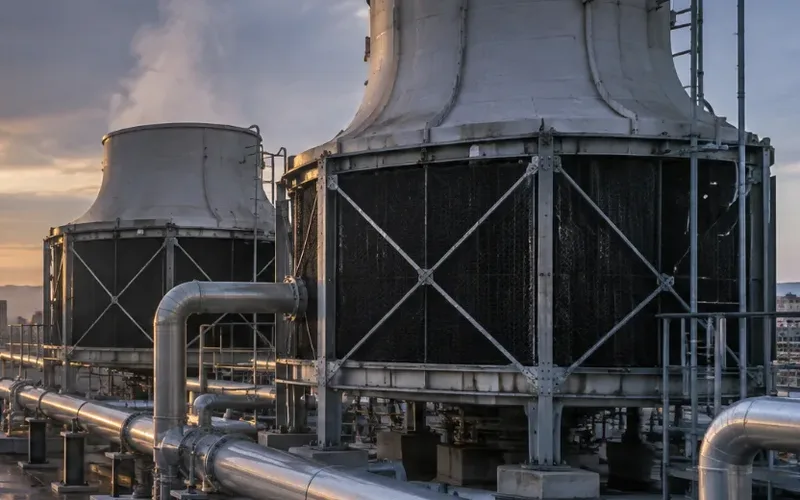
Plate & Frame
Cooling Tower Isolation
Plate-and-frame isolation units between an open cooling tower and a closed loop, with the plate grade set by the basin chloride at full cycles, not the makeup water.
+ Learn More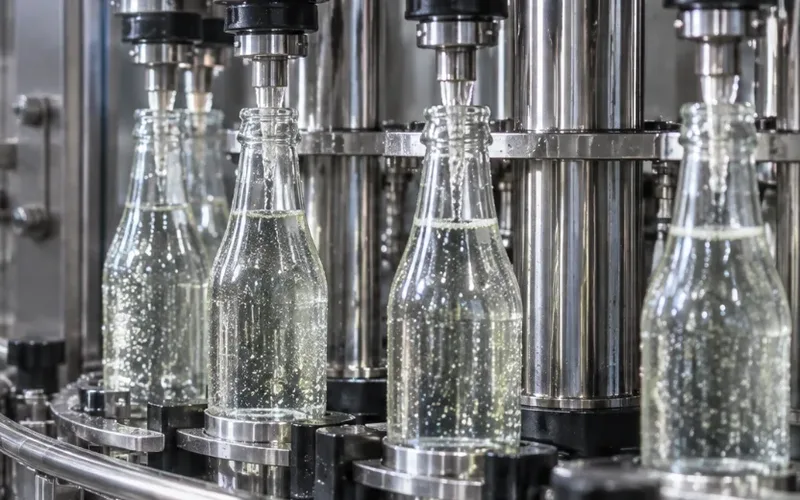
Plate & Frame
Beverage
Plate pasteurizers and chillers for juice, syrup, carbonated water and finished soft drinks, with acid, sugar and citrus oil driving the gasket choice.
+ Learn More