
1-805-484-2992
Quotes - Engineering - SalesWhat a single-phase brazed plate unit is
A single-phase brazed plate heat exchanger moves heat between two liquids that stay liquid the whole way through: water to water, glycol to water, lube oil to water, a process liquid against chilled water. The core is a stack of 316L plates, each pressed with a chevron pattern and stacked so the chevrons cross, with every other channel carrying the other fluid. A copper foil lies between each pair of plates; in a vacuum braze cycle it melts and bonds every contact point, and the finished block is one solid piece with no gasket, no frame and no tie bolts. A standard pack holds 435–650 psig and lives inside a -320 to 400°F envelope.
The chevron angle is the design lever. A steep angle gives high turbulence, a high heat transfer coefficient and a high pressure drop; a shallow angle gives the opposite. Mixing the two plate types in one stack lets us land a required duty inside the pressure drop you can afford, which on a glycol loop is usually the binding constraint. Channels are 1–3 mm wide and the flow is true counterflow, so a liquid-to-liquid pack can close to an approach under 5°F in a block one person can carry.
Ports sit at the four corners. What matters is that you pipe them counterflow: hot in at the top of one side, cold in at the bottom of the other. The 316L plate is the wetted surface on both sides, and that is why this construction belongs on a stainless site. The only non-stainless wetted material is the braze filler, and that is the one choice you make: copper for clean water, glycol and oil; nickel for ammonia or deionized water; all-stainless when no copper or nickel-alloy braze may touch the liquid.
Single-phase liquid duty runs on 316L plates as standard, copper brazed for water, glycol and oil, nickel or stainless brazed when the liquid attacks copper. See Material & Construction for the grade comparison.
Where liquid-to-liquid brazed plate fits, and where it does not
Liquids that suit it
- Chilled or tower water against process water, both sides strained
- Ethylene or propylene glycol to water at any concentration
- Hydraulic and lube oil to water, on a low-angle plate for the viscosity
- Clean process liquids under about 200 ppm chloride, or to 1,000 ppm cool by review
When to pick a different stainless construction
- Fibers, pulp or solids: the 1–3 mm channel blocks and the pack cannot be opened
- Surfaces that must be inspected: a gasketed plate or tube-in-tube opens up
- Chloride water above about 140°F: 316L can stress crack, a titanium plate pack resists it
- Flows beyond the port size: shell-and-tube or a gasketed frame carries them
What to send with the inquiry
- Both fluids, concentrations, and the chloride level of any open water
- Flow and inlet and outlet temperature on each side, or the duty in Btu/h
- Allowable pressure drop per side, which sets the plate angle and count
- Connection type and size, mounting orientation, and the code stamp if required
Standard single-phase build
These are standard-design values; the quotation states the ones that apply to your unit.
| Feature | Typical build |
| Plate material | 316L, dual-certified 316/316L |
| Plate pattern | Chevron, high- and low-angle plates mixed to set the pressure drop |
| Channel gap | 1–3 mm, symmetric channels on both sides |
| Braze filler | Copper standard; nickel or iron-based stainless to order |
| Design pressure | 435–650 psig both sides, as rated for the filler ordered |
| Design temperature | -320 to 400°F envelope; water and glycol duty sits well inside it |
| Connections | NPT, sweat or SAE on small frames; flanged ports on large ones |
| Flow arrangement | Counterflow, mounted vertical with the ports facing out |
| Strainer | Openings smaller than the channel gap on both sides; mandatory on open water |
Questions on liquid-to-liquid brazed plate
With three conditions. A strainer finer than the channel gap, because the pack cannot be opened to clean. A chloride check: tower water can reach 600–900 ppm from a 150 ppm makeup, a review case for a brazed pack, accepted only cool, clean and treated, and not at all if the water runs hot. And a treatment program that keeps scale off the plates, since scale in a 2 mm channel shows up as pressure drop within a season.
Under 5°F is routine on water-to-water in true counterflow, and 2–3°F is reachable when you can spend the pressure drop on high-angle plates. The number climbs with viscosity: a 40% glycol loop at 20°F has a laminar tendency in a narrow channel, and the approach you get is set by how much pressure drop you allow us to design to.
Parallel-flow piping. The four ports look symmetrical, so the installer connects the hot inlet and the cold inlet at the same end. The unit runs, but the approach doubles and the duty comes up 20–30% short, and the first call is about an undersized exchanger. Mark the ports on the drawing and on the block: hot in top, cold in bottom, opposite sides.
Copper, unless the glycol is going somewhere copper is not allowed. Inhibited ethylene and propylene glycol are formulated for copper-bearing systems, the copper-brazed rating is the higher one, and the price is lower. Nickel earns its place on ammonia, deionized water and copper-sensitive process fluids; on a plain glycol loop it buys a lower rating for nothing.
Because plain water rarely is. City water carries 50–250 ppm chloride depending on the source, softened water keeps its chlorides, and anything from a tower or a well is higher. The molybdenum in 316L is what resists pitting in that range; 304 plates give up at about 200 ppm. The cost diffrence on a plate pack is small, which is why 316L is the standard plate on every unit we quote.
Related
Brazed Plate
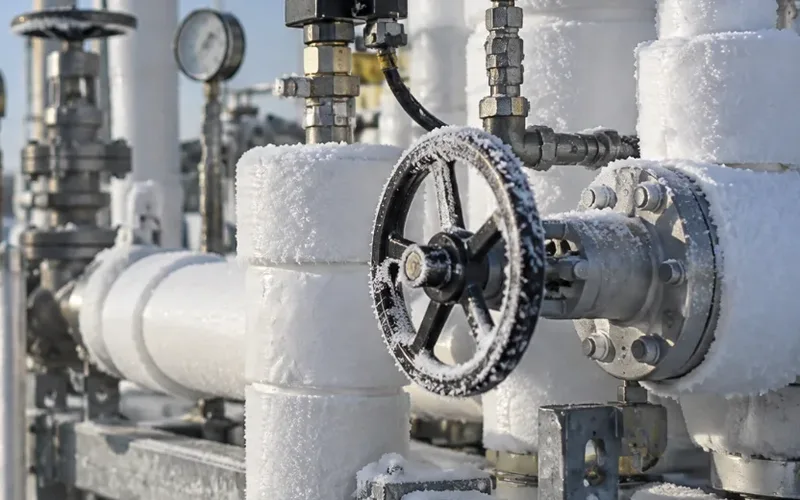
Nickel Brazed
When the fluid attacks copper or must not pick it up, the braze filler changes to nickel. What that buys on ammonia and DI water, and what it costs in rating.
+ Learn More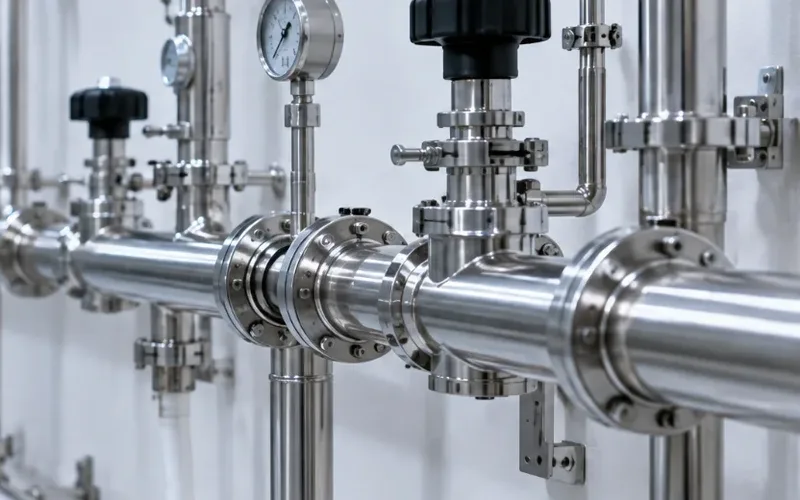
Brazed Plate
All-Stainless
Every wetted surface stainless, joints included. When corrosive, high-purity or copper-free food liquids rule out copper and nickel braze, this is the plate pack.
+ Learn More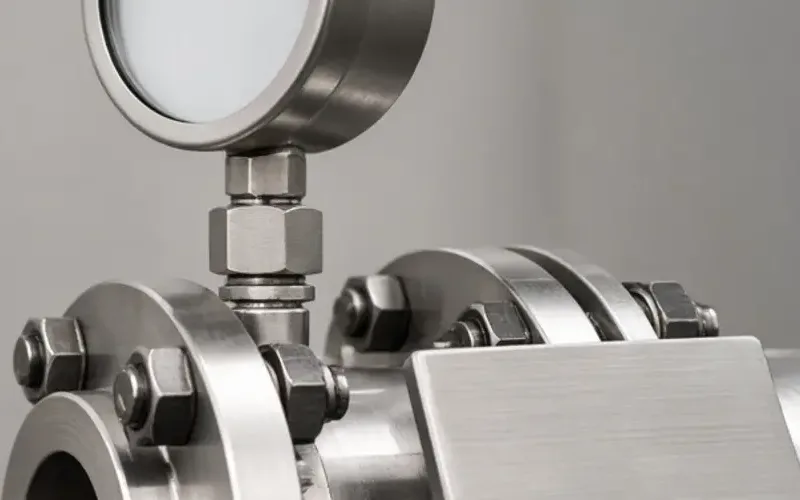
Brazed Plate
316L Plates
Copper brazed versus stainless brazed is a filler question, not a plate question. What the 316L plate tolerates, and what each braze adds or takes away.
+ Learn More