
1-805-484-2992
Quotes - Engineering - SalesPulling heat back out of exhaust, flue gas and waste water
A heat recovery exchanger built from pillow plates is a bank of panels stacked on spacers inside a duct, a flue or a sump. The waste stream passes between the plates; water or glycol inside them picks up the heat and carries it to make-up water, boiler feed or a glycol loop. The bank goes into a stream a finned coil cannot survive: wet, dusty, corrosive or hot enough to anneal aluminum fins. Flat stainless plates on a wide pitch pass lint, dust and droplets that would block a fin pack in a week.
Dry or wet decides the grade
Three waste streams account for most recovery banks. Dryer and oven exhaust at 250 to 400°F, carrying moisture and product fines, is the easiest and the most rewarding. Boiler and generator flue gas is hotter and cleaner but turns acidic the moment it is cooled below its dew point. Warm waste water from washdown, pasteurizer overflow and rinse tanks sits at 100 to 140°F and gives up its heat to an immersion bank in the sump before it goes to drain.
The grade question on a recovery bank is a single question: will the plate run wet? Dry gas above its dew point, and clean air, are 304L duties. Any plate that cools the gas through its dew point, that sits in waste water, or that is washed down between runs is 316L, because the condensate carries chlorides, sulfur compounds and whatever the process put into the air. Where flue gas is high in sulfur and the bank is designed to condense, the plate moves past 316L to a higher alloy.
Recovery banks are 304L in dry exhaust and air streams and 316L once the gas is cooled through its dew point or the plate sits in waste water. The Material & Construction page compares the grades.
What a recovery bank includes
- Single-embossed plates on spacers for duct and flue banks, double-embossed for immersion
- Plate pitch set wide for dusty or linty gas, closer for clean air
- Common inlet and outlet headers with the plates in parallel or in series passes
- Rated 100 psig for water and glycol; low-pressure steam where the gas is hot enough
- Casing or frame in stainless with access doors for cleaning the gas side
- Drain pan and drain line under any bank that will condense
- 304L or 316L sheet to the dry-or-wet rule, higher alloy where the condensate is acidic
for dry exhaust, 316L once wetA bank that only cools dry gas runs happily in 304L; the same bank pushed below the dew point needs 316L on every plate that gets wet.
What to send us for a recovery bank
A recovery bank is sized from the waste stream, which is usually less well known than the water it will heat. Measure the stream if you can; estimate it if you must, and say which it is.
- Waste stream: gas or liquid, flow rate, temperature in, and how low it may be cooled
- What is in it: moisture, dust, fibers, oil mist, sulfur or chlorine compounds, pH if liquid
- Duct or sump dimensions where the bank will sit, and the straight run available
- Allowable pressure drop on the gas side, which sets plate pitch and bank depth
- The sink: water or glycol flow, inlet temperature, and the temperature you want it raised to
- Hours of operation, steady or batch
- Access for cleaning, and whether the bank must be removable from the duct
Call and talk it through with an engineer: 1-805-484-2992
Several pillow plates set parallel in a duct or tank and manifolded together, so a hot gas or liquid passes between them and gives its heat to the water or glycol inside. The plates can be lifted out for cleaning.
Where recovery banks earn their keep and where they fail
The recoverable heat is the waste stream's flow times the temperature drop you can afford to take from it. Exhaust from a dryer at 300°F cooled to 150°F gives up about two-thirds of its sensible heat above ambient and a good deal of latent heat if moisture condenses; the same exhaust cooled only to 250°F gives up about a fifth. The limit is usually the dew point. Cooling below it recovers much more energy and makes the bank wet, which changes the grade, adds a drain and raises the pressure drop as condensate sits on the plates.
The sink side is where the heat has to go, and it has to want the heat all the hours the waste stream runs. Make-up water to a hot water system, boiler feedwater preheat and washdown water are reliable sinks because a plant uses them continuously. Space heating is a sink for half the year. A bank sized against a sink that is cold for only two hours a day recovers heat for two hours a day, and the payback calculation has to say so. Each gpm of water raised 1°F takes about 500 Btu/h, so 50 gpm raised 40°F absorbs 1,000,000 Btu/h, which is a useful fraction of a mid-sized dryer's exhaust.
Plate pitch and gas velocity set the fouling behavior. A dryer exhaust carrying lint or product fines needs a wide pitch, a velocity high enough to keep the fines moving but low enough to hold pressure drop, and an access door at each end so the plates can be hosed or blown clear. A bank set too tight for the dust it sees plugs within weeks and the dryer backs up. We size the pitch to the stream and say what cleaning interval to expect.
The grade rule is dry or wet. Dry exhaust and clean air above their dew point leave 304L untouched. Cooling flue gas below its dew point produces a condensate that is acidic from the sulfur in the fuel and carries chlorides from the combustion air, and that condensate sits on the plate untill it drains. 316L usually handles the condensing section on natural gas and most process exhaust. Fuel oil, biomass and any stream with chlorine compounds push the wet section toward 2205 duplex or 6-moly, and we will say so rather than quote 316L for a duty that will eat it.
The failure that reaches us is a 304L bank that was specified for a dry duty and then run harder. The water flow was raised to recover more heat, the gas dropped through its dew point in the last rows, and those rows corroded from the condensate side within a season while the inlet rows stayed bright. Specify the lowest gas outlet temperature the bank will ever see, not the design case, and grade the plates that cross the dew point as a wet duty.
Specify the lowest gas temperature the bank will ever see, then grade the wet rows for it.
The rows that cross the dew point corrode while the inlet rows stay bright, and the bank is condemned for the sake of a few plates in 304L.
Request a QuoteHeat recovery questions
Sensible heat down to about 20 to 30°F above the sink's inlet temperature is routine; a bank that condenses adds the latent heat of the moisture it knocks out, which on a humid dryer exhaust can double the recovery. The limits are the pressure drop the fan can spare and the grade you are prepared to buy for the wet rows. We quote the recovery at the gas outlet temperature you set and show the pressure drop next to it.
A finned coil has far more surface per foot of duct and is the right choice in a clean, dry air stream. In exhaust with lint, dust, oil mist or droplets the fins block, in acidic condensate aluminum fins dissolve, and above about 400°F mechanically bonded fins loosen. A pillow plate bank gives up surface density to gain a flat stainless face that can be hosed, a wide pitch that passes dirt, and a grade that survives the condensate.
Either works: it can heat potable make-up water directly, or feed a loop through a second exchanger. Direct heating needs 316L plates and a bank piped as a single-wall heater acceptable to the local code. Many plants prefer a glycol or treated-water loop so the recovery bank never carries potable water into a dirty duct; the loop costs a second exchanger and a pump and buys freeze protection and isolation. Either is quoted.
Related
Embossed Plate
Drip Elimination
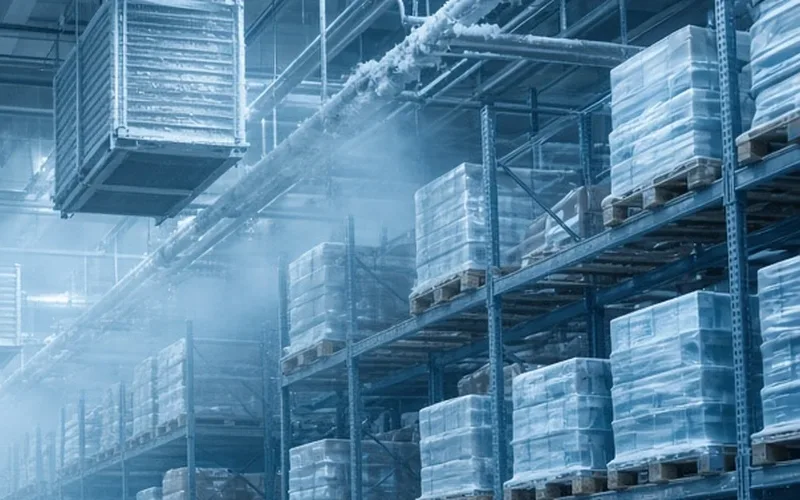
Pillow plates run below the room dew point pull moisture out of the air over product lines and in cold rooms, with a gutter and drain so nothing reaches the floor.
+ Learn More
Embossed Plate
Troughs
Single-embossed plates formed into U or V channels for conveyed solids, falling pastes and thin-film liquids, heated by steam or hot water or chilled by glycol.
+ Learn More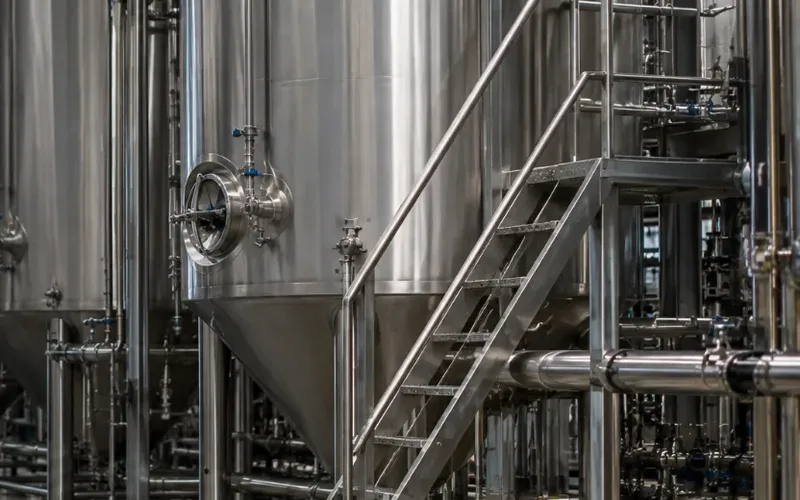
Embossed Plate
Clamp On
Retrofit heating or cooling on a stainless tank you already own: curved pillow plates, straps and heat-transfer mastic, with no weld and no code re-rating.
+ Learn More