
1-805-484-2992
Quotes - Engineering - SalesWhat a tube-in-tube exchanger is, and what the stainless version adds
A tube-in-tube heat exchanger, the double pipe heat exchanger of the older textbooks, sends the product through an inner tube while the heating or cooling medium runs the opposite way through the annulus around it. There are no plates to bridge, no baffles to snag a fiber, and no pass partition narrower than the tube itself. Whatever enters a full-bore unit travels the whole length at one diameter, which is why this construction carries diced fruit, meat pieces, pulp, sludge and pastes that would stall a plate pack or a shell-and-tube on 3/4 in. tubes.
In stainless the construction takes on a second job. The inner tube is the only surface the product touches, so one tube grade settles corrosion resistance for the whole unit: 316L as the standard, 2205 duplex where salt and chloride run high, while the annulus and outer shell can stay 304L when they see only water, glycol or steam. Single-tube units take the largest pieces and the thickest products; multi-tube units with 3–7 inner tubes suit thin, clean liquids where surface matters more than bore; corrugated tubes add turbulence to viscous product and slow the fouling that a smooth wall invites.
The engineers who land here are sizing a pasteurizer, a sauce-line cooker-cooler, a sludge heat recovery loop or an aseptic heater, and want grade and bore settled before the quote.
Product tubes are 316L as standard, with 2205 duplex or higher where wastewater passes about 1,000 ppm chloride or a sauce or brine exceeds about 3% salt hot. Material & Construction explains how the grade is chosen.
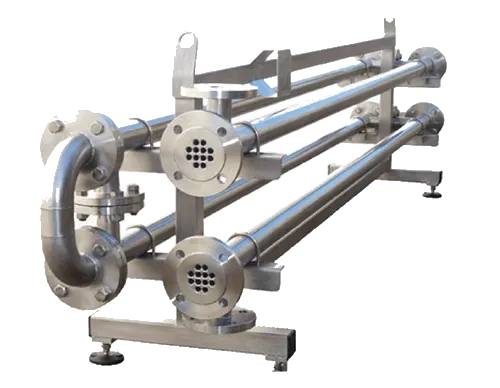
The product sees one tube and nothing else: a 316L inner tube in a full-bore layout passes pieces up to half its diameter with no internal crevice and gaskets only at the end connections.
Single, multi-tube and corrugated designs with product-side ratings of 150–300 psig.
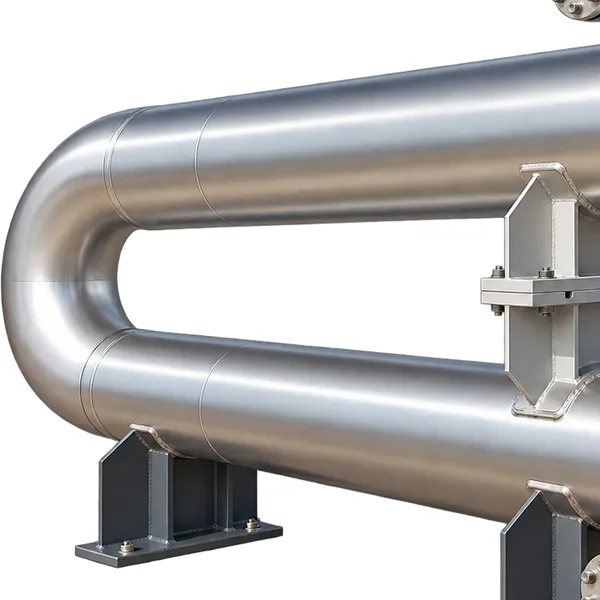
Built for what plugs everything else
- Inner tubes 1–4 in. pass pieces up to half the bore
- True counterflow for a close approach on regeneration
- No baffles or narrow channels; gaskets only at the ends
- Corrugated tubes hold turbulence in viscous product
- Straight runs that rod out from the end covers
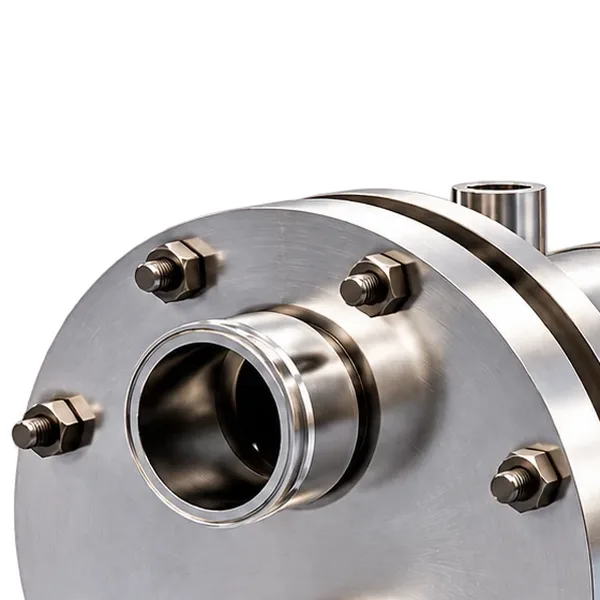
One tube grade carries the corrosion duty
- 316L product tube standard, 304L annulus on clean utility
- 2205 duplex for effluent above 1,000 ppm, brines above 3% salt
- Product side 150–300 psig, higher to order
- 32 µin Ra or 20 µin Ra product finish, electropolish as specified
- Fully drainable with tri-clamp or flanged ends
Specify it your way




Three stainless tube-in-tube builds, and which duty each one fits
The choice between them is set by the product, not by the duty. Piece size and viscosity decide whether a single large bore is required; a thin, clean liquid can go through several small tubes and gain surface; a viscous but pumpable product gains most from a corrugated wall. All three take hot water, steam to about 125 psig, chilled water, glycol or process liquid in the annulus.
Single tube, full bore
- One 316L inner tube, 1–4 in., no reduction anywhere in the product path
- Pieces up to about half the inner diameter pass without damage
- Lowest surface per foot, so runs are long and often stacked as hairpins
- Pressure drop stays low even on pastes and purees
- First choice for diced tomato, fruit preparations, meat sauces, sludge
Multi-tube
- 3–7 inner tubes inside one shell, product split across them
- Several times the surface of a single tube in the same length
- Clean, low-viscosity liquids only: juice without pulp, milk, water, brine
- Tube ends in a tubesheet, double tubesheet available for sanitary duty
- Regeneration sections make sense here because the approach can be tight
Corrugated tube
- Spiral or ring corrugation rolled into the 316L inner tube
- Turbulence at Reynolds numbers where a smooth tube is laminar
- Fouling layers tend to break up rather than build toward burn-on
- Slightly higher pressure drop than smooth for the same flow
- The usual pick for sauces, dairy desserts, egg and syrups
Selecting a stainless tube-in-tube unit
Bore first, surface second
Sizing starts with the largest piece in the product and the viscosity at the coldest point in the run, not with the duty. A 3/8 in. dice wants a 1 in. tube at minimum and more often 1-1/2 in.; a 1 in. chunk of fruit wants 2 or 3 in. Once the bore is fixed, velocity falls out of the flow rate, and only then does the surface follow from the duty and the approach. Run the calculation the other way and you get a unit with the right area and the wrong tube, and it plugs on the first shift.
- Pick the bore from the piece size, then check velocity
- Hold 2–6 ft/s on liquids, slower on soft particulates
- Keep every connection at the tube bore or larger
- Let the surface set the length, not the other way around
Grade choice: 316L, and when it is not enough
316L is the standard inner tube because almost every product that needs this construction is acidic, salty or both, and the 2–3% molybdenum is what resists pitting in that combination. 304L is acceptable on the annulus wherever the utility is clean water, glycol or steam. The grade question gets serious when chloride and heat arrive together: a pickle brine, a soy-type sauce, a digester sludge at 1,000 ppm chloride and 130°F. There 316L can pit, and above about 140°F it can suffer chloride stress corrosion cracking; 2205 duplex, with a PREN near 35 and twice the yield strength, is the answer, and 6-moly for the rare hot acid-plus-chloride case.
Utility side and wall temperature
Because the product film controls in nearly every tube-in-tube duty, the utility choice sets the wall temperature and therefore the fouling. Steam at 15 psig puts a 250°F wall against a product that may scorch at 220°F; hot water 20–30°F above the product outlet does the same duty on a longer unit and typically runs much longer between cleanings. A regeneration section that swaps heat between incoming and outgoing product typically recovers more than half the heating duty on a pasteurizer.
The mistake: a reducer at the inlet
The most common failure we see is not in the exchanger at all. A 2 in. full-bore unit is piped from a pump with a 1-1/2 in. discharge, or into a 1 in. tri-clamp tee somebody had on the shelf, and the reducer becomes the choke point the exchanger was bought to avoid. The second mistake is the same one in disguise: a sample valve or instrument tee that leaves a dead leg in a line meant to be aseptic. Match every fitting to the bore, keep the product path straight, and mount instruments in flush tees.
Tube-in-tube questions engineers bring us
Yes. Double pipe is the older name for one pipe inside another with the two fluids in counterflow; tube-in-tube is the same arrangement built from tubing, usually in stainless and usually for food or process liquids. Multi-tube and corrugated variants grew out of it, and the selection rules on this page apply to both names.
As a working rule, pieces up to about half the inner diameter pass a full-bore layout without bridging, provided nothing in the piping is smaller than the tube. A 2 in. tube therefore handles a 1 in. dice and a 3 in. tube takes whole small fruit. Soft pieces need low velocity as well, since the return bends are where they get crushed.
Whenever the product carries fiber, skins or pieces. Splitting the flow across 3–7 small tubes multiplies the surface but shrinks the bore to something a strand of pulp can bridge, and the tubesheet entry is exactly the sort of edge fiber catches on. Multi-tube belongs on clear juice, milk, whey, water and brine, where the gain in surface per foot is real and the plugging risk is not.
Rate the product tube for the pump's dead-head pressure, not the running pressure. Positive displacement pumps on viscous product can push a line well past 150 psig when a downstream valve closes, so 300 psig product-side ratings are common on puree and paste lines, higher to order. The utility side is rated separately, typically 150 psig at 350°F.
Related
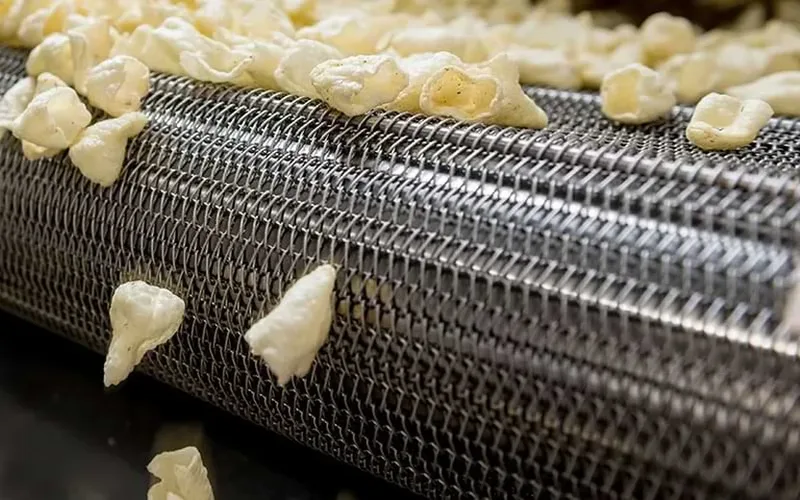
Tube-in-Tube
Solids in Suspension
Pieces, chunks and grains carried in a liquid need a bore they cannot bridge and a velocity that keeps them moving. Here is how the tube is chosen.
+ Learn More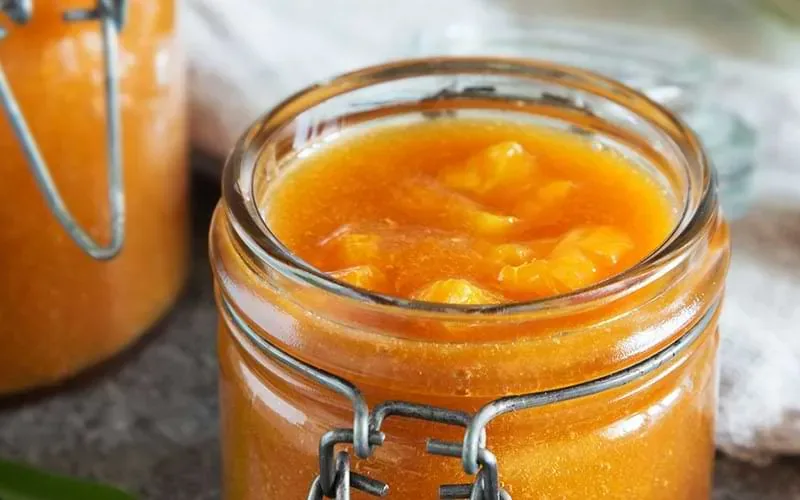
Tube-in-Tube
Puddings & Purees
Thick products move in laminar flow and scorch on a hot wall. How a corrugated 316L tube and a hot-water utility get a pudding or puree through without burn-on.
+ Learn More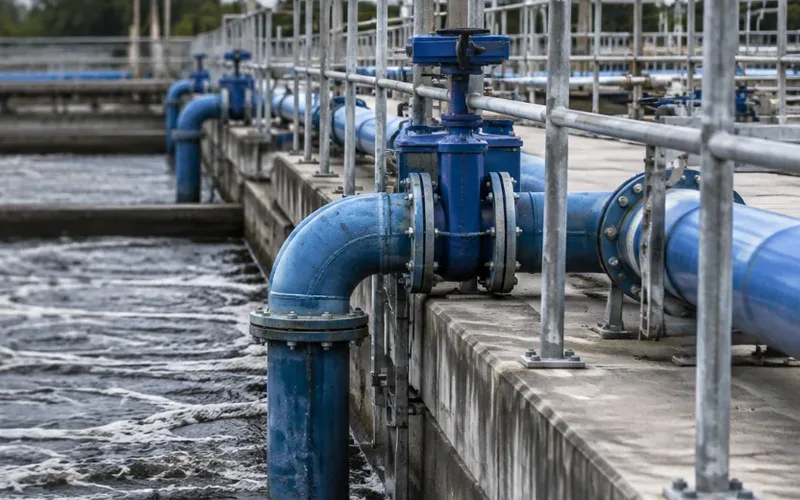
Tube-in-Tube
Waste Water
Digester sludge, plant effluent and process waste streams carry rags, grit, sulfide and more chloride than anyone expects. The tube and grade that survive them.
+ Learn More