
1-805-484-2992
Quotes - Engineering - SalesWhat makes a plate exchanger sanitary
A sanitary plate exchanger differs from an industrial one in four places, and none of them is the heat transfer. The frame is stainless clad over carbon steel, or solid stainless, so a wash-down hose and a caustic splash do not leave rust running onto the floor. The plates are pressed thinner, typically 0.4–0.5 mm in 316L, with a product-side surface at 32 µin Ra or better and no laps or dead corners in the port area. The gaskets are compounds listed for food contact, EPDM or NBR by duty, and are clip-on so they come off without adhesive residue. The ports are tri-clamp to 4 in. on the product side, and the pack drains when the follower is backed off.
The material question is the one this page owns. Product streams on a sanitary plate pack carry salt, lactic and citric acids, sugars that caramelize on a hot plate, and a CIP sequence of caustic at 160–185°F followed by an acid rinse. That is a chloride and low-pH exposure on a 0.4–0.5 mm wall, and it is why product plates on a sanitary frame are 316L rather than 304L, however benign the product looks on the data sheet.
What this page does not do is design your pasteurizer or your process line; it tells you what to specify in the stainless so the plate pack you buy holds up to the product and the cleaning.
316L plates at typically 0.4–0.5 mm with a 32 µin Ra product face, on a 304L clad or solid stainless frame, since the product side sees salt, acid and daily caustic. The Material & Construction page compares the grades.
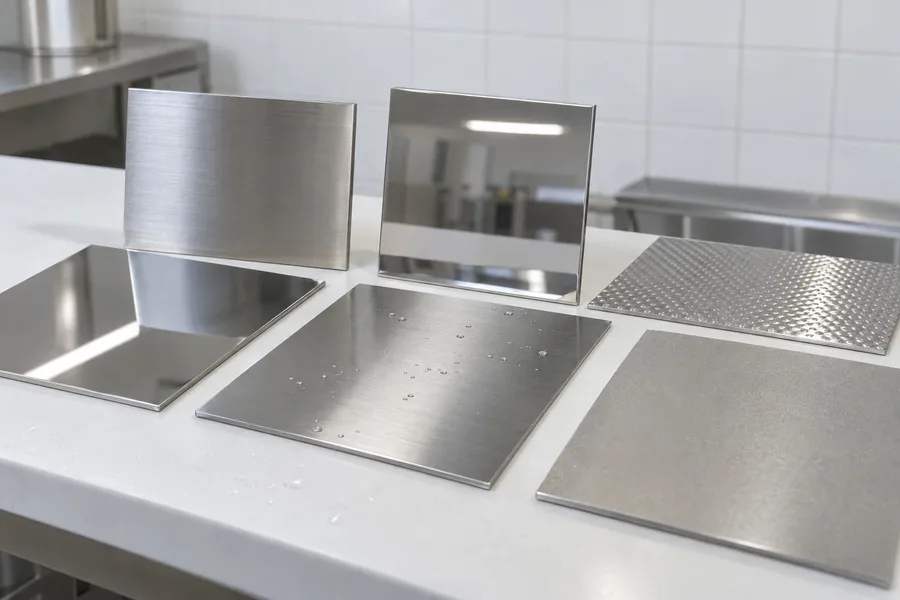
What a sanitary plate pack must survive every day
- Caustic CIP at 160–185°F followed by an acid rinse
- Product chlorides on a 0.4–0.5 mm plate, which rules out 304L
- Full drain through the tri-clamp ports with the follower backed off
The line as it runs and the sanitary unit for it
Sanitary plate duty is set as much by the cleaning cycle as by the product, so the left column lists both. The right column is the stainless specification that follows, with the frame choice tied to the plant's wash-down practice rather than to the product.
Product and cleaning duty
- Product side: Milk, juice, brine, sauce base, broth; 35–200°F
- Utility side: Hot water, chilled water or propylene glycol
- CIP sequence: Caustic 160–185°F, acid rinse, final water rinse
- Chlorides: Brined and salted products to several thousand ppm
- Wash-down: Hose and foam cleaning of the frame exterior daily
Sanitary build we recommend
- Plates: 316L, 0.4–0.5 mm, 32 µin Ra product face, no exposed laps at the ports
- Gaskets: Food-contact EPDM for water and CIP; NBR where fats or oils dominate
- Frame: 304L clad over carbon steel, or solid 304L; stainless tie bolts and feet
- Connections: Tri-clamp to 4 in., flanged above; product ports on the fixed head
- Surface and finish: Passivated per ASTM A967 after pressing; electropolish on request
- Send us: Product, flow, four temperatures, CIP chemicals and temperatures, port sizes
Write the recipe
caustic and acid strength, heat and contact time
State product salt
chloride decides 316L or a higher alloy
Specify the finish
plate finish and the hygiene papers wanted
Plan the drain
ports set so the pack empties after washing
Specifying the stainless on a sanitary plate pack
Why the plate is 316L and the frame is 304L
The plate and the frame face different exposures and get different grades. The plate is wetted by product and CIP chemistry on a 0.4–0.5 mm wall, so it takes the molybdenum of 316L to resist pitting from salt and the acid rinse. The frame is wetted only by wash-down water on the outside, and 304L clad plate resists that well; it is also easier to weld and form into a clad shroud than 316L. Specifying 316L for the frame cladding buys nothing for the product and adds cost; specifying 304L for the plates loses the pitting margin where it matters.
Surface finish on a pressed plate
A plate is pressed from cold-rolled sheet that arrives at about 32 µin Ra, and the pressing does not degrade that finish in the channel area. What matters for cleanability is the port region and the gasket groove, where a poor pressing leaves a lap or a sharp fold that holds product through CIP. We specify plates with a smooth port transition and, where the plant standard calls for it, an electropolished product face that drops the Ra by roughly half and raises the chromium-to-iron ratio at the surface. Passivation per ASTM A967 after pressing removes the free iron left by the die.
- 32 µin Ra on the product face is the usual dairy and food specification
- Electropolish to about 15–20 µin Ra for pharma or where the product bakes on
- Ask for the passivation certificate with the MTRs
The mistake: the right plate on the wrong frame
A beverage plant bought a plate pack with 316L plates and food-contact gaskets and put it on a painted carbon steel frame to save money. The product side was fine. The frame was foamed and hosed twice a day, the paint lifted at the tie bolt holes within months and the carbon steel bled rust down the front of the unit onto the floor, which failed the plant's own audit. The tie bolts seized and the pack could not be opened for inspection without cutting them. A clad frame with stainless tie bolts would have cost a fraction of the replacement and the lost production.
- Wash-down floor means clad or solid stainless frame, no exceptions
- Stainless tie bolts and leveling feet even when the frame is clad
- A drip pan under the pack where the floor drain is not beneath it
Drainability and the gasket
A 3-A sanitary layout asks the pack to drain by gravity, which a plate exchanger does only when the ports are at the bottom corners, the frame is level and the follower is backed off enough to let the plates separate. The gasket matters here too: a clip-on food-contact EPDM gasket can be removed and inspected without solvent, while a glued gasket leaves adhesive in the groove that holds product and has to be scraped. Where the product carries fats or oils, NBR holds up where EPDM swells; where the CIP includes a chlorinated sanitizer, EPDM is the compound and the plates are 316L for the same reason.
Before you pick the frame
No. A clad frame is a carbon steel structure with 304L sheet welded over every exposed face, which gives the wash-down resistance of stainless at a lower cost and with the stiffness of carbon steel. A solid stainless frame is machined from 304L plate throughout. Both meet most food plant standards; the solid frame is specified where the hygiene audit requires no carbon steel anywhere in the equipment.
They are typically pressed at 0.4–0.5 mm because many product sides run at moderate pressure, and the thinner plate gives a higher heat transfer coefficient for the same chevron. The cost is a lower design pressure and a plate that is less forgiving of pitting, which is the reason sanitary product plates are 316L and why we ask for the product's salt content before quoting.
A short steam flush at atmospheric pressure, around 212°F, is within the range of a food-contact EPDM gasket. Pressurized sterilization at 250–275°F is done on indirect UHT packs, but it shortens gasket life and needs a steam-resistant EPDM compound. Where a line requires SIP on every cycle, a stainless tube-in-tube or a double tubesheet sanitary shell and tube is the construction with no elastomer in the product path.
Material test reports for the plate sheet and the frame cladding, a gasket compound statement for food contact, the passivation record and a hydrotest report. Where the plant standard calls for it we supply 3-A conformance on the specified unit, surface finish certification for the product face and, for the pressure parts, an ASME stamp where the design pressure and the plant require one.
Related
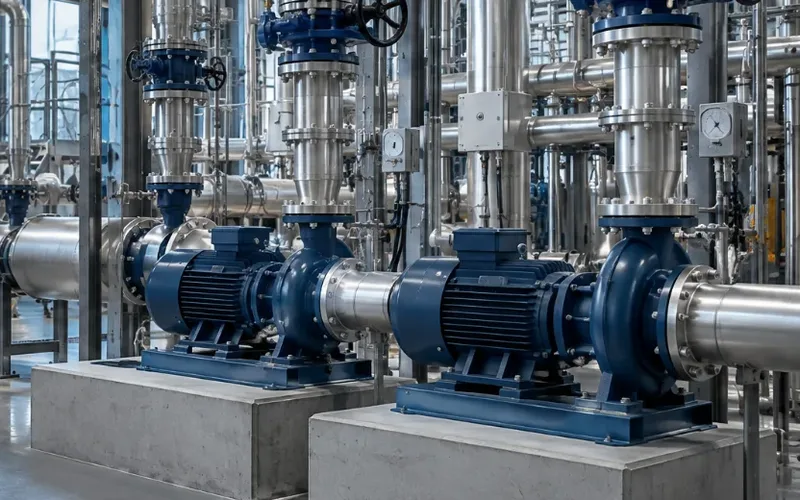
Plate & Frame
Industrial
Process cooling, glycol loops, quench water and oil coolers on 316L plate packs with painted frames, sized to a stated pressure drop.
+ Learn More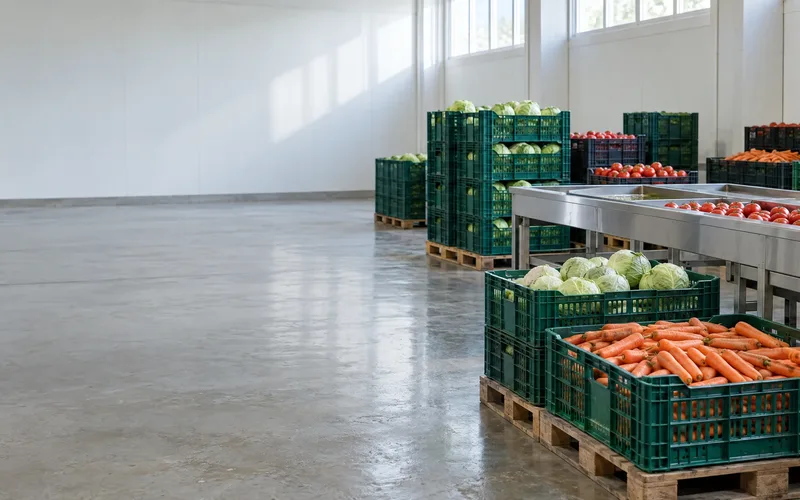
Plate & Frame
Food Processing
Multi-section plate pasteurizers for broths, sauce bases, brines and dressings, with the plate grade checked against the salt in the product.
+ Learn More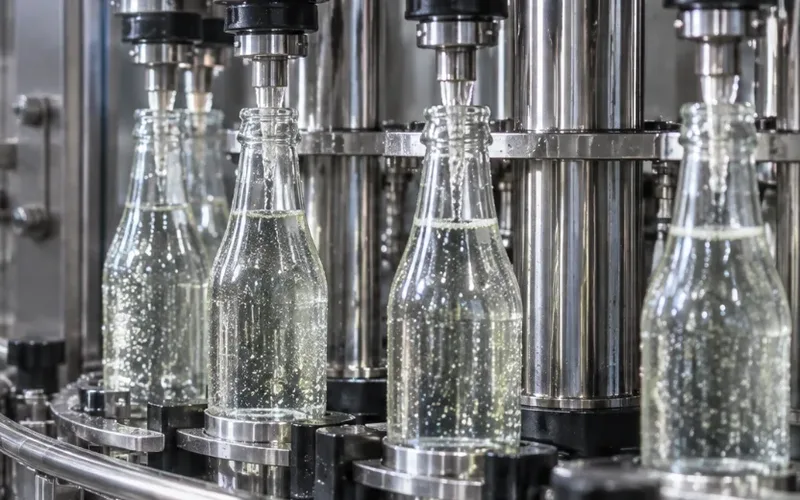
Plate & Frame
Beverage
Plate pasteurizers and chillers for juice, syrup, carbonated water and finished soft drinks, with acid, sugar and citrus oil driving the gasket choice.
+ Learn More