
1-805-484-2992
Quotes - Engineering - SalesBoiling refrigerant in a 1–3 mm channel
A brazed plate evaporator takes liquid refrigerant from the expansion valve at perhaps 20 percent quality, spreads it across every refrigerant channel, boils it to saturated vapor and adds 8–12°F of superheat before it leaves for the compressor. The chilled water or glycol runs counterflow in the alternate channels, typically dropping 10°F, with the evaporating temperature set 5–8°F below the leaving fluid temperature. Because the plates are 316L and the channel is 1–3 mm, the whole process happens in a unit a fraction the size of a shell-and-tube chiller barrel, with a refrigerant charge to match.
Two things separate a good plate evaporator from a short-lived one. The first is distribution. Two-phase refrigerant entering a port wants to send liquid to the first channels and vapor to the last, which starves the far end of the stack and sends liquid back to the compressor from the near end. The inlet distribution device inside the refrigerant port fixes that, and it is sized to the refrigerant, the plate count and the load range, so we ask for the turndown. The second is the braze: copper on HFC and HFO, nickel on ammonia, where copper would be dissolved out of the joints by the refrigerant itself.
The failure that scraps more evaporators than anything else is freeze. Water in a 1–3 mm channel that freezes expands with enough force to split the plates, and a split plate puts water into the compressor. It happens on low flow, a stuck expansion valve, a dirty strainer, or a glycol loop that was topped up with plain water. Specify glycol concentration for the lowest evaporating temperature with margin, fit a flow switch and a low-pressure cutout, and tell us the minimum flow case so the design keeps the channel velocity above the point where ice can form.
Plates are 316L whatever the refrigerant; copper braze serves HFC and HFO evaporators, nickel braze serves ammonia, and glycol strength rather than plate grade sets the freeze margin. Material & Construction explains how the grade is chosen.
What makes a plate evaporator work
Refrigerant side
- Refrigerant, oil type and expansion valve type (TXV or electronic)
- Evaporating temperature and required superheat at full and part load
- Copper braze for HFC and HFO, nickel braze for ammonia
- Inlet distribution sized to the load range, not the nominal point
Chilled fluid side
- Water or glycol type and percent at the coldest condition
- Flow, inlet and outlet temperatures; a 10°F range is typical
- Allowable pressure drop; brazed units run higher than tube bundles
- Chloride and hardness; closed, treated loops are the norm here
Freeze protection
- Glycol concentration with margin below the lowest evaporating temperature
- Flow switch, low-pressure cutout and freeze thermostat on the leaving fluid
- Strainer upstream so a plugged channel cannot stall flow and freeze
- Vertical mounting with refrigerant in at the bottom, out at the top
Typical brazed plate evaporator build
A representative chiller or process-cooling evaporator; dual-circuit versions put two refrigerant circuits against one chilled fluid side.
| Feature | Typical build |
| Plate grade | 316L, dual-certified 316/316L |
| Braze filler | Copper on HFC and HFO; nickel on ammonia |
| Refrigerant-side rating | 435–650 psig; CO2 subcritical evaporators on a high-pressure plate |
| Evaporating temperature | Commonly 34 to 45°F on water, down to -40°F on glycol and ammonia |
| Superheat | 8–12°F at the outlet; lower with an electronic valve |
| Fluid-side approach | 5–8°F between leaving fluid and evaporating temperature |
| Distribution | Inlet distribution in the refrigerant port, matched to turndown |
| Mounting | Vertical, refrigerant bottom in and top out, fluid counterflow |
| Protection | Flow switch, low-pressure cutout, freeze thermostat, strainer on the fluid side |
Evaporator questions
Enough that the freeze point sits well below the lowest evaporating temperature the compressor can pull, not the lowest leaving fluid temperature. At a 20°F evaporating temperature the refrigerant channel wall is colder than the bulk fluid, so a loop that freezes at 20°F is not protected. Give us the glycol type and the coldest refrigerant condition and we will state the concentration we sized for.
Yes. Nickel-brazed ammonia evaporators run DX with a distribution device, or flooded and pumped overfeed with the ports arranged for liquid in at the bottom and wet vapor out at the top to a surge drum. The water or glycol side is unchanged. Tell us the feed arrangement, because a plate pattern and port layout chosen for DX will not drain or circulate correctly on overfeed.
Usually distribution. At low load the refrigerant mass flow drops, the distribution device no longer meters evenly, some channels flood and others starve, and the expansion valve hunts between them. The fix at selection is to tell us the turndown ratio so the distribution and plate count are chosen for the whole range; a unit picked for the nominal point alone will hunt at 30 percent.
The plate and braze are good to -320°F, so the exchanger is rarely the limit; the secondary fluid is. Water-based glycol runs to about -40°F before viscosity makes the fluid side impractical, and below that the duty moves to a brine, a silicone fluid or a direct-expansion coil. Ammonia and CO2 evaporators on a plate unit at -40°F are routine in industrial refrigeration.
Related
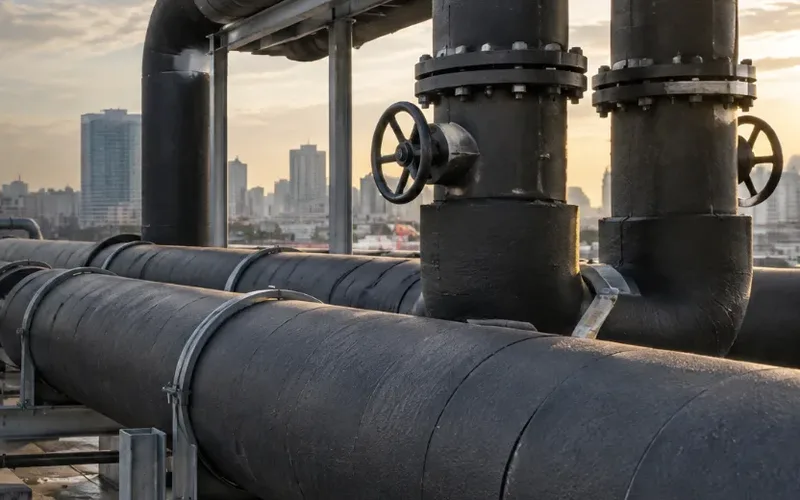
Brazed Plate
Condensers
A water-cooled brazed plate condenser desuperheats, condenses and subcools in one 316L block. Water quality, not refrigerant, decides whether it belongs on the job.
+ Learn More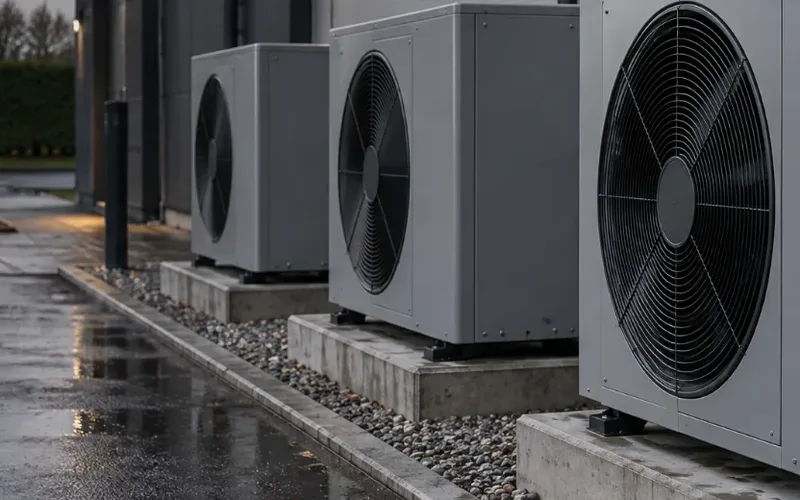
Brazed Plate
Heat Pump
A reversible heat pump asks one exchanger to boil refrigerant in heating mode and condense it in cooling mode. Plate pattern and ports must suit both.
+ Learn More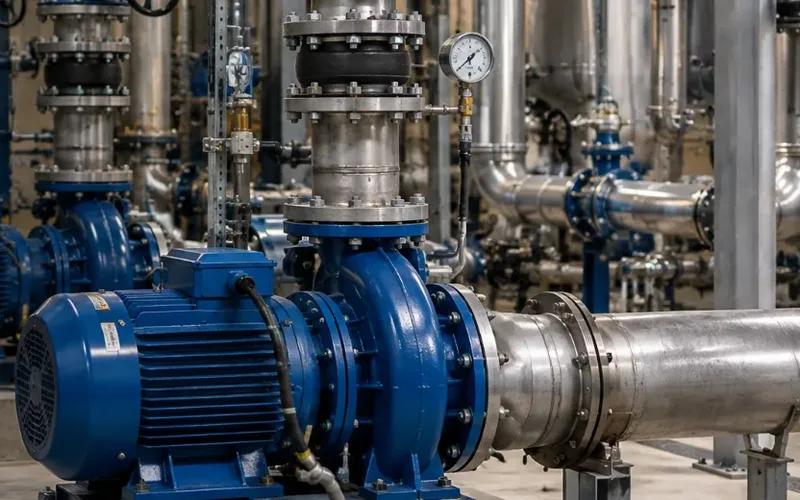
Brazed Plate
Hydronics
Commercial hydronic duty is clean water against clean water at modest temperature, a fit for a brazed 316L plate once the braze and the potable code are settled.
+ Learn More
