
1-805-484-2992
Quotes - Engineering - SalesSingle-phase liquid on both sides
Liquid-to-liquid is the duty the brazed plate was made for: a closed glycol loop cooling a process water loop, a hydraulic oil cooler on tower water, a 180°F boiler loop heating a 140°F process loop through an isolation exchanger, a chilled water loop cooling a machine-tool coolant. Both fluids stay liquid, the temperature program is sensible-heat only, and the corrugated 316L plates give true counterflow with an approach of 2–5°F. A duty that would need a long shell-and-tube often fits in a brazed unit a fraction of its volume.
The filler is copper unless something in the fluid says otherwise. Copper braze is fine on city water, softened water, glycol with inhibitors, and mineral or synthetic oils. It is not fine on deionized or reverse-osmosis water, which leaches copper from the fillets and both weakens the joint and puts copper into the water, and it is not fine on ammonia or on amine-bearing streams. Those take nickel braze. Where a process stream may see no copper or nickel braze at all, the stainless-brazed version keeps the wetted path stainless end to end.
The limit on the water side is chloride. 316L plates typically tolerate about 1,000 ppm in cool, clean, near-neutral water, but tower water can reach 600–900 ppm from a 150 ppm makeup, sits in a brazed crevice, and warms past 140°F on the hot side of an oil cooler. That is pitting territory for a plate you cannot open. For a closed loop with treated water it is a non-issue; for open tower water we ask for a water analysis before we quote a brazed unit at all, and a gasketed plate-and-frame with titanium plates is often the better answer.
316L plates with copper braze cover clean water, glycol and oil; nickel or stainless filler takes over on deionized water, and chloride-rich water goes to another construction. The Material & Construction page compares the grades.
Three things that decide the selection
The two fluids
- Water, glycol percent and type, oil grade and viscosity at inlet
- Chloride, pH and hardness on any water side
- Deionized or RO water on either side rules out copper braze
- Solids, fibers or scale on either side rule out brazed plate
The thermal program
- Flow and inlet temperature on both sides, or flow and duty on one
- Required outlet on the side that matters; the other side floats
- Allowable pressure drop per side, usually 5–10 psi
- Fouling margin of 10–25% excess surface on tower or process water
The mechanical fit
- Port size and type: NPT, sweat, flange or weld stub
- Design pressure and temperature; 435–650 psig is standard
- Mounting orientation and bracket; vertical ports preferred
- Code stamp, MTRs or CRN where the site requires them
Typical liquid-to-liquid build
A representative selection for closed loops and clean once-through water; oil and glycol duties change the channel pattern and plate count, not the construction.
| Feature | Typical build |
| Plate grade | 316L, dual-certified 316/316L |
| Braze filler | Copper standard; nickel for deionized water; stainless filler for copper-free duty |
| Flow pattern | Counterflow, single pass, both fluids; approach 2–5°F |
| Design pressure | 435–650 psig (30–45 bar) both sides |
| Design temperature | -320 to 400°F; glycol and oil duties rarely leave 0–250°F |
| Water-side chloride | Under about 200 ppm preferred; 200–1,000 ppm only cool, clean and treated, by review |
| Viscosity | Oils to a few hundred cSt with a wide channel pattern; above that, shell-and-tube |
| Protection | Strainer on every open loop; double-wall where water must not meet oil or glycol |
Questions on liquid-to-liquid duty
Yes, and more than most buyers expect. At 40 percent propylene glycol the viscosity near 32°F is several times that of water and the specific heat is lower, so the glycol side needs more surface and more pressure drop for the same duty. Tell us the glycol type, percent and the coldest operating temperature; a unit sized on water will come up short on glycol.
Only with a water analysis in hand and a strainer in the line. Tower water concentrates chlorides, carries silt and biological growth, and the oil side runs warm enough to push the plate past 140°F. Under 200 ppm chloride, well filtered and treated, a 316L brazed unit usually works; 200–1,000 ppm is a review case, and past that we would rather quote a gasketed plate with titanium plates you can open and inspect.
Neither, if dirty means solids; brazed plate is not for solids. If dirty means a modest fouling tendency, put that fluid on the side with the larger port and specify a slightly higher velocity, because velocity is the only fouling control a sealed unit has. We also size with a fouling margin of 10–25% excess surface so a season of scale does not take the duty below spec.
In full counterflow a brazed plate unit can bring the cold-side outlet to within 2–5°F of the hot-side inlet. Every degree tighter than that costs plates quickly; a 2°F approach can need twice the surface of a 5°F approach on the same duty. Tell us the approach you truly need and we will show the plate count for both.
If a leak of glycol into the water side would reach a potable supply or a process stream, yes, and the code may require it. The double-wall plate vents a failure to atmosphere so the two loops never mix, at the cost of some surface and a larger unit. On a closed loop against a closed loop, a single-wall unit with a pressure differential check is the usual answer.
Related
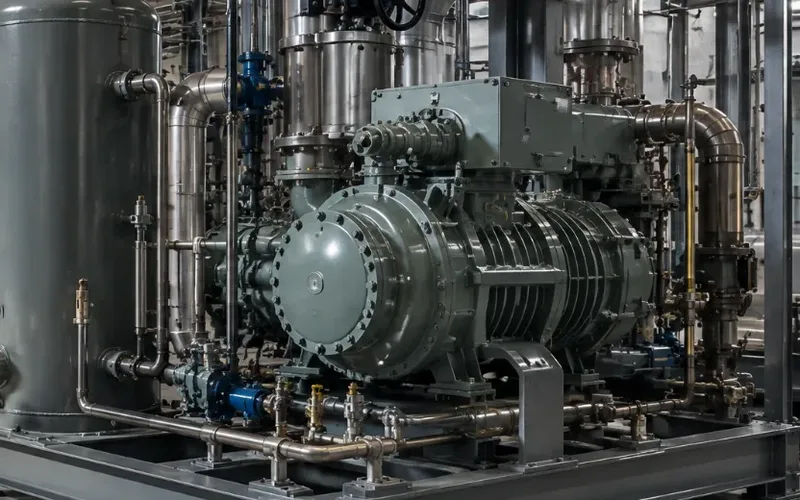
Brazed Plate
Refrigeration
For chillers and industrial refrigeration the braze follows the refrigerant: copper for HFC and HFO, nickel for ammonia, high-pressure plates for CO2.
+ Learn More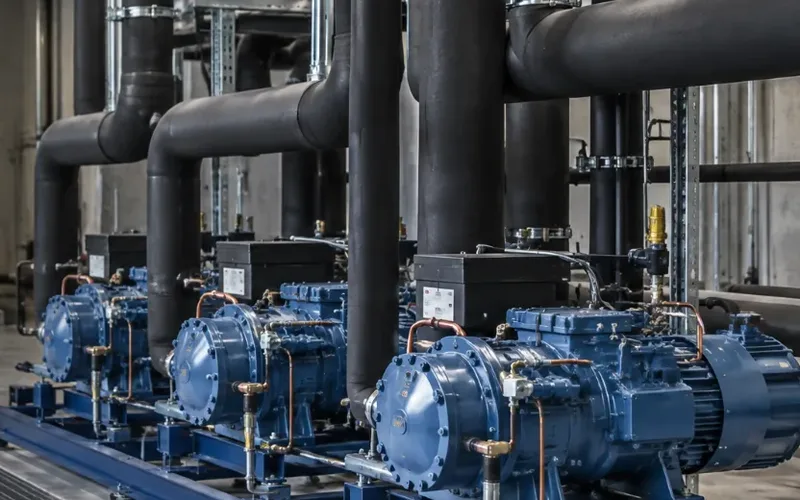
Brazed Plate
Evaporators
A plate evaporator in 316L boils refrigerant a few degrees below the chilled fluid. Distribution, superheat and freeze margin are the three things that make it last.
+ Learn More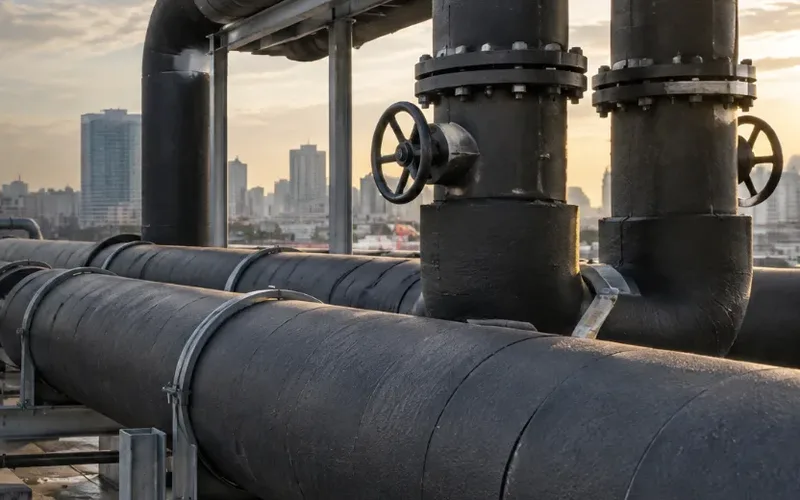
Brazed Plate
Condensers
A water-cooled brazed plate condenser desuperheats, condenses and subcools in one 316L block. Water quality, not refrigerant, decides whether it belongs on the job.
+ Learn More