
1-805-484-2992
Quotes - Engineering - SalesThe 316L plate and the three fillers that hold it together
A brazed plate exchanger starts as thin 316L sheet pressed into a chevron pattern. The plates are stacked with filler between them and vacuum brazed, and the filler flows to every point where the chevrons of neighboring plates cross, then seals the plate edges and the port rings. 316L is used because the plate is thin enough that a single pit is a leak between the two fluids: the 2–3% molybdenum holds off pitting in chloride-bearing water, and the 0.03% maximum carbon matters because the braze cycle passes slowly through the range where a higher-carbon grade would lose chromium at the grain boundaries. Plate stock is dual-certified 316/316L. There is no corrosion allowance on a plate; a pit that would be a blemish on a shell wall goes straight through.
The filler is the second wetted metal. Copper is the standard braze and suits water, glycol, oils and HFC or HFO refrigerants. Nickel-based filler replaces it where the fluid attacks copper or must not pick it up: ammonia, deionized and high-purity water, copper-sensitive process liquids. An iron-based stainless filler leaves no copper and no nickel-alloy braze in the wetted path. The fluid has to suit both the plate and the filler, at thousands of joints in each pack.
Chloride is a plate limit, so changing the filler does not move it. On the water side, chloride under about 200 ppm is preferred for a copper-brazed pack; 200–1,000 ppm is accepted only on cool, clean, treated water after review; above that the duty goes to a gasketed titanium plate or a shell-and-tube. The stainless filler does not raise that limit, and the braze points are themselves crevices where attack starts. Above about 140°F the 316L plate also carries a chloride stress cracking risk.
Every brazed pack here uses 316L plates; copper, nickel or iron-based stainless filler suits the fluid, and chloride past the 316L guidance moves to titanium gasketed plates. See Material & Construction for the grade comparison.
Choosing the filler for a 316L pack
Copper braze fits
- Closed water and glycol loops with treated, low-chloride water
- Lube, hydraulic and thermal oils within the 400°F envelope
- HFC and HFO refrigerants with POE oil, where its ductile joint gives the highest rating
- Water near neutral to mildly alkaline pH, without sulfide or ammonia
Change the filler when
- Ammonia is on either side: nickel braze with stainless connections
- The water is deionized, RO permeate or held to a copper limit
- Sulfide or sulfur compounds in the fluid would blacken and thin copper
- The specification bans copper and nickel-alloy braze: iron-based stainless filler
Change the construction when
- Tower water, brackish water or brine passes 1,000 ppm chloride: gasketed titanium
- The fluid carries fibers or particles that bridge a 1–3 mm channel
- Product contact must be opened and inspected under a 3-A standard
- Hot acids or chlorides sit beyond 316L whatever holds the plates together
The 316L brazed pack, part by part
What the plate and each filler option carry; the quotation states the rating and limits for the unit you order.
| Feature | Typical build |
| Plate | 316L, dual-certified 316/316L, pressed chevron pattern |
| Standard filler | Copper, vacuum brazed at every contact point and port ring |
| Copper-free filler | Nickel-based alloy for ammonia, deionized water and copper-sensitive fluids |
| All-stainless filler | Iron-based stainless alloy; no copper and no nickel-alloy braze in the wetted path |
| Pressure rating | Commonly 435–650 psig (30–45 bar); to about 2,030 psig (140 bar) on transcritical CO2 designs |
| Temperature | -320 to 400°F typical envelope, set by the filler and the design |
| Water-side chloride | Under about 200 ppm preferred; 200–1,000 ppm by review on cool, clean, treated water |
| Channel | 1–3 mm gap; strain both fluids, no fibers or particulates |
What engineers ask about 316L brazed plates
No. Seawater carries about 19,000 ppm chloride, far past the 316L guidance, and a brazed pack has thousands of crevices at its braze points where pitting starts. Pits go through a thin plate quickly and mix the fluids. For seawater or brine on one side, the stainless-family answer is a gasketed plate unit with titanium plates, or a shell-and-tube with titanium tubes in a titanium-clad tubesheet.
It depends on the fluid, because the two packs share the same 316L plate. On clean glycol or treated water both typically run for many years and the copper unit carries the higher rating. On ammonia or a fluid that strips copper, only the copper-free packs make sense. The all-stainless braze changes the joint metal, not the plate's chloride or acid limit.
The packs we supply use 316L plates. On sheet this thin the molybdenum is the margin between treated water that drifts upward in chloride and a pinhole leak, and the cost difference in the plate metal is a small part of a brazed unit's price. The savings on a brazed selection come from plate count and pressure drop, not from the grade.
Putting open tower water on one side. A tower fed with 150 ppm makeup can reach 600–900 ppm chloride at normal cycles, sits warm, carries deposits and is dosed with oxidizing biocide, and it cannot be cleaned mechanically out of a brazed pack. The plates can pit at the braze points or scale shut. A gasketed plate isolating the tower water, with the brazed unit on the clean loop, avoids it.
Related
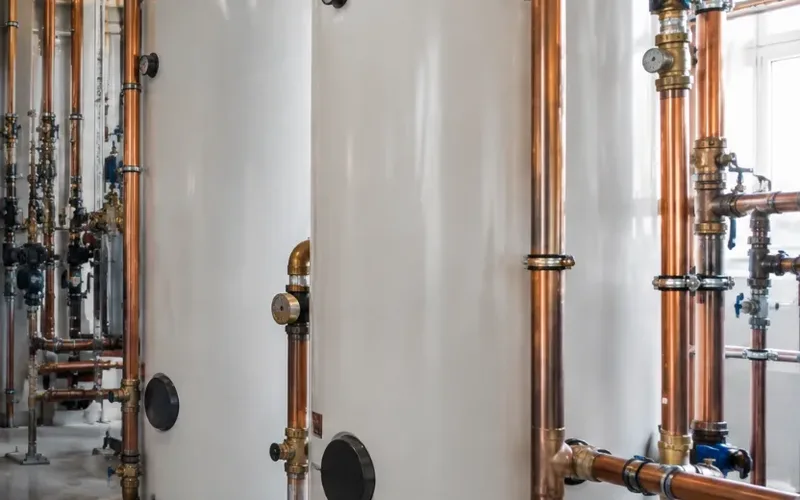
Brazed Plate
Double Wall
Where a plumbing code demands a vented barrier between potable water and a heating fluid, this is the construction, and here is what it gives up to get it.
+ Learn More
Brazed Plate
Nickel Brazed
When the fluid attacks copper or must not pick it up, the braze filler changes to nickel. What that buys on ammonia and DI water, and what it costs in rating.
+ Learn More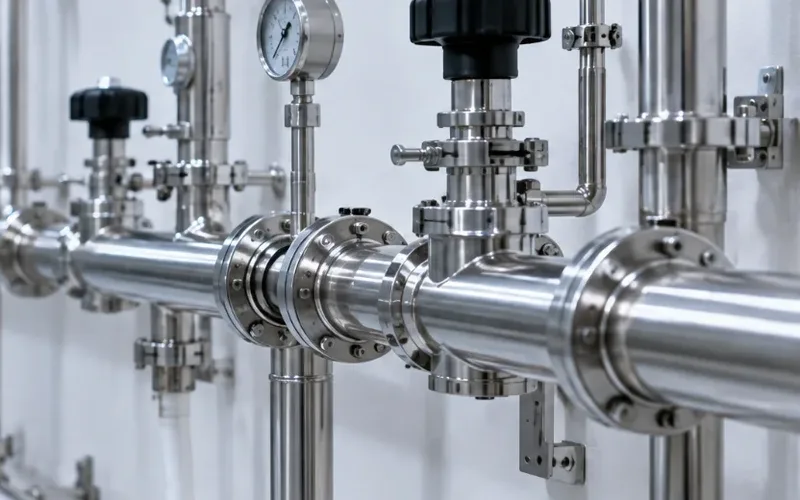
Brazed Plate
All-Stainless
Every wetted surface stainless, joints included. When corrosive, high-purity or copper-free food liquids rule out copper and nickel braze, this is the plate pack.
+ Learn More
