
1-805-484-2992
Quotes - Engineering - SalesCondensing in counterflow against water
A brazed plate condenser receives hot compressor discharge gas, typically 150–200°F on an HFC system, strips the superheat, condenses it at saturation and subcools the liquid 5–10°F before it leaves for the receiver or the expansion valve. Water or glycol runs counterflow, commonly entering at 85°F from a tower or 95–105°F on a heat-reclaim loop and leaving 10°F warmer. The condensing temperature sits 5–10°F above the leaving water, which is a tighter approach than a shell-and-tube condenser gives, and that is the energy case for the plate unit: lower head pressure for the same water.
Refrigerant enters at the top port and leaves as liquid at the bottom, so gravity drains every channel and the subcooling section is the last few inches of plate above the outlet. Discharge gas is the hottest refrigerant the unit sees, and at 200°F it is still well inside the -320 to 400°F envelope, so the braze filler is chosen for chemistry alone: copper on HFC and HFO refrigerants, nickel on ammonia. The pressure side is the refrigerant, and the upper end of the 435–650 psig range is needed for R-410A and R-32, while lower-pressure HFOs fit the standard rating; CO2 cascade condensers and gas coolers move to a high-pressure plate.
What takes brazed plate condensers out of service is the water. A tower loop at 4–6 cycles can reach 600–900 ppm chloride from a 150 ppm makeup, carries silt and slime, and near the discharge-gas inlet the plate wall can exceed 140°F. That combination can pit a 316L plate in a crevice nobody can see, and the first symptom is refrigerant in the tower sump. A brazed condenser belongs on closed, treated loops and on clean tower water under about 200 ppm chloride with a strainer, with 200–1,000 ppm only by review on cool, clean, treated water; dirtier tower water goes to a gasketed plate with titanium plates or a shell-and-tube condenser that can be opened and rodded.
316L plates with copper braze on HFC and HFO condensers, nickel braze on ammonia; open tower water with chlorides above about 200 ppm pushes the duty toward a titanium gasketed plate instead. The Material & Construction page compares the grades.
The condenser selection in three parts
Refrigerant and heat
- Refrigerant, discharge temperature and condensing temperature at design
- Heat of rejection, which is compressor capacity plus compressor power
- Subcooling required at the liquid outlet
- Copper braze for HFC and HFO, nickel braze for ammonia
Cooling water
- Source: closed loop, tower, well or once-through, and its analysis
- Chloride, hardness and pH; under 200 ppm chloride for a brazed unit
- Flow and inlet temperature; a 10°F rise is the usual design
- Strainer on every open loop before the condenser
Installation
- Vertical mounting, refrigerant top in and liquid bottom out
- Liquid line sized so the condenser does not back up and lose surface
- Head pressure control for low water temperature in winter
- Relief valve setting against the refrigerant-side rating
Typical brazed plate condenser build
A water-cooled condenser for chillers, process refrigeration and heat reclaim; the water quality row is the one that changes the construction.
| Feature | Typical build |
| Plate grade | 316L, dual-certified 316/316L |
| Braze filler | Copper on HFC and HFO; nickel on ammonia; high-pressure plate for CO2 |
| Refrigerant-side rating | 435–650 psig (30–45 bar) |
| Discharge gas temperature | 150–200°F typical; envelope -320 to 400°F |
| Condensing approach | 5–10°F above leaving water |
| Subcooling | 5–10°F in the lower plates; more with a separate subcooler |
| Water quality | Closed treated loop, or clean tower water under about 200 ppm chloride with a strainer |
| Fouling margin | 10–25% excess surface on tower water |
| Protection | Double-wall version where refrigerant may not reach a potable or process water loop |
Condenser questions
On clean, treated tower water under about 200 ppm chloride, with a strainer, yes, and many run for years. On tower water that cycles up to 600–900 ppm, carries silt, or runs a hot leaving temperature, the 316L plates can pit in the crevices and the unit is scrapped. Send the water analysis with the quote request; if the numbers are marginal we will quote a titanium gasketed plate instead.
With the liquid outlet at the bottom and the water inlet beside it, 5–10°F of subcooling is normal because the coldest water meets the liquid refrigerant last. More than that needs a separate subcooler or a larger unit sized with a subcooling section, because the plates given to subcooling are plates taken from condensing and the head pressure rises.
Head pressure drops, the expansion valve loses its pressure differential, and the system starves. The condenser itself is unharmed. Control the water flow or temperature with a head pressure valve or a tower bypass so the condensing temperature stays above the valve's minimum; the brazed unit's small water volume reacts quickly, which is a help to the control loop and a nuisance without one.
If the reclaim loop is potable water or feeds a potable system, the code usually requires a double-wall exchanger with a vented gap so a plate failure cannot put refrigerant or oil into drinking water. On a closed heating loop a single-wall unit is normal. State what the water side serves and we will quote the construction the code calls for.
Charge and footprint. A nickel-brazed plate condenser holds a fraction of the ammonia a tube-bundle condenser does and fits where a shell will not. The trade is water quality, because the plate unit cannot be opened, so an ammonia plate condenser belongs on a closed glycol loop or clean, strained water, not on raw tower water.
Related
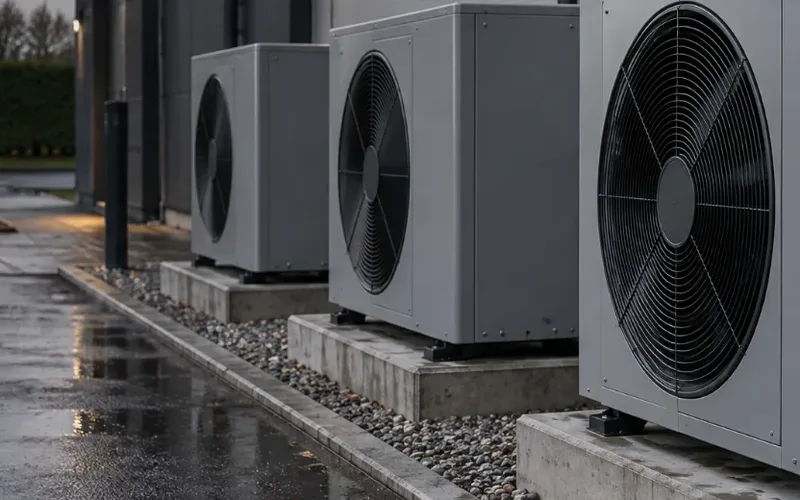
Brazed Plate
Heat Pump
A reversible heat pump asks one exchanger to boil refrigerant in heating mode and condense it in cooling mode. Plate pattern and ports must suit both.
+ Learn More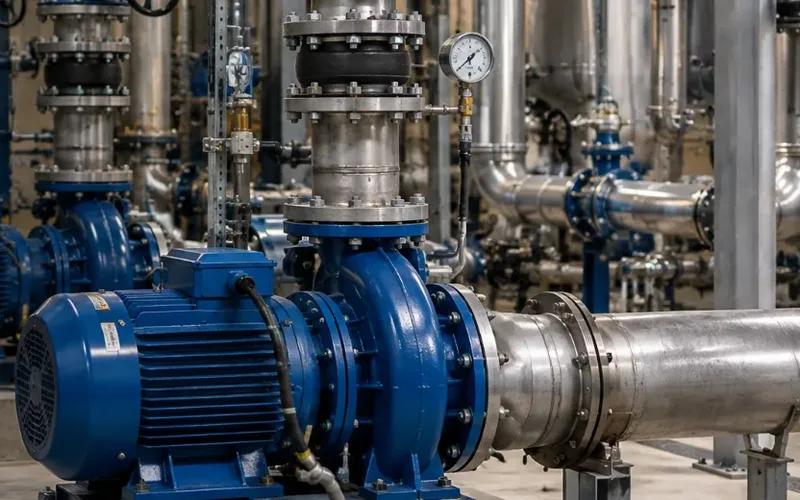
Brazed Plate
Hydronics
Commercial hydronic duty is clean water against clean water at modest temperature, a fit for a brazed 316L plate once the braze and the potable code are settled.
+ Learn More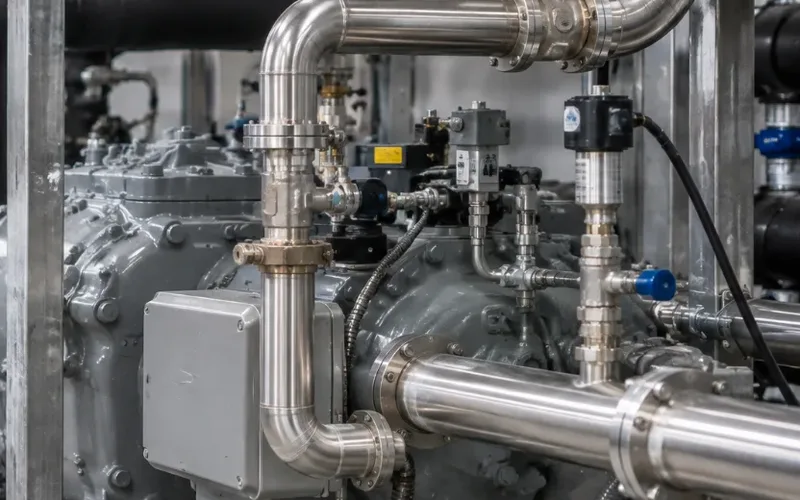
Brazed Plate
CO2
R-744 is a pressure problem, not a chemistry problem. The high-pressure brazed plate puts 316L and copper braze to work at ratings a standard plate cannot reach.
+ Learn More