
1-805-484-2992
Quotes - Engineering - SalesWhere 304L carries a shell and tube
Clean water, steam, glycol and oxidizing duty
304/304L is about 18% chromium and 8% nickel with no molybdenum, a PREN of about 19 against about 24–25 for 316L. In a shell and tube that makes it a legitimate grade for a long list of duties where the fluid is clean, cool or oxidizing, at a lower material cost than 316L because it carries less nickel and no molybdenum. On a large bundle that difference is worth having when the chemistry allows it.
The duties it suits: saturated steam and its condensate on either side; inhibited propylene or ethylene glycol in closed loops; demineralized and deionized water; low-chloride municipal or well water; and nitric acid, where 304L usually performs at least as well as 316L because molybdenum brings no benefit in an oxidizing acid. It is also the usual shell grade when 316L tubes carry the product and the shell carries only steam or glycol, which keeps the expensive grade on the side that needs it.
304L for steam, condensate, glycol and water under about 200 ppm chloride; 316L once chlorides, salt or warm stagnant conditions arrive; dual-certified 304/304L tube and plate. See Material & Construction for the grade comparison.
Where it stops: chloride guidance for 304 is about 200 ppm at ambient, for clean, flowing, near-neutral water, and it falls with heat, crevices and deposits. Open tower water passes that early, brines and salted or acidic foods are past it, and above roughly 140°F with chlorides present 304 can suffer stress corrosion cracking. Those duties start at 316L, and hot chloride water past a few hundred ppm goes to 2205 duplex.
Shell & Tube Construction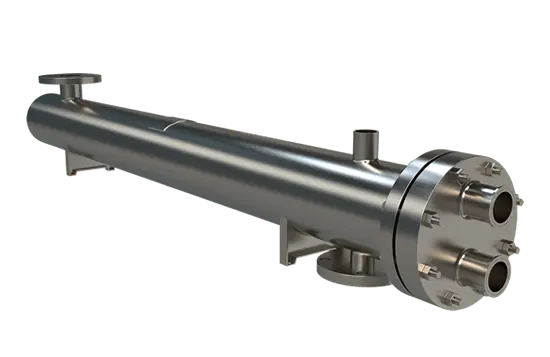
304L against the duty list
Typical guidance for clean, flowing service. Each row assumes the water analysis was taken where the exchanger sits, not at the makeup.
| Condition | Typical value |
| Saturated steam and condensate | 304L suits either side; condensate carries almost no chloride |
| Inhibited glycol, closed loop | 304L on the glycol side; check the makeup water for chloride |
| Deionized and demineralized water | 304L is common; 316L where the specification calls for it |
| City or well water | 304L to about 200 ppm chloride at ambient; above that, 316L |
| Open tower water | Usually 316L; a 150 ppm makeup can reach 600–900 ppm in the basin |
| Nitric acid | 304L preferred; molybdenum gives no gain in oxidizing acid |
| Brines, salted or acidic foods | 316L as the floor; heavy salt at cooking temperature goes to review |
| Chloride water above 140°F | 304 can crack under tensile stress; 316L to a few hundred ppm on the hot wall, above that 2205 duplex |
Chromium carbide precipitation at grain boundaries when ordinary-carbon 304 or 316 is held in roughly the 800–1,500°F range during welding. The chromium-depleted band beside each carbide then corrodes along the grain boundaries. Holding carbon to 0.03% max in the L grades limits it.
Choosing 304L for tubes, tubesheet and shell
Splitting the grades across one unit
Most shell and tube units we quote in 304L are not all-304L. The common split is 316L tubes, tubesheet and heads on the process side, with a 304L shell on steam, condensate or glycol. The tubes and tubesheet are where the corrosive fluid, the crevices and the thinnest metal meet; the shell is thick and sees a benign fluid. Putting 316L only where it earns its place keeps the price close to an all-304L unit with most of the protection of an all-316L one.
Where both sides are clean, as on a closed glycol-to-chilled-water loop or a steam unit heating demineralized water, all-304L is a reasonable build.
Welding and the L grade
Straight 304 allows up to 0.08% carbon. Welding holds the heat-affected zone in roughly the 800–1,500°F band long enough for chromium carbides to form, and the depleted metal beside them corrodes along the grain. 304L, at 0.03% max carbon, avoids that in normal fabrication, which matters on a bundle with hundreds of tube-end welds. Dual-certified 304/304L material and ER308L filler are standard; an ASTM A262 intergranular test is added where specified.
Where 304L is the better grade
Nitric acid and other oxidizing duties favor 304L: the chromium film is what resists them, and the molybdenum in 316L adds cost without adding resistance. On clean steam, glycol or deionized water, 316L buys a margin the duty does not use.
- Steam heating of deionized water
- Glycol coolers on closed loops
- Nitric acid heaters and coolers
- Shells around 316L bundles on benign shell fluids
The mistake: specifying from the makeup analysis
A 304L bundle selected against a 150 ppm city-water analysis and then piped to an open cooling tower is the classic failure. Four to six cycles of concentration take the basin to 600–900 ppm, evaporation at warm spots concentrates it further, and pits can appear at the tube-to-tubesheet crevices and under deposits within months. If the water passes through a tower, specify against the circulating water, which usually means 316L.
Before you settle on 304L
Yes. In nitric acid and other oxidizing service 304L performs at least as well as 316L and usually better, because molybdenum does not help there. On clean steam, condensate, glycol and deionized water it does the same job for less material cost. It is the wrong choice once chloride passes about 200 ppm or the duty runs hot with chlorides.
Usually, if the chloride ion stays under about 200 ppm and the water is cool and flowing. The free chlorine residual of treated municipal water is not the main concern; the chloride content is, along with any heating that warms the tube wall past about 140°F. Ask your water supplier for the chloride figure, and test it at the plant if the source changes seasonally.
No meaningful galvanic couple forms. Both grades are passive austenitic stainless steels with almost the same potential in water, so mixing them on one unit is normal practice. The concern with a mixed build is only that the 304L part must suit the fluid it touches, since that is the part with the lower chloride limit.
Dual-certified material meets the carbon limit of 304L and the strength of 304, so the vessel design can use the higher allowable stress without losing weld-zone corrosion resistance. Most stainless tube and plate for exchangers is produced this way, so the callout costs nothing extra and closes the door on high-carbon material.
Related
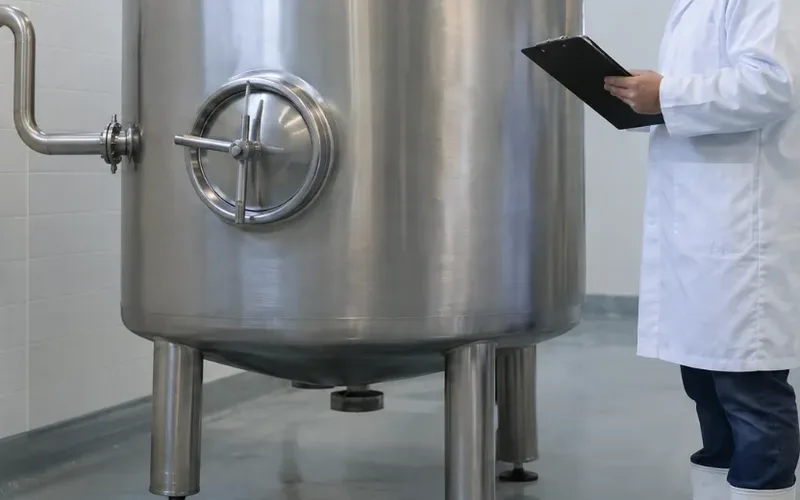
Shell & Tube
Double Tubesheet
How a double tubesheet sends a tube-joint leak to atmosphere instead of into the other fluid, where it is specified, and the tube-wall risk it leaves in place.
+ Learn More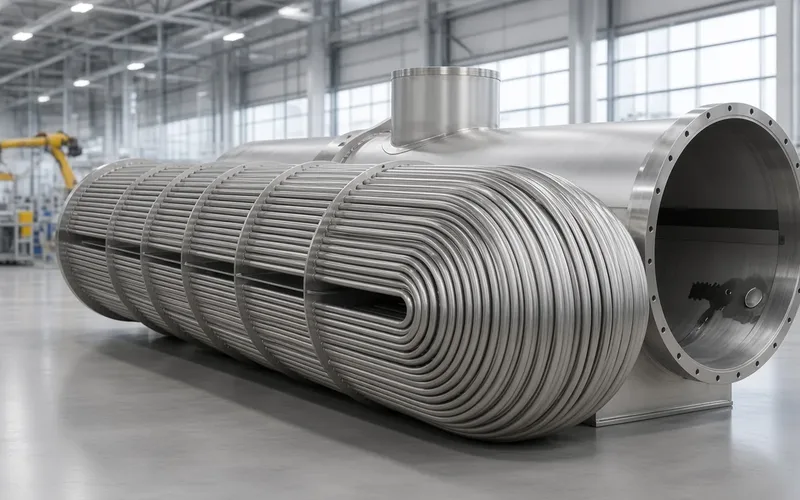
Shell & Tube
Fixed & Removable Bundles
Fixed tubesheet, U-tube or floating head: how each stainless bundle copes with thermal growth, which side it lets you clean, and what it asks of the plant layout.
+ Learn More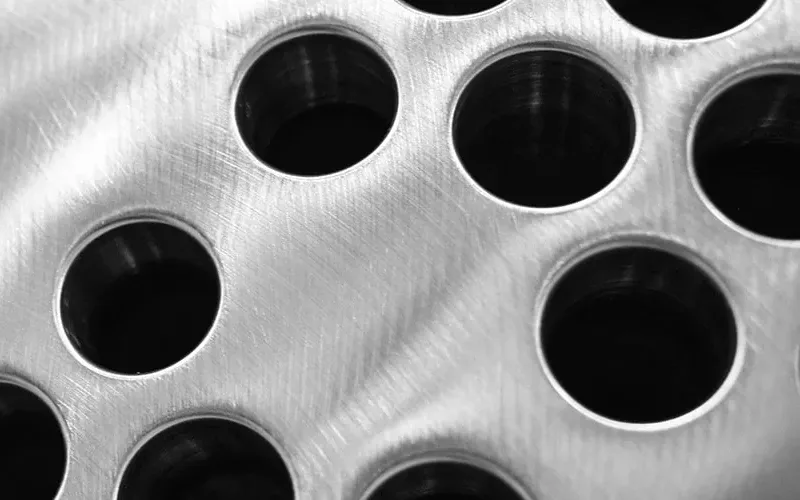
Shell & Tube
Polished & Electropolished
Which surfaces of a stainless shell and tube need a finish, what 32, 20 and 15 microinch Ra mean, and how electropolishing and passivation differ.
+ Learn More
