
1-805-484-2992
Quotes - Engineering - SalesWhen the plate pack leaves stainless
A gasketed plate pack is the least forgiving place to stretch a stainless grade. The plate is 0.5–0.6 mm thick, every plate carries a gasket crevice, and the contact points between chevrons trap deposits. Seawater at about 19,000 ppm chloride, a brine chiller loop, a hot salt process stream, or tower water running high cycles on reclaimed makeup all sit beyond the 316L guidance of about 1,000 ppm, and above about 140°F metal temperature 316L also carries a stress corrosion cracking risk. On those duties the usual answer is titanium plates pressed to the same pattern and hung in the same kind of frame.
Titanium Grade 1 and Grade 2 are both commercially pure. Grade 1 is softer and takes the deepest pressings; Grade 2 is stronger and is the common choice where the pattern allows it. Both hold a stable oxide film in seawater and brine at normal cooling temperatures, and both conduct heat at about 12 Btu/h-ft-°F, slightly better than 316L at about 9.4, so the plate count does not grow when a pack moves to titanium. Above about 160°F with crevices present, which describes every gasketed plate, the pressing moves to a palladium-bearing grade (Grade 7, or Grade 11 where softer sheet is needed) or to Grade 12.
Titanium does not suit every aggressive fluid. Hydrochloric and other reducing acids attack it, as does dry chlorine, and fluoride-bearing cleaners strip its oxide. Fluoride traces can point to 6-moly; hydrochloric acid goes to nickel alloy plates or off the metal plate altogether, case by case after a review of the actual chemistry.
Titanium Grade 1 or 2 plates for seawater and cool brine, a palladium grade above about 160°F, 6-moly for warm chlorides with acid, nickel alloys beyond that. Material & Construction explains how the grade is chosen.

Signs the plate pack has outgrown 316L
- Seawater, brine or basin chloride above about 1,000 ppm
- Chloride-bearing water on a plate wall above 140°F
- Acid with chlorides, where pitting and general attack combine
High-chloride and acid duty and the plate that fits it
Each row on the left is a duty that rules out 316L plates; the same row on the right is the alloy we would rate first. Chemistry outside these rows, or a mixture of them, is reviewed against the full analysis before a grade is offered, including temperature excursions during cleaning.
Duty as the plant runs it
- Seawater: About 19,000 ppm chloride at 50–90°F, open intake
- Brine: Sodium or calcium chloride chiller loop below 32°F
- Hot brine: Salt process liquor or geothermal water above 160°F
- Acid with chloride: Dilute sulfuric or phosphoric acid carrying chloride
- Hydrochloric acid: Pickling liquor or process HCl, dilute or strong
- Hot caustic: Concentrated sodium hydroxide well above 200°F
Plate we rate first
- Seawater: Titanium Grade 1 or 2, with a strainer and chlorination
- Brine: Titanium Grade 2, gasket checked against the brine
- Hot brine: Titanium Grade 7, 11 or 12 for crevice resistance
- Acid with chloride: 6-moly plates, or Alloy C-276 where 6-moly falls short
- Hydrochloric acid: Case-by-case review: nickel alloy or non-metallic
- Hot caustic: Nickel 200 plates; titanium is not suited
Measure the chloride
at operating temperature and full concentration
Check the acid
pH, reducing acids and any fluoride
Pick the alloy
titanium, palladium grade, 6-moly or nickel
Isolate the ports
keep noble plates off bare carbon steel
Choosing an alloy plate
Titanium on seawater and brine
Titanium is the usual seawater plate because the gasket crevice, the weak point of any stainless pack on salt water, does little harm to it at normal cooling temperatures. It does not resist biofouling the way copper alloys do, so a seawater pack still needs a strainer on the intake and a chlorination program; titanium accepts hypochlorite at normal residuals. Titanium is also noble: carbon steel or copper-alloy piping bolted straight to the ports corrodes faster near the joint, so the ports are rubber-lined or the first spool is made in a compatible material.
- Grade 1 for deep pressings, Grade 2 where the pattern allows
- Palladium grade or Grade 12 when the plate wall runs above 160°F
- Strainer and chlorination on open seawater intakes
- Lined ports or a compatible spool against the piping
6-moly where titanium is the wrong metal
6-moly stainless (the 254 SMO type, PREN about 43–45) handles chloride to roughly 20,000 ppm at modest temperature, warmer chloride duty than 316L, and cool flowing seawater. In a gasketed pack titanium is still the more common seawater plate because of the crevice, so 6-moly earns its place where titanium is ruled out: dilute sulfuric or phosphoric acid carrying chloride, fluoride traces, or a plant standardized on 6-moly piping. 904L, at PREN about 34, is a sulfuric acid grade, not a chloride upgrade over 2205 duplex.
Nickel alloys and the end of the plate map
Past 6-moly the plates go to nickel alloys. Alloy C-276 handles mixed acids with chlorides and oxidizers that pit 6-moly; Nickel 200 handles hot concentrated caustic, where both stainless and titanium are poor. Hydrochloric acid, hot concentrated sulfuric acid and pickling liquors are off the stainless map and are reviewed case by case, sometimes ending in non-metallic construction. These plates cost far more than a 316L pressing, so the chemistry has to justify them.
The mistake: a Grade 2 pack on a hot brine
Titanium's reputation leads plants to treat Grade 2 as the answer to any salt water. On a cooler duty it is. On a brine or salt liquor that heats the plate above about 160°F, the gasket crevice becomes oxygen-starved and acidic, and Grade 2 can suffer crevice corrosion that shows as etched, discolored bands along the gasket line and around the ports. The fix is a palladium-bearing grade or Grade 12 in the same pattern. State the hottest plate wall temperature, including cleaning, when titanium is requested.
Titanium and alloy plate questions
When basin chloride at operating cycles passes about 1,000 ppm, or the makeup is reclaimed or seawater-influenced, yes: the plate pack is the item that pits first and the one that lets tower water in to the closed loop when it does. Below that, with treated water and a working strainer, 316L plates are the usual choice. The pattern and frame are the same, so the grade can be changed later.
Not for corrosion: both are commercially pure titanium with the same oxide film. The difference is mechanical. Grade 1 is softer and presses into deep chevron patterns without cracking, while Grade 2 is stronger and suits patterns that need the extra strength at the rated pressure. The plate pattern usually decides, and either grade is acceptable on seawater and cool brine duty.
Titanium resists hypochlorite and wet chlorine well at normal process conditions, which is one reason it is used on chlorinated seawater. The gasket is usually the weak point. Nitrile is attacked by strong hypochlorite, so specify a compound rated for the dose, and keep shock doses flowing rather than standing in a stopped pack.
On cool, flowing seawater with a clean intake they can be. Under gaskets, in warmer water or where flow stops, the crevice tolerance of 6-moly is lower than titanium's, so titanium remains the usual seawater plate in a gasketed pack. 6-moly is chosen where fluorides, a reducing acid or piping compatibility rules titanium out, and the rating notes the temperature limit.
Usually not. Titanium conducts heat slightly better than 316L, about 12 against 9.4 Btu/h-ft-°F, and the wall is thin enough that its resistance is a small part of the total. Plate count is set by the film coefficients, the approach and the pressure drop, which change little with the plate grade. The rating run confirms the count for the actual pattern and thickness.
Related

Plate & Frame
Double-Wall Plates
Where a gasketed double-wall pack is called for, how a leak shows at the plate edge, and how much extra surface the second plate costs on a water duty.
+ Learn More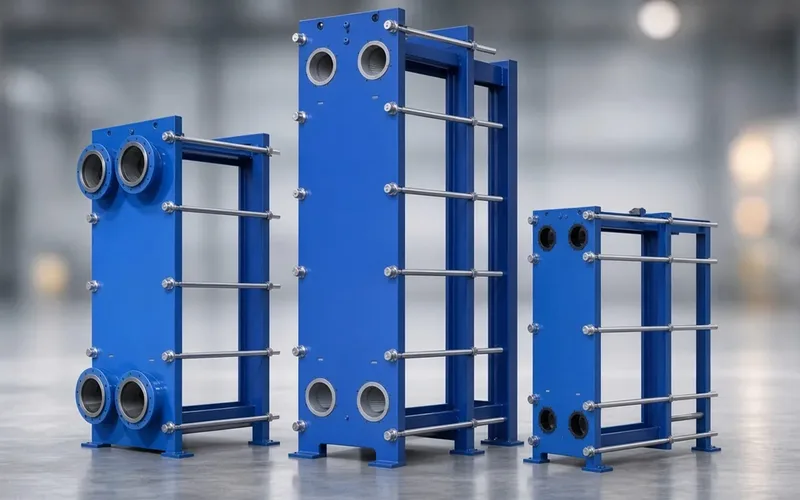
Plate & Frame
316L Plates
Why 316L is the standard pressing for gasketed plates, where 304 still serves, and how thin plates and gasket crevices pull the chloride figure down.
+ Learn More
Plate & Frame
Gaskets
How EPDM, nitrile and fluoroelastomer gaskets compare on hot water, oils, acids and CIP, and why the gasket rather than the plate sets the design temperature.
+ Learn More