
1-805-484-2992
Quotes - Engineering - SalesTwo plates where one leak cannot be allowed
A double-wall plate is two identical plates pressed together as a pair, so each channel wall is two sheets of metal with a thin interspace between them. The pair hangs in the frame like a single plate and carries an ordinary gasket. If either sheet perforates through pitting, fatigue or a crack at a port, the fluid enters the interspace and follows it to the plate edge, where it drips outside the pack rather than passing into the other stream. A leak becomes a visible drip on the frame instead of contamination nobody sees.
Two kinds of duty call for it. The first is potable water heated or cooled against a fluid that must not reach it: boiler water carrying treatment chemicals, ethylene glycol, a refrigerant, or a process stream. Plumbing codes in many jurisdictions require a double wall with a vented, visible leak path there. The second is product protection, where a leak in either direction would spoil a batch or a machine: a pharmaceutical or food product against a glycol or brine utility, or a lube or hydraulic oil cooled with water, where water in the oil damages bearings.
A standard single-wall pack already vents its port gaskets: where one fluid passes the other's port, a drain area between the two seals is open to atmosphere, so a gasket failure there leaks outside. Double-wall plates add that protection to the plate itself.
Double-wall plates are pressed in pairs of 316L for potable water and product protection, with other alloys reviewed where the utility side carries high chloride. The Material & Construction page compares the grades.

When a double-wall pack is worth the extra plates
- Potable water against boiler water, glycol or refrigerant
- Product that a trace of utility fluid would spoil
- Oil circuits where water ingress damages bearings
A potable water duty and the double-wall pack for it
The left column is a typical plant or building duty where the code calls for double wall; the right column is the pack we would rate for it. The code clause matters: send it, because some jurisdictions also set the leak path, the drain arrangement or the pressure relationship.
Duty as specified
- Potable side: Plant or building water heated from 50°F to 140°F
- Heating side: Boiler water with treatment chemicals at 180–200°F
- Code: Local plumbing code calling for a vented double wall
- Pressure: Potable side held above the heating side where possible
- Chloride: Municipal supply, checked against 316L at 140°F
- Inspection: Plate edges visible from the walkway side of the frame
Double-wall pack we recommend
- Plates: Paired 316L pressings with a vented interspace
- Gaskets: EPDM listed for potable water contact, which also suits the boiler water
- Frame: Painted carbon steel, 150 psig, lined ports
- Surface: More plates than single wall; the rating states how many
- Drip tray: Under the pack, piped to a visible open drain
- Send us: Code clause, both fluids, flows, temperatures, pressures
Name the code
the clause that calls for double wall
Set the pressures
potable side above the heating side
Rate the surface
count the plates the second wall adds
Keep vents visible
no insulation or closed drain over edges
Living with a double-wall pack
What the second wall costs
Two sheets and the contact between them add thermal resistance to every channel wall. On oil cooling, where the oil film dominates, the penalty is small. On water to water, where both film coefficients are high, the wall becomes a larger share of the total resistance, and a double-wall pack commonly needs 10–20% more surface than a single-wall pack on the same duty, more at a tight approach. Each paired plate also costs more than a single pressing. The rating should state the plate count both ways, so the cost of the code requirement is visible against the duty.
How a leak shows
On a single-wall pack a pinhole is found by its effects: a product that picks up water, a loop that needs makeup. On a double-wall pack it shows as a drip from the edge of one plate pair, often at a lower corner near a port. The position along the pack identifies the pair, so the frame can be opened and that pair replaced. A drip from the outer gasket edge points to the gasket; a drip from between the two sheets of a pair points to a perforated plate.
- Drip between two sheets of a pair: a perforated plate
- Drip at the outer gasket line: a gasket or tightening problem
- Drip from a port drain area: a port gasket failure
- Note which pair leaks before the pack is opened
Grade and chloride on paired plates
Each sheet of a pair is still a thin 316L pressing, and the chloride guidance for 316L applies to it: about 1,000 ppm in clean, flowing, near-neutral water at ambient, falling on a hot wall above about 140°F. A double wall does not make a marginal grade safe; it only turns the eventual failure into a drip. Potable water at 140°F against 316L is normal practice with municipal supplies, but a high-chloride well water or a brine utility calls for the grade to be reviewed, not just the number of walls.
The mistake: hiding the leak path
The protection works only if the drip can get out and be seen. Packs are wrapped in insulation jackets that soak up the drip, drip trays are piped to a drain with a closed valve, or the frame is pushed against a wall so the plate edges face the block. Each one turns a double-wall pack back into a pack whose leak goes unnoticed. Leave the plate edges open, pipe the tray to an open, visible drain, and put the inspection side where operators walk.
Double-wall plate questions
The principle is the same: two walls with a vented space between them. The construction differs. A gasketed pack opens for cleaning and inspection, takes extra plates later and identifies the leaking pair, while a brazed unit is sealed and is replaced whole. The gasketed pack also suits water with more chloride than a copper-brazed unit should see, and flows too large for a brazed unit.
Sometimes, where a double-wall pressing exists for that plate size and the frame has room on the carrying bar. A pair is thicker than a single plate, so the tightening dimension changes, and the extra surface the second wall needs may add pairs. The duty is rerated with the double-wall plate before the change, and the gaskets are matched to the new plates.
Codes and engineers often ask for both. The double wall protects against a perforated plate; holding the potable side at the higher pressure adds a second defense, since any path that does open pushes potable water outward rather than drawing the other fluid in. Check the local code, because some jurisdictions accept one measure, some require the other, and some specify both.
Yes. The flow channels are the same shape as on single-wall plates and take the usual CIP or flushing program. The interspace is not wetted and should stay dry, so when the pack is opened for manual cleaning the pairs are handled as units and not split. A pair that shows moisture between its sheets after cleaning is set aside and checked before it goes back.
Related

Plate & Frame
Titanium & High-Alloy Plates
Plate grades past 316L: titanium Grade 1 and 2 for seawater and brine, palladium grades for hot crevices, 6-moly and nickel alloys for acid with chlorides.
+ Learn More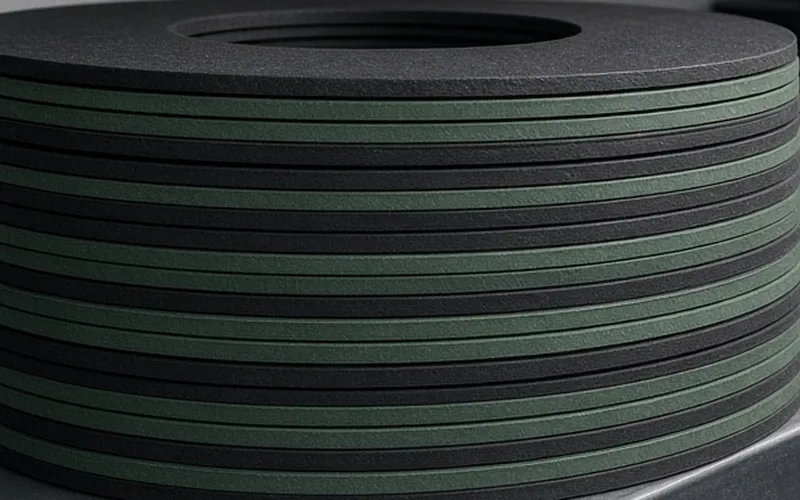
Plate & Frame
Gaskets
How EPDM, nitrile and fluoroelastomer gaskets compare on hot water, oils, acids and CIP, and why the gasket rather than the plate sets the design temperature.
+ Learn More
Plate & Frame
316L Plates
Why 316L is the standard pressing for gasketed plates, where 304 still serves, and how thin plates and gasket crevices pull the chloride figure down.
+ Learn More