
1-805-484-2992
Quotes - Engineering - SalesWhat the second tubesheet is for
A leak path that ends in air rather than in the other fluid
In a single tubesheet unit, one plate at each tube end separates the two fluids, and the tube-to-tubesheet joint, expanded or welded, is the weakest point of that boundary. If it opens, one fluid passes straight into the other. A double tubesheet unit puts two sheets at each tube end with a short gap between them: the inner sheet faces the shell fluid, the outer sheet faces the channel or bonnet, and each tube is sealed in both. A straight tube is therefore sealed at 4 points instead of 2.
If an outer joint leaks, tube-side fluid seeps into the gap; if an inner joint leaks, shell-side fluid does. Either way it drains to atmosphere at the gap, where operators can see it, instead of crossing into the other stream. That is why pharmaceutical purified water and WFI systems specify it, why it appears on critical duty where the two fluids must not meet, and why some dairy and food plants call for it in their specifications.
316L tubes and outer tubesheets on pharma and food product duty, electropolished where the order asks; the inner sheet and shell matched to the utility on the shell side. Material & Construction explains how the grade is chosen.
What it leaves in place is the tube wall. A pit, an erosion groove at an inlet, fretting wear at a baffle or a crack anywhere along the tube inside the shell still connects the two fluids directly. The tube remains a single barrier, so grade, testing and keeping the clean side at higher pressure carry that risk.
Shell & Tube Construction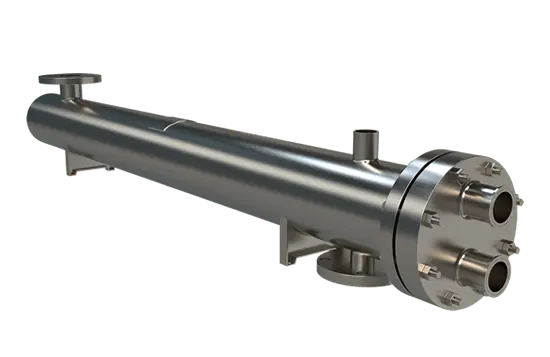
How a double tubesheet unit is built
The common arrangement for a stainless double tubesheet exchanger. Gap length, joint type and sheet thickness are set by the design calculation for each unit.
| Condition | Typical value |
| Arrangement | Straight tube with a sheet pair at each end, or U-tube with one pair at the head end |
| Gap | Open to atmosphere with a drain or tell-tale, so leakage shows rather than mixes |
| Inner sheet joint | Usually expanded, letting the tube accommodate movement between the two sheets |
| Outer sheet joint | Expanded and welded, with the weld ground flush where the face is product contact |
| Materials | 316L tubes and outer sheet on product duty; inner sheet matched to the shell fluid |
| Pressure practice | Clean side held above the utility pressure wherever the system allows |
| Design rating | 150 psig at 350°F on the shell as standard, higher to order |
| Codes | ASME Section VIII, ASME BPE and 3-A where the order requires them |
A small open drain or vent from the gap between the two tubesheets of a double tubesheet exchanger. Fluid appearing there means a tube joint has started to leak, and whether it is product or utility tells the crew which of the two sheets to inspect first.
Specifying a double tubesheet
Where it is specified
Pharmaceutical and biotech systems are the core use: WFI and purified water heaters and point-of-use coolers, product heaters, and any duty where the utility could compromise a validated fluid. A fuller treatment of those systems sits on the pharmaceutical heat exchanger page. Outside pharma it is chosen for critical duty, where the two fluids react, where a toxic fluid must not reach a cooling system, or where a customer specification or standard calls for it in food or dairy service. It is a specified option rather than a default on sanitary shell and tube units.
What it costs in length, price and layout
Two sheets per end double the drilling and the number of tube joints, add length to the unit at each end, and make tube replacement slower. Straight-tube double tubesheet units are usually fixed; where shell-side access matters, a U-tube bundle with it's single sheet pair at the head end can be pulled. Pull clearance equal to the bundle length still applies.
Thermal stress across the gap
The inner sheet runs near the shell fluid temperature and the outer sheet near the tube-side fluid temperature. When those differ, the sheets grow by different amounts across their diameter and the short length of tube bridging the gap is bent. The design checks that bending for the full range of operating and sterilization temperatures and sets the gap length to keep tube stress within code allowables.
- Steam on the shell, cold product in the tubes: the case to check first
- SIP cycles, where the tube side swings far faster than the shell
- Startup with one fluid flowing and the other still cold
The mistake: treating it as leak-proof
A double tubesheet is sometimes bought as if it made the exchanger leak-proof, and the tube-wall inspection program is dropped. The joints are protected; the tubes are not. Hydrotest each side separately, inspect the tell-tales on every round, and keep the clean fluid at the higher pressure so that a tube-wall failure pushes product toward the utility rather than the reverse.
Double tubesheet questions from spec review
No. It protects the tube-to-tubesheet joints, which are a common leak point, by venting a joint leak to atmosphere. A hole or crack in the tube wall inside the shell still connects the fluids. That risk is managed by grade selection, tube testing, routine inspection and pressure differential, not by the tubesheet arrangement.
Not as a rule. It is used in dairy and food where a plant specification, a regulator or the processor calls for it, and many sanitary shell and tube units run with single tubesheets and a pressure differential in favor of the product. We quote it where the order specifies it and explain the trade-off where it does not.
Yes, as a U-tube bundle with one sheet pair at the head end, which pulls out for shell-side inspection. Straight-tube double tubesheet units are usually fixed because a floating double tubesheet adds complexity and leak paths. On a fixed unit, the tube side is cleaned and inspected through the heads and the shell side by circulation.
Watch what appears at the tell-tale. Utility fluid at the gap points to an inner sheet joint, product points to an outer one. Each side can then be pressurized on its own with the other drained, and the gap observed tube by tube to identify the joint before it is re-expanded, re-welded or the tube plugged.
Related
Shell & Tube
Polished & Electropolished
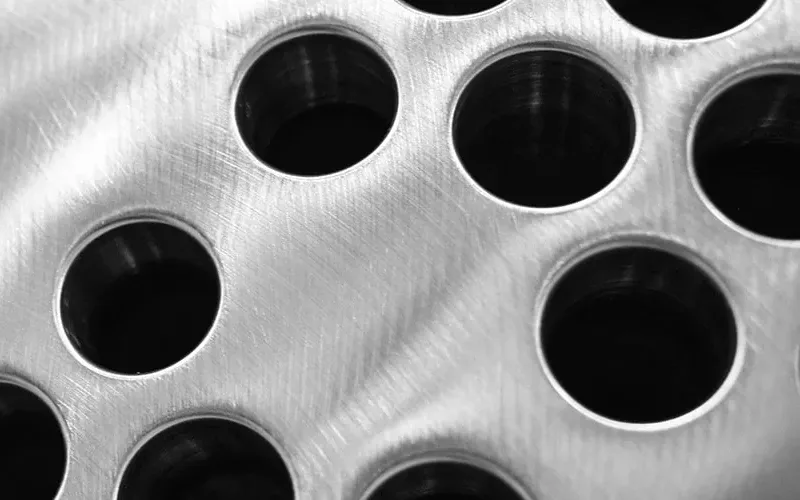
Which surfaces of a stainless shell and tube need a finish, what 32, 20 and 15 microinch Ra mean, and how electropolishing and passivation differ.
+ Learn More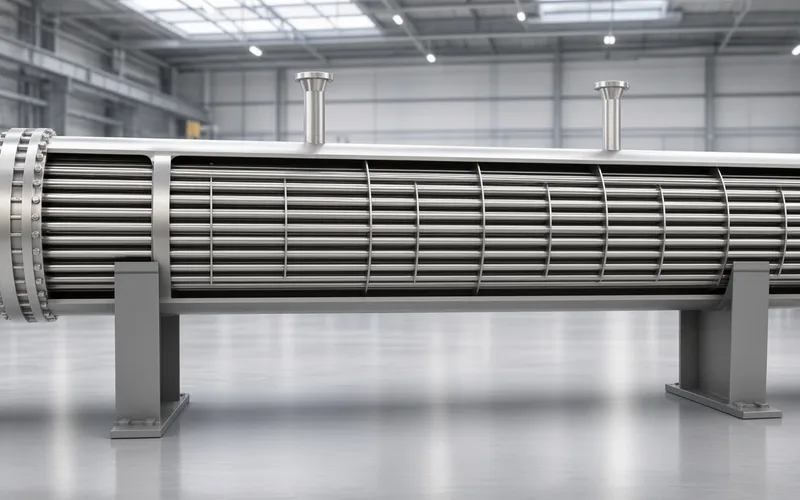
Shell & Tube
316L Stainless
Where 316L belongs in a shell and tube, part by part: tubes, tubesheet, shell and heads, with the chloride and temperature limits that decide each one.
+ Learn More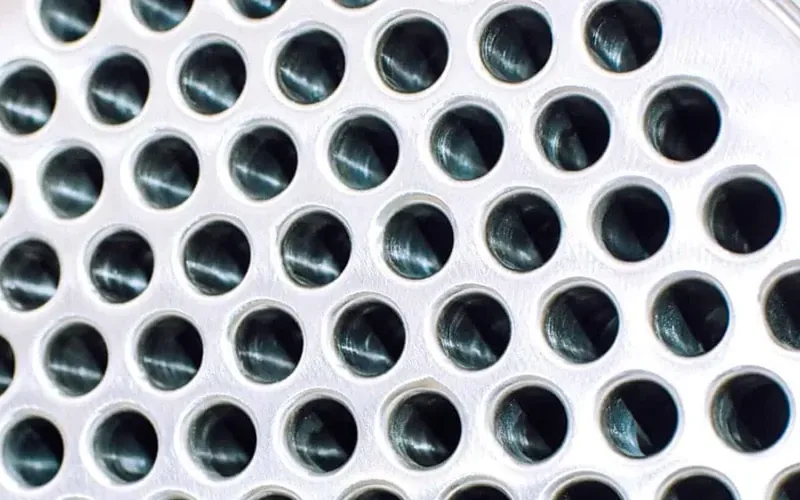
Shell & Tube
304L Stainless
When 304L tubes, tubesheets and shells do the job at lower cost: clean steam, glycol, low-chloride water and nitric service, and the duties that need 316L.
+ Learn More