
1-805-484-2992
Quotes - Engineering - SalesThree ways to hold a stainless tube bundle
Thermal growth and cleaning access decide it
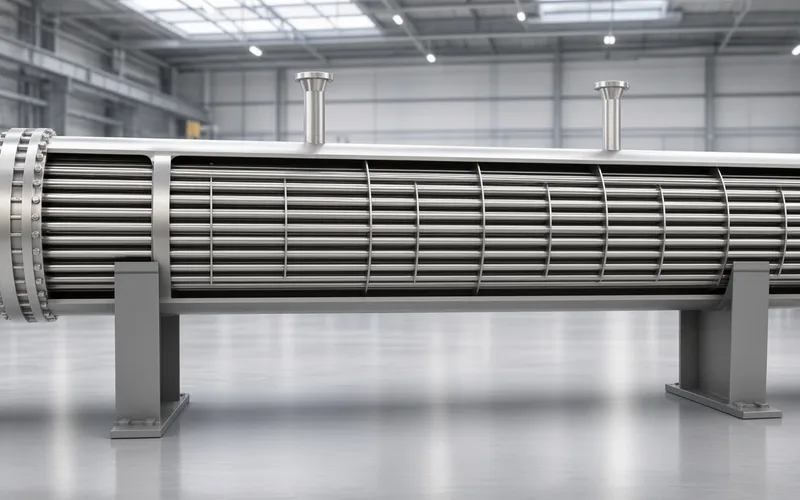
A fixed tubesheet unit welds a tubesheet to each end of the shell. There is no internal gasketed joint, the shell-to-bundle clearance is tight, and the price per square foot is the lowest of the three. The tube side is reached by removing the heads and rodding each 3/4 in. or 1 in. tube straight through; the shell side can be cleaned only chemically. Its limit is growth: when the shell and tubes run more than roughly 100–150°F apart, the shell needs an expansion joint.
A U-tube bundle has one tubesheet and takes growth in the bends, so it needs no joint and the whole bundle pulls out for shell-side cleaning. The bends cannot be rodded straight through, and inner-row tubes are hard to replace, so the cleaner fluid goes in the tubes. It is the usual choice for steam heating.
304L or 316L tubes and tubesheets in every bundle type; a fixed unit welds the shell to both sheets, so its shell grade must suit the shell fluid too. Grade limits are set out on Material & Construction.
A removable straight-tube bundle with a floating head fixes one tubesheet and lets the other slide inside the shell. Both sides can be cleaned mechanically, every tube rods end to end, and growth is free. The price is a higher cost, an internal gasketed joint at the floating head that cannot be seen in service, and, on pull-through designs, a larger shell for the same tube count.
Shell & Tube Construction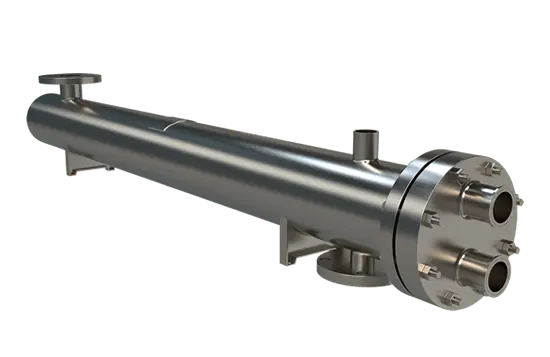
Fixed, U-tube and floating head side by side
A plain comparison of the three bundle types in stainless. The standard shell rating of 150 psig at 350°F applies to all three, with 300 psig and higher to order.
| Condition | Typical value |
| Typical TEMA letters | Fixed: BEM or AEL; U-tube: BEU or AEU; floating head: AES or AET |
| Thermal expansion | Fixed needs a joint above roughly 100–150°F differential; U-tube and floating head absorb it |
| Shell-side cleaning | Fixed: chemical only; U-tube and floating head: bundle pulled and cleaned outside the shell |
| Tube-side cleaning | Straight tubes rodded end to end; U-bends need flexible lances or chemical cleaning |
| Tube replacement | Straight tubes one at a time; inner U-tubes are hard to reach |
| Shell-to-bundle clearance | Tightest on fixed and U-tube; widest on pull-through floating head, which uses sealing strips to limit bypass |
| Hidden leak paths | Fixed and U-tube: tube joints only; floating head adds an internal gasketed joint |
| Relative cost | Fixed lowest, U-tube next, floating head highest |
| Space | Removable designs need pull clearance equal to bundle length |
A three-letter code from the TEMA standards naming a shell and tube's front head, shell type and rear head in that order. BEM is a bonneted fixed-tubesheet unit, BEU a U-tube bundle in a single-pass shell, and AES a removable floating head behind a channel with a bolted cover.
Picking a bundle for a stainless duty
Why stainless makes expansion more pressing
Austenitic stainless grows roughly a third more per degree than carbon steel. On an all-stainless fixed unit that matters only through the temperature difference between shell and tubes, but on a carbon steel shell around a 304L or 316L bundle the tubes outgrow the shell even when both run at the same temperature. Steam on the shell and cold water in the tubes, or a hot process stream on one side and chilled glycol on the other, are the cases that push a fixed unit to a joint.
A thin stainless bellows on a hot chloride shell fluid is itself a cracking risk, so where the differential is large and the shell water carries chlorides, a U-tube or floating head is often the safer answer than a fixed unit with a joint.
Which side fouls decides the bundle
Put the fouling fluid where it can be cleaned mechanically. Tower water, river water and fluids carrying solids go in straight tubes that a crew can rod; a fixed tubesheet unit suits them when the shell fluid is clean steam, glycol or treated water. When both fluids foul, or the shell fluid lays down scale or sludge, a floating head lets the bundle come out and both sides be cleaned.
- Clean shell fluid, fouling tube fluid: fixed tubesheet
- Clean tube fluid, large temperature swing: U-tube
- Both sides fouling or inspected: floating head
U-tube at a glance
The U-tube is the workhorse of steam heating because the bends absorb growth with no joint and no internal gasket, and the bundle pulls for inspection. It belongs where the tube-side fluid is clean enough not to need rodding. The steam application itself is covered on the steam to hot water heat exchanger page.
The mistake: no room to pull the bundle
A removable bundle installed with its rear head a foot from a wall, or under a pipe rack, is a fixed unit that cost more. Pull clearance equals bundle length, plus space for the rigging. Mark the pull zone on the layout drawing before the unit is set, and keep it clear of later piping.
Bundle questions before the drawing is released
When the calculated differential growth between shell and tubes overstresses the tubes, the tube joints or the shell, which in practice starts at roughly a 100–150°F difference between mean shell and mean tube metal temperatures. The check covers startup, upset and cleaning conditions as well as normal running, and it uses the actual expansion coefficients of each part.
Only by circulating a cleaning solution, since the bundle cannot come out. That works on soft deposits and scale that a chemical program will dissolve, and it fails on hard or fibrous fouling. If the shell fluid fouls that way, choose a U-tube or floating head design at the start rather than planning on chemical cleaning.
In a pull-through design the floating tubesheet and its bolted cover must pass through the shell, so the outer tubes sit well inside the shell wall. That costs tube count for a given shell diameter and opens a bypass lane that sealing strips partly close. A split-ring floating head keeps the bundle closer to the shell.
Related
Shell & Tube
316L Stainless
Where 316L belongs in a shell and tube, part by part: tubes, tubesheet, shell and heads, with the chloride and temperature limits that decide each one.
+ Learn More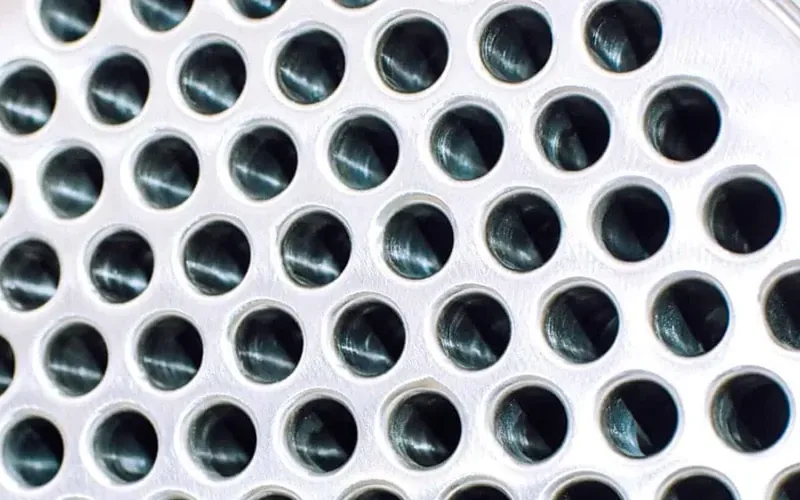
Shell & Tube
304L Stainless
When 304L tubes, tubesheets and shells do the job at lower cost: clean steam, glycol, low-chloride water and nitric service, and the duties that need 316L.
+ Learn More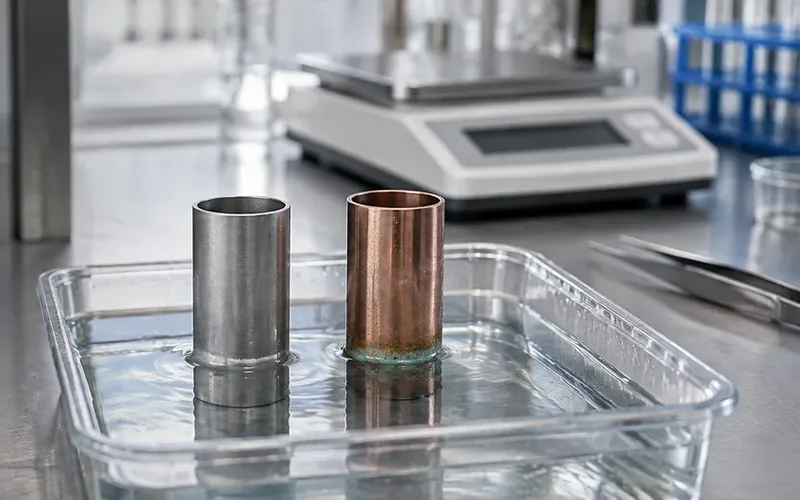
Shell & Tube
Duplex & High Alloy
The alloys that take over from 316L in a tube bundle: 2205 and super duplex, 904L, 6-moly and titanium, with what each one demands of the tubesheet and welds.
+ Learn More