
1-805-484-2992
Quotes - Engineering - SalesWhat 316L does in a gasketed plate pack
In a plate-and-frame exchanger the plates are the only metal both fluids touch, so the plate grade is the material decision; the frame, tie bolts and carrying bar stay dry when the ports are lined. 316L is the standard pressing because its 2–3% molybdenum resists the pitting that starts under a gasket, where water sits still in the groove and chloride concentrates as it dries between runs. On most process water, open cooling water and food duty, the modest premium over 304 buys the margin a thin plate needs.
The wall is why the grade matters more here than in a tube bundle. A 3/4 in. shell-and-tube tube is commonly 0.035–0.049 in. thick; a gasketed plate is 0.020–0.024 in. (0.5–0.6 mm), and a sanitary plate can be 0.4 mm. A pit that would take years to cross a tube wall crosses a plate far sooner, and once through it mixes the two fluids. The usual 316L guidance, about 1,000 ppm chloride in clean, flowing, near-neutral water at ambient, is read lower on a plate pack because every plate carries a gasket crevice at its edge and around four ports.
The L, carbon held to 0.03% maximum, protects weld zones. A fully gasketed plate has no welds, so the L adds little there; plate sheet is normally dual-certified 316/316L, so it costs nothing extra and matters on semi-welded pairs.
316L plates for most process and open-circuit water, 304 only on treated closed loops under about 200 ppm chloride, and titanium once chloride at the plate passes about 1,000 ppm. Material & Construction explains how the grade is chosen.

Where a 316L plate earns its place over 304
- Any side open to air through a tower or tank
- Gasket grooves that hold stagnant water between production runs
- Food duty with salt, fruit acid or daily caustic cleaning
A typical 316L plate duty and the pack we build for it
The left column is a process cooling or heating duty of the kind most 316L packs serve; the right column is the build that follows from it. The one figure plants usually lack is the chloride the plate actually sees in service, after evaporation or recirculation, so measure that before the grade is fixed.
Duty as the plant runs it
- Hot side: Process water or liquid product at 120–190°F
- Cold side: Tower water, a treated closed loop or chilled glycol
- Chloride: Under about 1,000 ppm at the plate; lower on a hot wall
- pH: Near neutral on water; 3–4 on fruit juice and acid rinses
- Cleaning: Caustic CIP at 160–185°F, nitric or phosphoric acid step
- Pressure: 150 psig design, 5–10 psi allowable drop per side
316L pack we recommend
- Plates: 316L, 0.5–0.6 mm industrial; 0.4–0.5 mm sanitary
- Sheet: Dual-certified 316/316L, mill test reports as the order requires
- Gaskets: EPDM for hot water and CIP, NBR where oil or fat is present
- Frame: Painted carbon steel; stainless clad on wash-down floors
- Ports: 316L or rubber-lined ports so no fluid meets carbon steel
- Send us: Water analysis in service, top temperature, cleaning chemicals
Read the water
chloride, pH and temperature at the plate
Pick the grade
304, 316L or titanium from that reading
Set the gauge
plate thickness from the frame pressure rating
Line the ports
keep both fluids off a carbon steel frame
Choosing between 304, 316L and the next grade up
Where 304 plates still serve
304 plates are a reasonable choice when both sides are closed, treated loops, chloride stays under about 200 ppm and nothing evaporates. A building heating loop against a treated campus supply, or glycol against chilled water, fits that description. Once one side is open to atmosphere through a cooling tower, a wash-water tank or a product with added salt, 304 gives up its margin, and the saving on the plates is small against the cost of a replacement pack. If a side cannot be shown to stay under 200 ppm in service, the plates go to 316L.
Hot walls, crevices and the chloride figure
The 1,000 ppm guidance for 316L assumes clean metal near ambient temperature. Two things on a plate pull it down. Above roughly 140°F metal temperature, chloride stress corrosion cracking becomes a risk, and on a plate wall heated by 200°F water the tolerable chloride falls to a few hundred ppm; pressing the chevron pattern also leaves residual stress in the formed metal, one of the conditions cracking needs. The second is the crevice: the gasket groove and the points where chevrons touch the next plate are where deposits settle and pitting begins.
- Take the chloride reading where the plate sees it, after concentration
- On a hot wall, work to a few hundred ppm, not the ambient figure
- Plan cleaning before deposits build in the gasket grooves
- Move to titanium rather then gambling on a marginal reading
Plate thickness and frame choice
Plate thickness follows pressure, not corrosion allowance. A 0.5 mm plate carries a standard 150 psig rating because the chevrons support each other at hundreds of contact points; heavier plates, 0.6–0.8 mm, are common in 300 psig frames and in packs opened often. A thicker plate buys little life once a pit starts, so a marginal chloride reading calls for a better grade, not a heavier gauge. Painted carbon steel suits a dry mechanical room; a stainless-clad or solid stainless frame suits a food floor hosed down every shift, where chipped paint and rust would sit beside product.
The mistake: a 304 pack on an open circuit
A common failure starts with a drawing that says city water on the cold side. In service the cold side turns out to be an open evaporative loop at 4–6 cycles, where a 150 ppm makeup can reach 600–900 ppm. Pinholes can then appear at the lower port corners, where silt collects against the gasket, and the first sign is the closed loop losing inhibitor. The fix is 316L plates of the same pattern in the same frame, plus a strainer on the open side. Ask what the water becomes in service, not what it was at the meter.
Questions on 316L plate packs
Usually, yes. Plates of the same pattern and size are pressed in either grade, and the gaskets, frame and tightening dimension stay the same, so a pack can be re-plated in 316L when the water turns out worse than specified. Keep the plate count and chevron arrangement of the original rating so that the pressure drop and approach do not change.
Nitric and phosphoric acid descalers at the supplier's dilution are standard on 316L, and nitric also helps rebuild the passive film. Hydrochloric (muriatic) acid descalers attack stainless and should stay off the pack, as should chlorinated cleaners left standing. Rinse to neutral after each acid step, because acid left in a drained pack concentrates in the gasket grooves, and check the gasket compound against the acid as well.
Usually as cross-contamination: a closed loop losing inhibitor or needing makeup, a product picking up water, or conductivity rising in a clean stream. With the pack open, plates are checked by dye penetrant or by holding each plate against a lamp in a dark room. Pinholes on 316L plates typically sit near the ports and the lower gasket corners, where deposits gather and stay wet.
No. The grade is one condition of several. A sanitary pack also needs plates finished for product contact, food-grade gasket compounds, a frame suited to wash-down, drainable porting and the documentation the plant asks for, such as 3-A where specified. An industrial 316L pack in a painted frame with industrial nitrile gaskets is not a food-contact unit, even though its plates are the same alloy.
Related
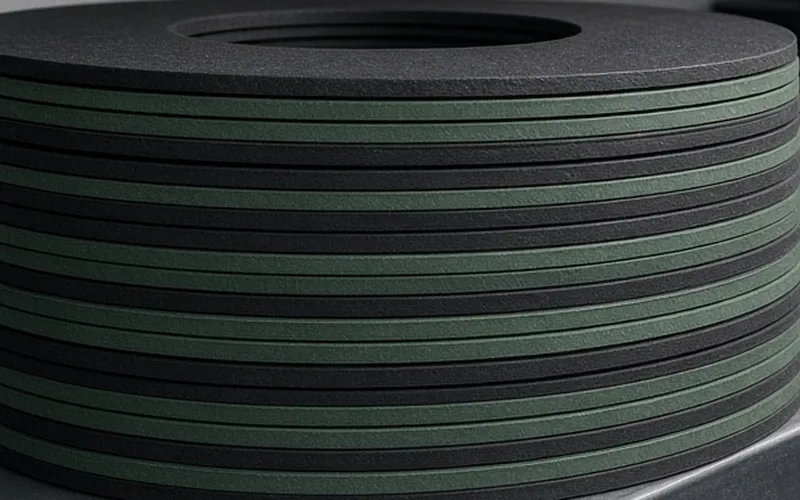
Plate & Frame
Gaskets
How EPDM, nitrile and fluoroelastomer gaskets compare on hot water, oils, acids and CIP, and why the gasket rather than the plate sets the design temperature.
+ Learn More
Plate & Frame
Double-Wall Plates
Where a gasketed double-wall pack is called for, how a leak shows at the plate edge, and how much extra surface the second plate costs on a water duty.
+ Learn More
Plate & Frame
Titanium & High-Alloy Plates
Plate grades past 316L: titanium Grade 1 and 2 for seawater and brine, palladium grades for hot crevices, 6-moly and nickel alloys for acid with chlorides.
+ Learn More