
1-805-484-2992
Quotes - Engineering - SalesDimple plate, pillow plate and half-pipe on a tank
A dimple plate, in the tank-builder's sense, is a stainless sheet pressed with a regular grid of dimples and then welded to the vessel shell at the bottom of each one, by resistance welding or by a plug weld through a punched hole. The shell and the dimpled sheet together form a dimple jacket, and the utility flows in the shallow space between them. An inflated pillow jacket reaches a similar result from flat sheet; a half-pipe jacket uses pipe split lengthwise and wound around the shell.
Dimple, pillow or half-pipe
The welds do structural work as well as sealing. Each one ties the jacket sheet to the shell, so jacket pressure acts on small spans of thin metal. A conventional open jacket, a second shell with an annular gap, loads the whole inner shell with the jacket pressure as external pressure, and a thin tank wall under external pressure buckles unless it is thickened or stiffened. That is why a dimple jacket lets the tank wall stay thin, which also helps the heat get through.
Steam and liquid behave differently in it. Steam spreads itself to wherever there is cool surface to condense on. Glycol and water take the easiest path, so a liquid dimple jacket needs diverters that turn the jacket into passes and keep the velocity up across the whole face.
Dimple jacket sheet is usually 304L for steam and inhibited glycol on a shell graded for the product, moving to 316L when the utility carries chloride. See Material & Construction for the grade comparison.
How the jacket types compare
- Dimple jacket: pressed thin sheet, economical, commonly 100 to 150 psig, steam or glycol
- Pillow jacket: flat sheet laser welded and inflated, with a more even flow path
- Half-pipe: split pipe welded in a spiral, higher pressures and hot thermal oil
- Conventional annular jacket: low pressure, and the inner shell must resist buckling
- Dimple and pillow jackets stay the shell at every weld
- Half-pipe sets a defined liquid velocity; dimple jackets need diverters to get one
a common dimple jacket steam ratingThin dimple sheet on a close weld grid commonly carries 150 psig steam at 366°F, and anything higher becomes a design exercise in heavier sheet or half-pipe.
What to tell us about the vessel and the jacket
A dimple jacket is designed with the tank it sits on, so the vessel details matter as much as the heat duty. Ratings for dimple jackets are application-dependent; the design pressure follows from the sheet, the weld pitch and the shell, and we confirm it on the drawing.
- Shell diameter, thickness and grade, and whether the vessel is new or existing
- Utility in each zone: steam pressure, or glycol supply temperature, concentration and flow
- Jacket design pressure and temperature, and the code stamp the order requires
- Fill levels, so zone boundaries sit below the smallest batch
- Vacuum or external pressure on the tank, which the shell must carry as well
- Nozzles, legs, manways and lugs the jacket must work around
Call and talk it through with an engineer: 1-805-484-2992
A tank jacket made from pipe split lengthwise and welded to the shell in a spiral, giving the utility a single defined channel. It runs at higher velocity, pressure and temperature than a dimple jacket and is the usual choice for hot thermal oil.
Running steam, glycol and thermal oil in a dimple jacket
Steam is the easy utility for a dimple jacket. It condenses wherever the shell is coolest and keeps the whole zone near its saturation temperature, 250°F at 15 psig, 298°F at 50 psig and 366°F at 150 psig. What it demands is drainage: steam in at the top of each zone, condensate out at the lowest dimple, a trap sized for the cold start-up load and a vacuum breaker, so the zone empties when the valve closes and does not hammer when it opens.
Glycol needs a path. Diverter bars welded between the jacket and the shell split each zone into passes, and the pass count is chosen so the velocity stays high enough to keep the jacket-side film coefficient up without an unreasonable pressure drop. Allow for the glycol itself: 30% propylene glycol carries about 4 to 5% less heat per gallon than water and 50% about 10% less, so the flow has to rise to match, and 30% protects only to about +9°F.
Zones follow the batch. A zone that covers wall above the smallest fill heats nothing and, on steam, bakes product onto the dry shell. Each zone is a separately welded pocket with its own connections, so the bottom head can run glycol while the side wall runs steam, and the jacket for a cook-and-chill tank can keep its utilities apart.
Hot thermal oil is where a dimple jacket usually gives way to half-pipe. Oil has a poor film coefficient unless it moves quickly, and a slow film runs hot against the wall, which shortens the oil's life. Half-pipe gives a defined channel and a controlled velocity, and it carries the higher pressures and temperatures that oil and high-pressure steam duties bring.
The dimple jacket that disappoints most is a glycol jacket built without diverters. The inlet and outlet sit a short distance apart, the glycol short-circuits between them, the upper part of the zone stays almost still, and the tank cools at a fraction of the rate it was sized for. The fix after the fact is a larger pump and a wider temperature difference; the fix on the drawing is a set of diverters and a pass layout.
Steam finds the whole jacket by itself; glycol only goes where diverters send it.
Because each dimple weld ties the jacket to the shell, the tank wall does not have to resist the jacket pressure on its own.
Request a QuoteDimple jacket questions
They do the same job by different routes. A dimple plate is pressed into dimples before it is welded to the shell; a pillow plate is welded flat and then inflated, which gives smoother channels and suits laser welding on thin sheet. Buyers and builders use the names loosely, so we confirm the construction on the drawing rather than relying on the word.
Ratings are application-dependent, and 100 to 150 psig is common for steam or glycol on thin sheet. Higher ratings come from heavier sheet and a closer weld pitch, and past a point the half-pipe is the better design. The jacket pressure also bears on the shell between welds, so the jacket and shell are rated together, with an ASME stamp where it is specified.
With liquid utility, often yes, because its defined channel keeps the velocity high. With steam the difference is small, and the dimple jacket's thinner tank wall and greater coverage usually make up for it. The half-pipe costs more in welding and puts more heat into the shell during fabrication, so it is chosen for pressure, temperature or thermal oil rather than by default.
Yes, and the dimple welds help, because they tie the shell to the jacket and shorten the unsupported spans. The shell still has to be checked for external pressure from the vacuum, combined with the jacket pressure pushing on it, and the worst case of full jacket pressure with full vacuum inside is the one the design is rated against.
Related
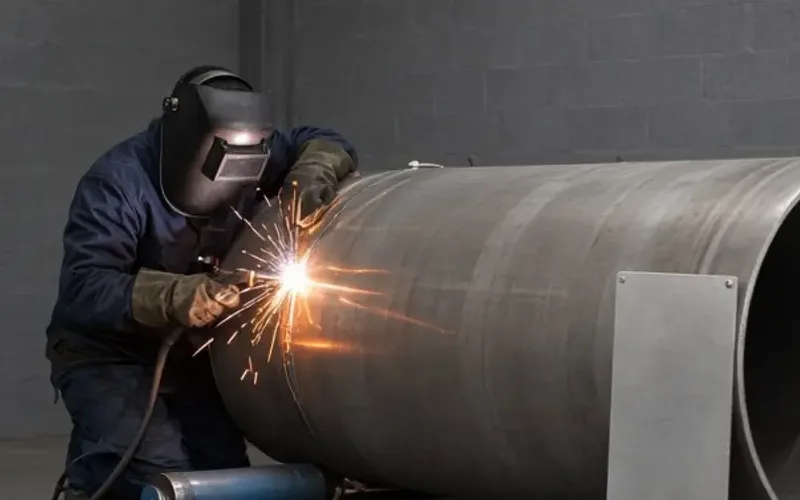
Embossed Plate
304L Stainless
When 304/304L sheet is the sensible choice for a jacket or plate, which fluids it handles, and the water, insulation and washdown conditions that rule it out.
+ Learn More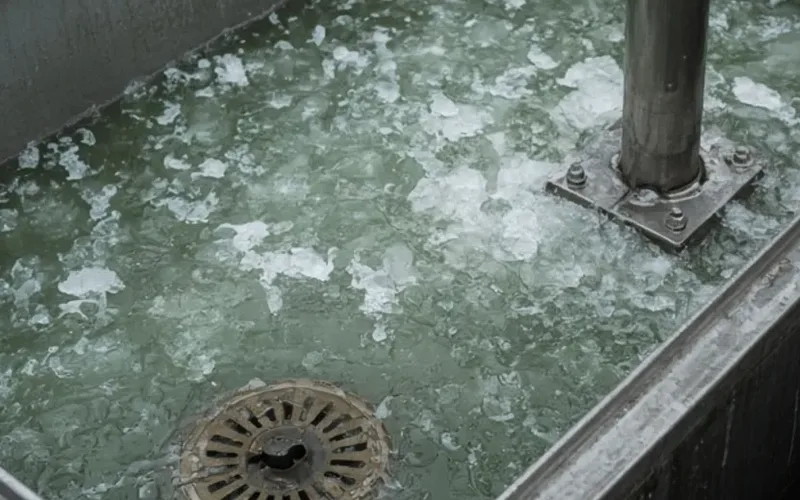
Embossed Plate
Pillow Plate
How a laser-welded pillow plate is made, what sheet gauge and weld pitch do to its rating, and where an inflated plate beats a tube coil or loses to one.
+ Learn More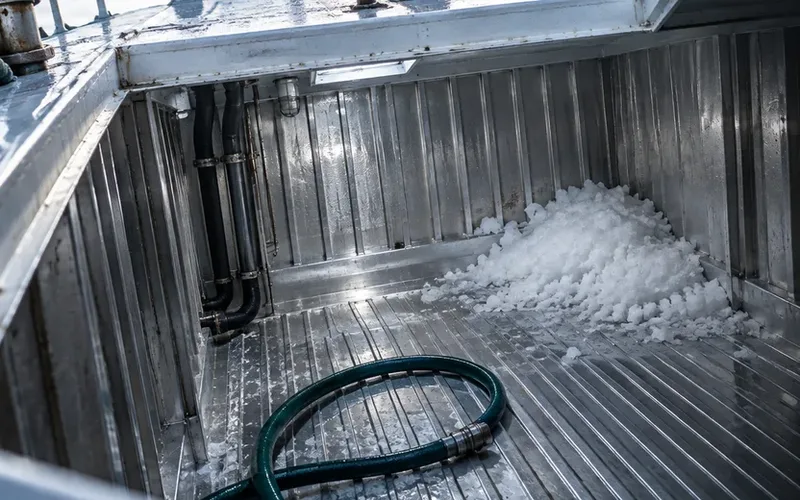
Embossed Plate
316L Stainless
Which sheet of an embossed plate has to be 316L, how far its chloride and acid resistance reaches, and what the welds need after inflation.
+ Learn More