
1-805-484-2992
Quotes - Engineering - SalesWhat a welded coil assembly is
A bent tube is a coil. A welded coil is the tube plus everything that makes it an exchanger: the inlet and outlet headers, the stubs that pass through the tank or duct wall, the support frame that carries the weight and the thermal growth, and every joint between them fused rather than threaded, brazed or compression-fitted. HeatX builds welded coil assemblies for steam heating of process tanks, hot water and glycol duty in vessels, and tube banks in ducts and flues where the gas side is hot and dirty. Tube, headers, stubs and frame are all 304L or 316L, so there is no dissimilar-metal joint anywhere in the tank.
Welding is why the grade carries an L. Each weld takes the tube through the 800–1,500°F range where chromium carbides form at the grain boundaries of ordinary 304 and 316 and leave the heat-affected zone short of chromium. With carbon held to 0.03% sensitization is avoided in normal welding, and once the heat tint is removed the weld zone comes close to the tube.
Welded coils are always an L grade, 304L or 316L, because the 0.03% carbon limit keeps the heat-affected zone from sensitizing; 2205 duplex where the tank runs hot chlorides. Material & Construction explains how the grade is chosen.
Welds
- Full-penetration GTAW on tube butt joints, argon back-purged so the root does not sugar
- Stub-to-header and header-to-tube welds ground flush where the coil is in product
- Hydrotest to the code multiple of design pressure; steam coils to 150 psig are the common rating
- Pickle and passivate after welding to strip heat tint, which is where a welded coil pits first
Headers and stubs
- Pipe-size headers in the same grade, with tube stubs welded in on a drilled pitch
- Flanged, butt-weld or tri-clamp stubs through the wall, on a reinforcing pad for a thin tank
- Steam header at the top and condensate header at the bottom; the condensate stub is the lowest point of the assembly
- Vent stub on the high header of any water or glycol coil
Supports and growth
- Stainless frame to the tank floor or wall, isolated from the nozzle so the stubs carry no coil weight
- One header fixed, the other on guides; a steam coil grows about a quarter inch per 20 ft per 100°F
- Duct and flue banks on a casing frame with slip joints
Talk to an Application SpecialistA welded coil assembly fails at the nozzle weld if it cannot grow, and at the heat tint if it was not pickled.
Fix one end, guide the other, passivate every weld.
Building a welded coil that lasts
Steam coils that drain
Steam condenses inside the tube and the condensate has to leave as fast as it forms. A welded steam coil is laid out so that every run slopes toward the condensate header, the condensate stub is the lowest point of the whole assembly and the trap sits below it, outside the tank. On a modulating steam valve the coil pressure falls with the load, and at low load it can drop below the back-pressure of the condensate line; the coil stalls, fills with condensate and the next time the valve opens a slug of water hits live steam. That is water hammer, and it finds the weakest weld. A vacuum breaker on the steam inlet and a trap below the coil with a free drain prevent it.
Fifteen psig steam condenses at 250°F, 50 psig at 298°F, 100 psig at 338°F, and the coil metal sits close to the steam temperature. Design the supports for that, not for the tank temperature.
Duct and flue banks
A tube bank in a duct or a flue sees gas on the outside, and gas-side coefficients are a small fraction of liquid ones. The bank is deep, many rows of bare or finned tube on a staggered pitch, with the tubes welded into side headers on a casing frame. Flue gas is the harder service: it can be 400°F or more, it carries sulfur compounds that condense as acid on any tube below the gas dew point, and the tubes run hotter than the casing. We weld the bank with slip supports at one end and use 316L or a higher alloy, chosen for the sulfur and chloride in the gas, on the cold rows where condensate will form.
Pickling, passivation and the weld
Welding leaves a band of heat tint beside every weld, an oxide film over a chromium-depleted layer that pits long before the parent tube does. After welding we remove the tint, by pickling with a nitric-hydrofluoric paste or by mechanical cleaning followed by passivation per ASTM A967, and the weld zone goes to the tank with the same passive film as the tube. Passivation does not polish and does not fix a bad weld; it removes free iron and lets the chromium oxide rebuild. On a sanitary tank the welds are also ground and polished to the tank finish first.
The mistake: anchored at both ends
The welded coil we are most often asked to replace was welded solid to a nozzle at each end, with a support frame bolted hard to the floor between them. On the first few steam cycles it grew about 2 in. over its 60 ft length, had nowhere to go, and put all of that growth into bending at the two nozzle welds. It cracked at the cold-end nozzle within the first season, inside the tank, where the leak was found by product running out of the condensate line. The replacement has one fixed header, one on a guided slide, and a frame that holds the weight without clamping the coil.
Welded coil questions
Because the welds sensitize the straight grade. Welding heats the metal next to the joint through 800–1,500°F, and in 304 or 316 with normal carbon that is enough for chromium carbides to form at the grain boundaries and leave the weld zone short of chromium. The L grades cap carbon at 0.03% and resist sensitization in normal welding. Most tube is dual-certified anyway, so the L grade usually adds little or no cost.
Yes, when the manway is too small for the assembled coil. We build the coil in sections that pass the opening, with prepared butt ends, and either quote field welding to join and purge them in the tank or supply flanged joints for the plant's own crew. Field welds inside a tank still need purging, pickling and passivation afterward, and the quote states who does it.
By layout. Every run slopes toward the condensate header, the condensate stub is the lowest point of the assembly and the trap sits below it with a free drain to a receiver. A vacuum breaker on the steam supply lets air in when the modulating valve closes so the coil does not pull a vacuum and hold it's condensate. A coil installed level, or with the trap above the outlet, hammers and cracks at a nozzle weld.
It can be built for one. The tube and headers are 316L, the inside welds are ground flush and polished to the tank finish, typically 32 µin Ra, the stubs are tri-clamp and every run drains toward the outlet so there is no pocket to clean. Whether 3-A or other hygiene requirements apply is settled on the quote; a welded coil is not sanitary by default.
Related
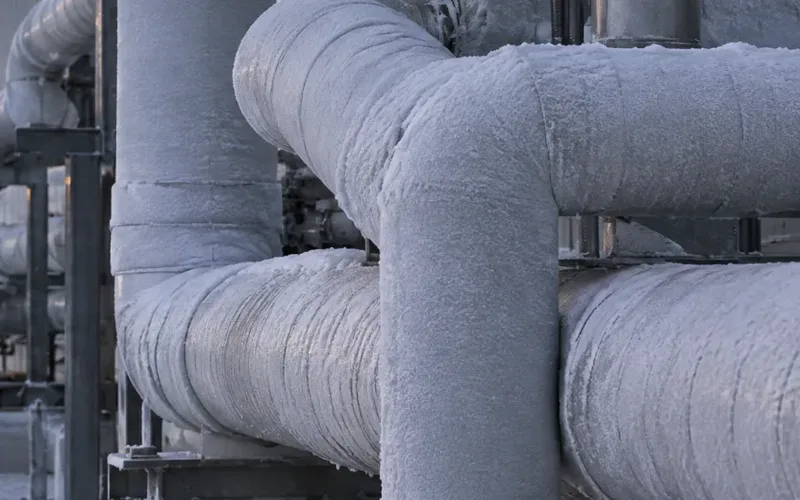
Heating & Cooling Coils
Ammonia Coils
Evaporator coils for ammonia in brine, glycol, ice-bank and process tanks, built entirely in stainless with no copper-bearing part on the circuit.
+ Learn More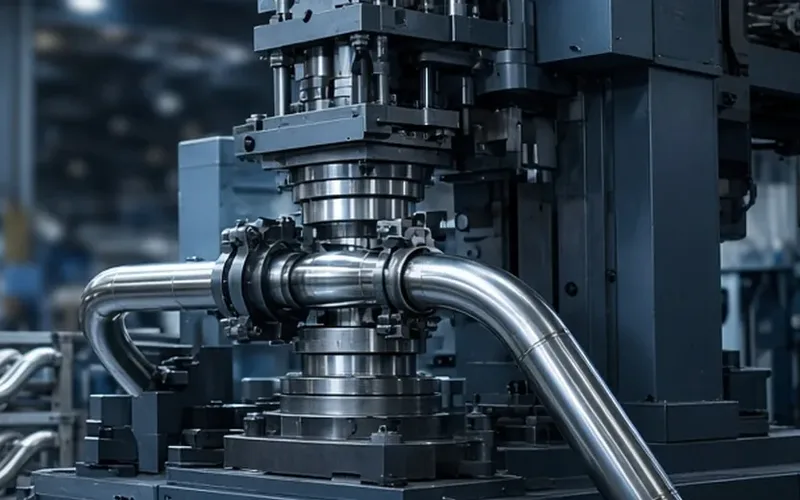
Heating & Cooling Coils
Custom Coils
Helical and serpentine coils made to your tank drawing in 304L or 316L, with the tube size, pitch and nozzle layout chosen for the duty and the agitator.
+ Learn More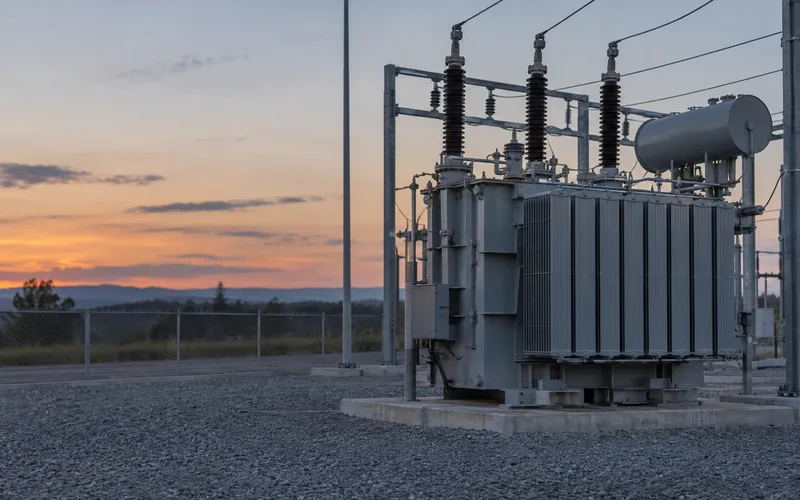
Heating & Cooling Coils
Transformer Oil Coolers
Cooling coils for transformer and rectifier insulating oil, sized on the laminar oil film and arranged so a pinhole leaks oil out, not water in.
+ Learn More